ICRC Humanitarian Law and Policy Blog
englanti
Teknologia & tieteet
Rajoitettu tarjous
1 kuukausi hintaan 1 €
Sitten 7,99 € / kuukausiPeru milloin tahansa.
- Podimon podcastit
- Lataa offline-käyttöön
Lisää ICRC Humanitarian Law and Policy Blog
The International Committee of the Red Cross (ICRC) Humanitarian Law & Policy blog is a unique space for timely analysis and debate on international humanitarian law (IHL) issues and the policies that shape humanitarian action.
Kaikki jaksot
270 jaksot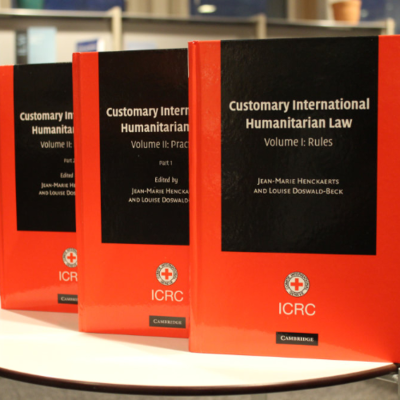
Twenty years on: the enduring impact of the ICRC customary IHL study and database
The ICRC’s 2005 study on customary international humanitarian law – along with the free, public database launched five years later – arrived at a moment when the legal landscape of armed conflict was rapidly shifting. Mandated by the 26th International Conference of the Red Cross and Red Crescent, the study set out to map the customary rules governing contemporary warfare by systematically analyzing global state practice and opinio juris. Twenty years on, with more than 130 armed conflicts active worldwide, reassessing the study’s methodological contributions, its evidence base, and its impact on the regulation of both international and non-international armed conflicts offers a timely lens on how customary IHL continues to underpin protections for people affected by war. In this post, ICRC Legal Adviser Claudia Maritano and members of the British Red Cross-ICRC customary IHL research team reflect on how the study’s rigorous methodology, global scope, and identification of 161 customary rules helped clarify gaps left by treaties, especially in non-international armed conflicts, and strengthen the practical application of IHL.
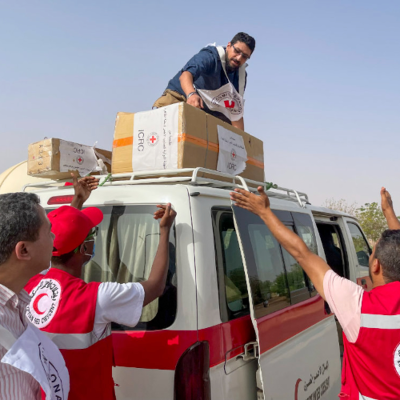
Complying with IHL in large-scale conflicts: How should states prepare to allow and facilitate delivery of humanitarian relief?
Large-scale armed conflicts consistently sever the systems that sustain civilian life, leaving populations without essential services or access to basic goods. International humanitarian law (IHL) sets out clear obligations for states to anticipate these foreseeable humanitarian needs and to ensure that impartial relief can reach affected communities swiftly and safely. Yet from customs hurdles to restrictive regulatory frameworks, many of the barriers to life-saving assistance are rooted not in conflict itself, but in peacetime choices. In this post, ICRC Legal Adviser Ellen Policinski examines how states can proactively shape legal, administrative, and logistical systems that enable, rather than obstruct, humanitarian relief in moments of crisis. She underscores that meeting IHL obligations requires advance preparation – from easing import restrictions to ensuring postal and customs exemptions – so that when conflict erupts, assistance can move without avoidable delay.
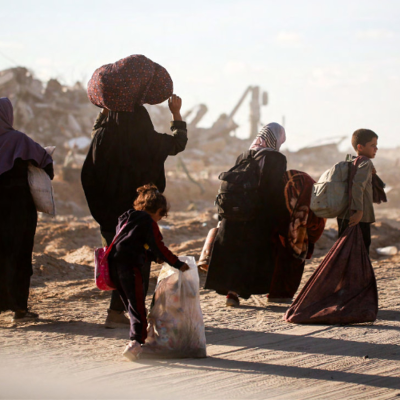
From crisis to recovery: managing the environmental impacts of armed conflict
The environmental toll of armed conflict is neither insignificant nor fleeting: it contaminates water, soil, and air, erodes ecosystems, undermines livelihoods, and burdens public health long after the fighting stops. The damage both mirrors and magnifies humanitarian crises, from Gaza’s mountains of debris to Ukraine’s flood-borne pollutants, to Sudan’s industrial contamination. Compounded by the impacts of the climate crisis, these environmental challenges only deepen the vulnerabilities of those affected by conflict. Understanding and addressing the interwoven impacts of conflict and the environment is essential for global climate, nature, pollution and sustainable development efforts, and to ensure that people can live and thrive in a healthy, secure and resilient environment. In this post, part of the War, Law and the Environment series, the UNEP Disasters and Conflicts Branch reflects on its decades of work helping countries address these challenges, charting a path from emergency response to long-term recovery. Through science-based assessments, practical guidance, and strategic partnerships, UNEP is equipping states to address the toxic legacies of war, restore ecosystems, and build resilience into the reconstruction process. Recent UN resolutions, including UNEA’s 2024 consensus decision, underscore growing political recognition that protecting the environment in armed conflict is integral to peace and recovery. What emerges is a vision of environmental response not as an afterthought to war, but as a cornerstone of recovery, and an entry point to build back greener, fairer, and stronger in the shadow of destruction.
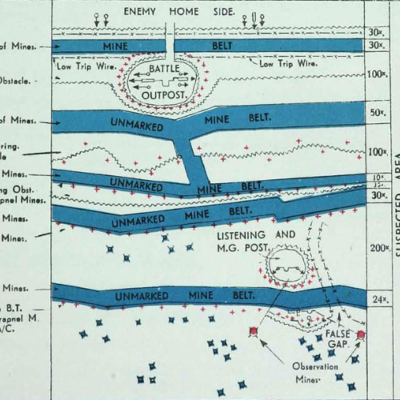
Do anti-personnel mines still have military utility in modern warfare?
Five States Parties to the Anti-Personnel Mine Ban Convention have recently submitted instruments of withdrawal, citing national security and military necessity, while at least one other has taken steps to “suspend” the Convention. These developments raise important questions about whether anti-personnel mines retain any meaningful military utility in contemporary conflict. In this post, Erik Tollefsen, Head of the ICRC Weapon Contamination Unit and Pete Evans, Head of the ICRC Unit for Arms Carriers and Prevention examine this question from an operational perspective. They argue that advances in technology and the realities of modern warfare have significantly reduced the military relevance of anti-personnel mines, while their humanitarian consequences remain severe. They outline why some of the most frequently cited justifications – border security, the supposed benefits of “smart” mines, or perceived low cost – no longer withstand scrutiny, and why renewed interest in these weapons risks reversing decades of progress. The authors call on states to base decisions on rigorous, transparent assessments of current military relevance weighed against humanitarian and legal obligations. In a security environment defined by rapid innovation, they conclude that, now as at the Convention’s adoption 30 years ago, anti-personnel mines have no place on the modern battlefield – and that reaffirming the norm against their use is more urgent than ever.
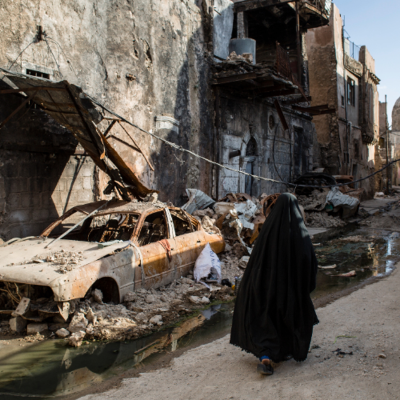
Navigating violence: five insights to strengthen humanitarian action in contested territories
More than 200 million people live today in contested territories – places where the authority of the state is challenged outright and armed groups exercise full or fluid control. This number has risen by 30 million since 2021. These are not distant statistics; each figure represents a person living in the shadow of competing powers, making difficult choices in an almost impossible environment. How do people navigate the presence of multiple, often competing, armed actors? Is dignity found in defiance, or safety in uneasy compliance? How do families secure food, water or medical care when neither the state nor armed groups are able or willing to provide basic services? And, crucially, what can humanitarian actors do to better protect and assist those caught in these fractured landscapes? In this post, and drawing on recently published research in Cameroon, Iraq and the Philippines, Arjun Claire, Senior Policy Adviser at the ICRC, and Matthew Bamber-Zryd, the ICRC’s Adviser on Armed Groups, offer five insights to help strengthen humanitarian responses in contested territories – insights rooted in the lived realities of the people who navigate them every day.
Valitse tilauksesi
Rajoitettu tarjous
Premium
Podimon podcastit
Lataa offline-käyttöön
Peru milloin tahansa
1 kuukausi hintaan 1 €
Sitten 7,99 € / kuukausi
Premium
20 tuntia äänikirjoja
Podimon podcastit
Lataa offline-käyttöön
Peru milloin tahansa
30 vrk ilmainen kokeilu
Sitten 9,99 € / month
Premium
100 tuntia äänikirjoja
Podimon podcastit
Lataa offline-käyttöön
Peru milloin tahansa
30 vrk ilmainen kokeilu
Sitten 19,99 € / month
Vain Podimossa










Suosittuja äänikirjoja















1 kuukausi hintaan 1 €. Sitten 7,99 € / kuukausi. Peru milloin tahansa.