
Skipped History
inglés
Entretenimiento
Empieza 7 días de prueba
$99 / mes después de la prueba.Cancela cuando quieras.
- 20 horas de audiolibros al mes
- Podcasts solo en Podimo
- Podcast gratuitos
Acerca de Skipped History
Interviews with top historians about their latest work. Mainly educational, often funny. Conveniently, most of the jokes are about people too far underground to punch back. Hosted by Ben Tumin, creator of the NYT-profiled Skipped History web series. skippedhistory.substack.com
Todos los episodios
115 episodios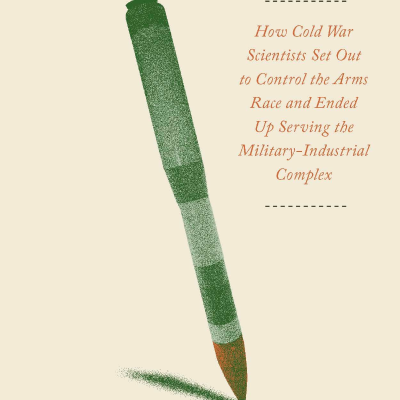
Preparing for Peace by Preparing for Nuclear War
Today, Professor Benjamin Wilson reveals how “arms control” became a euphemism for endless weapons development—and how the scientists who claimed to oppose the arms race often profited from it. In Strange Stability: How Cold War Scientists Set Out to Control the Arms Race and Ended Up Serving the Military-Industrial Complex [https://www.hup.harvard.edu/books/9780674976085], Professor Wilson traces the origins of “strategic stability,” a term security experts still use today, invented in the 1950s by people with no training in nuclear strategy. Professor Wilson argues that “stability” was conceptual shrink wrap borrowed from other fields and bolted onto nuclear strategy to justify whatever weapons systems the military-industrial complex wanted to build. The ideology it produced—that the best way to prevent nuclear war is to keep developing better weapons—is still at the heart of nuclear debates today, and we still prepare for peace “by preparing for war.” This is a public episode. If you'd like to discuss this with other subscribers or get access to bonus episodes, visit skippedhistory.substack.com/subscribe [https://skippedhistory.substack.com/subscribe?utm_medium=podcast&utm_campaign=CTA_2]
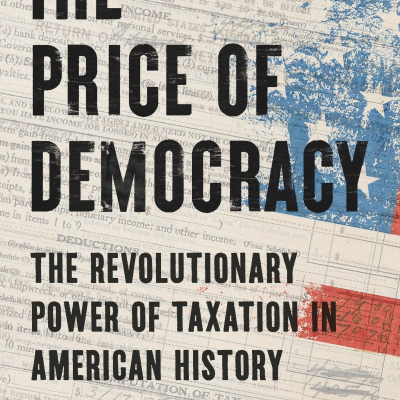
The Founders Wanted to Tax the Rich
Today, Dr. Vanessa S. Williamson dismantles some myths about taxes—and reveals how they’ve been weaponized throughout U.S. history. In The Price of Democracy: The Revolutionary Power of Taxation in American History [https://www.hachettebookgroup.com/titles/vanessa-s-williamson/the-price-of-democracy/9781541606111/], Dr. Williamson takes us from the Boston Tea Party (which wasn’t about high taxes) through Reconstruction (where tax rhetoric masked racial terror) to today’s anti-government movements. Her argument? That the familiar story—Americans hate taxes, taxation equals tyranny—is not only wrong, but dangerous. And the real history reveals something far more interesting: democracies are good at raising taxes because citizens consent to them, while authoritarians struggle precisely because they can’t govern by consent. And when politicians declare all taxation illegitimate, they’re not defending liberty—they’re laying the groundwork for authoritarianism. Dr. Williamson is a senior fellow in governance studies at the Brookings Institution and a senior fellow at the Urban-Brookings Tax Policy Center. Her writing has appeared in The New York Times, The Washington Post, The Atlantic, The Nation, and more. This is a public episode. If you'd like to discuss this with other subscribers or get access to bonus episodes, visit skippedhistory.substack.com/subscribe [https://skippedhistory.substack.com/subscribe?utm_medium=podcast&utm_campaign=CTA_2]
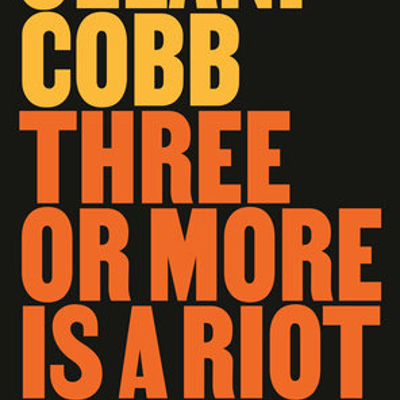
Jelani Cobb on Jamaica High, Trayvon Martin, and How We Got Here
Today, Jelani Cobb teases out the through lines of his celebrated commentary in The New Yorker—and warns us about some patterns we might’ve been ignoring. In his new essay collection, Dr. Cobb moves from a 1986 shooting at Jamaica High School to the Obama-era contradictions of Trayvon Martin’s death, from the architectural grandeur we once built for public education to the messaging of “defund the police.” His argument? That America keeps cycling between hope and cynicism, between shared reality and fractured perception—and that understanding where we’ve been is the only way to see where we’re headed. The events he chronicles in Three’s A Riot [https://www.penguinrandomhouse.com/books/779593/three-or-more-is-a-riot-by-jelani-cobb/] aren’t just historical footnotes. They’re “notes on how we got here.” Jelani Cobb is the current Dean of Columbia’s Graduate School of Journalism. He’s a Peabody Award winner and finalist for the Pulitzer Prize in Commentary. Dr. Cobb is also a staff writer at The New Yorker. This is a public episode. If you'd like to discuss this with other subscribers or get access to bonus episodes, visit skippedhistory.substack.com/subscribe [https://skippedhistory.substack.com/subscribe?utm_medium=podcast&utm_campaign=CTA_2]
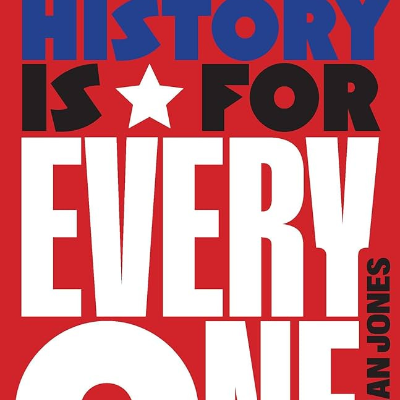
How Bacon's Rebellion Invented Race in the U.S.
Today, Dr. Brian Jones reframes some stories we thought we knew—and reveals a few others we were never taught. In Black History Is for Everyone [https://www.haymarketbooks.org/books/2605-black-history-is-for-everyone], Dr. Jones takes us through Bacon’s Rebellion, the Haitian Revolution, and Reconstruction, connecting centuries-old curricular bans to today’s battles over standardized testing. His argument? That students deserve complexity, not sanitized myths, and that flattening history does us all a disservice. Moreover, black history isn’t a niche subject. It’s the story of how America actually works. Dr. Jones has taught many ages and grades in New York City’s public schools and at the City University of New York. He served as the inaugural director of the Center for Education and Schools at the New York Public Library and as the associate director of education at the Schomburg Center for Research in Black Culture. I spoke with him [https://skippedhistory.substack.com/p/the-singular-and-emblematic-history-8f3] a couple of years back about another book he wrote, The Tuskegee Student Uprising: A History [https://nyupress.org/9781479809486/the-tuskegee-student-uprising/]. This is a public episode. If you'd like to discuss this with other subscribers or get access to bonus episodes, visit skippedhistory.substack.com/subscribe [https://skippedhistory.substack.com/subscribe?utm_medium=podcast&utm_campaign=CTA_2]
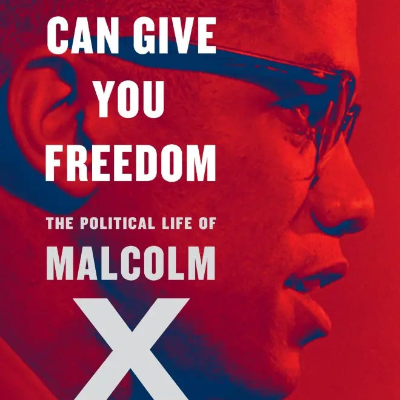
Why Malcolm X Said It Was "Already Too Late" in 1965
Today, a dose of Malcolm X and a timeless critique of our troubling times. In Nobody Can Give You Freedom: The Political Life of Malcolm X [https://www.hachettebookgroup.com/titles/kehinde-andrews/nobody-can-give-you-freedom/9781645030706/?lens=bold-type-books], Professor Kehinde Andrews pushes back on myths spread by The Autobiography of Malcolm X—which he calls “a great story, but a terrible book.” Those myths include that Malcolm thought white people were devils, that armed insurrection was the answer, and that he didn’t offer a coherent political program. To the contrary, Malcolm developed a sophisticated critique of “whiteness” as an ideology and believed it was pointless to accept reform within a fundamentally violent system still in place today. Kehinde Andrews is Professor of Black Studies at Birmingham City University, where he founded and directs the Centre for Critical Social Research. Professor Andrews regularly writes for The Guardian, The Independent, Ebony Magazine, and CNN. This is a public episode. If you'd like to discuss this with other subscribers or get access to bonus episodes, visit skippedhistory.substack.com/subscribe [https://skippedhistory.substack.com/subscribe?utm_medium=podcast&utm_campaign=CTA_2]
Elige tu suscripción
Premium
20 horas de audiolibros
Podcasts solo en Podimo
Podcast gratuitos
Cancela cuando quieras
Empieza 7 días de prueba
Después $99 / month
Sólo en Podimo










Audiolibros populares













Empieza 7 días de prueba. $99 / mes después de la prueba. Cancela cuando quieras.