
UO Today
inglés
Tecnología y ciencia
Empieza 0 días de prueba
$99 / mes después de la prueba.Cancela cuando quieras.
- 20 horas de audiolibros al mes
- Podcasts solo en Podimo
- Podcast gratuitos
Acerca de UO Today
The Oregon Humanities Center is the sole interdisciplinary umbrella organization for the humanities at the University of Oregon. We encourage scholars to articulate their ideas in language that is accessible both to scholars in other fields and to the general public. The OHC sponsors a wide array of free public programs designed to provide a forum for discussion of and reflection on important issues.
Todos los episodios
311 episodios
“Attention: Perspectives from Neuroscience, Art, and Literature”
The “Attention” series explores the dynamics of how, why, and what we focus on shapes our reality and creates our purpose. Also known as concentration, alertness, focus, notice, awareness, heed, regard, and consideration—Attention is the fundamental cognitive ability to sustain one’s energy on a specific pursuit or thought. The OHC’s 2025–26 Robert D. Clark Lectureship features three UO faculty members discussing, from their own perspectives, how attention connects us to others and allows us to experience the world around us. Santiago Jaramillo is an associate professor in the Department of Biology and the Institute of Neuroscience. His lab studies auditory cognition—how the brain helps us hear the world (recognize sounds, pay attention to sounds, remember sounds, etc). Their research is performed on mice so advanced techniques can be utilized to measure individual neurons of different classes and change their activity with high precision. While their work focuses on the healthy brain, rather than any specific disorder, their studies can help others understand and address disorders related to hearing (tinnitus, auditory processing disorders, age-related hearing loss, etc) and inspire better artificial hearing systems. Kate Mondloch is a professor of Contemporary Art History and Theory. Her research interests focus on late 20th- and early 21st-century art, theory, and criticism, particularly as these areas of inquiry intersect with the cultural, social, and aesthetic possibilities of new technologies. Her research fields include media art and theory, installation art, feminism, new media, science and technology studies, digital humanities, human flourishing, and mindfulness in higher education. She is especially interested in theories of spectatorship and subjectivity, and in research methods that bridge the sciences and the humanities. Forest Pyle is a professor of English and Cartoon and Comics Studies. His interests include 19th-century British Literary Studies, Literary and Critical Theory, Poetry and Poetics, Postmodern and Contemporary Literary Studies, and Visual Culture. His current research project explores the persistence and extensions of Romanticism in some of the more adventurous forms of contemporary music, art, film, and literature.
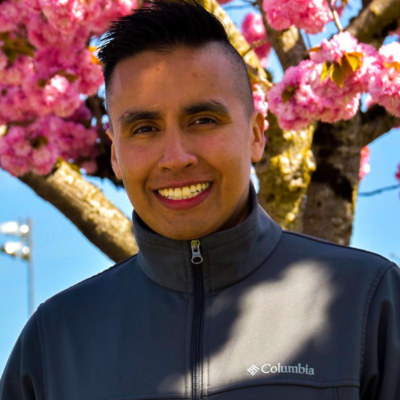
“The New Errancy: Unveiling Contemp. Migrant Literature in Cuba, the Dominican Rep, and Eq. Guinea”
Work-in-Progress talk with Alejandro Marin, PhD candidate, Romance languages, and 2025–26 Oregon Humanities Center Dissertation Fellow. Migration today is often framed as crisis, but literature reveals it as a site of creativity and resistance. Contemporary novels from Cuba, the Dominican Republic, and Equatorial Guinea portray movement across borders as an opportunity to forge new communities and reimagine belonging. My research examines how these texts challenge dominant narratives of displacement, offering fresh insights into diaspora, kinship, and the politics of memory. I focus on three authors, Karla Suárez (Cuba), Juan Tomás Ávila Laurel (Equatorial Guinea), and Loida Maritza Pérez (Dominican Republic), who write from migrant, exilic, or diasporic postions, foregrounding solidarity with contemporary migrants and reconfiguring our understanding of migration through their work. The New Errancy illuminates the aesthetic, political, and cultural elements incorporated into these narratives, providing a more dynamic view of migration. These authors portray non-biological family formations, evolving family dynamics across generations, gendered dimensions of mobility, transnational and diasporic identities, and circular migration that frames return as feasible and meaningful. I primarily draw on Édouard Glissant’s concepts of relation identity, circular nomadism, and errancy as rhizomatic practices; Stuart Hall’s theories on cultural identity and diaspora; Luisa Campuzano’s perspectives on uprooting and settlement; Michael Ugarte’s critique of rigid categories like emigrant, immigrant, and exile; Remei Sipi Mayo’s analysis of gender and migration; and Juan Flores’s reflections on diaspora to trace transnational cultural practices linking origin and destination communities.
UO Today: Diane Mizrachi, Jewish Librarian, UCLA; Research Notes w/Michael Stern; and Undergrad Persp
Diane Mizrachi is the Jewish and Israeli Studies Librarian at UCLA. She discusses her work on the Academic Reading Format International Study and the discovery of Nazi-looted books in the UCLA Library. SHOW NOTES: Shoham, Snunith, and Diane Mizrachi. "Library anxiety among undergraduates: A study of Israeli B. Ed students." The journal of academic librarianship 27, no. 4 (2001): 305-311. Mizrachi, Diane, Alicia M. Salaz, Serap Kurbanoglu, Joumana Boustany, and ARFIS Research Group. "Academic reading format preferences and behaviors among university students worldwide: A comparative survey analysis." PloS one 13, no. 5 (2018): e0197444. Mizrachi, Diane, and Alicia M. Salaz. "Reading format attitudes in the time of COVID." The Journal of Academic Librarianship 48, no. 4 (2022): 102552. Mizrachi, Diane, and Michal Bušek. "Discovery and recovery: Uncovering Nazi looted books in the UCLA library and repatriation efforts." College & Research Libraries 84, no. 6 (2023): 920. Mizrachi, Diane. "Digitized Collections and Provenance Issues: Who Owns What?." In Digital Libraries Across Continents, pp. 209-230. Routledge. (chapter in book edited by Alicia & Le Yang) Research Notes: Michael Stern is an associate professor of German and Scandinavian at the University of Oregon. He talks about his new book "Thinking Nietzsche with Africana Thought: Towards an Alluvial Poetic of Worlding." SHOW NOTES: Ifi Amadiume: "Male Daughters Female Husbands" ‘’’’’’’’’’’’’’’’’’’’’’’’’: "Reinventing Africa: Matriarchy, Religion, and Culture" Oyeronke Oyewumi: "The Invention of Women" Fabienne Eboussi Boulaga: "Muntu in Crisis: African Authenticity and Philosophy" Friedrich Nietzsche: “On Truth and Lies in an Extra Moral Sense” Oregon Humanities Center: https://ohc.uoregon.edu Undergraduate Perspectives: Emma Kersgaard talks about her experience as a Humanities Undergraduate Archival Fellow.
UO Today: Sam Lasman, English and Medieval Studies: Research Notes: Martha Bayless
Sam Lasman is an assistant professor of English and Medieval Studies at the University of Oregon. He talks about his research on medieval literature and what he calls “modern medievalism,” with a focus on how narrative texts use the supernatural, monstrous, and parahuman to explore identity and communal origins. Research Notes: Martha Bayless, professor of English, Folklore, and Medieval Studies at the University of Oregon, talks about her recent book "Entertainment, Pleasure, and Meaning in Early England" published by Cambridge University Press. https://www.cambridge.org/us/universitypress/subjects/history/british-history-1066/entertainment-pleasure-and-meaning-early-england?format=HB&isbn=9781009517119
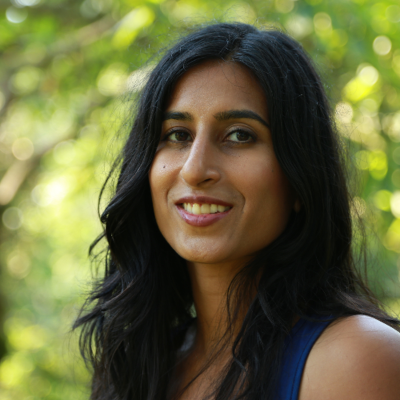
"Traumacracy: Towards a Constructive Politics"
Work-in-Progress talk with Anita Chari, professor of Political Science, and 2025-26 OHC Faculty Research Fellow. This project explores the political implications of the trauma-informed turn and examines the contemporary resonance of trauma in the public sphere as well as the current critical consensus that trauma discourse is part of the problem rather than the solution to our contemporary political woes. It explores how trauma-informed practices could be mobilized towards the creation of public cultures of care and repair, serving as the foundation of a politics that is less polarized, more capable of navigating human vulnerability, and ultimately generative of a public sphere that is able to navigate the conflict, agonism, and discomfort that are integral to the practice of democracy.
Elige tu suscripción
Premium
20 horas de audiolibros
Podcasts solo en Podimo
Podcast gratuitos
Cancela cuando quieras
Empieza 0 días de prueba
Después $99 / month
Sólo en Podimo









Audiolibros populares




Empieza 0 días de prueba. $99 / mes después de la prueba. Cancela cuando quieras.