Bede There, Done That
English
History & religion
Limited Offer
1 month for 9 kr.
Then 99 kr. / monthCancel anytime.
- 20 hours of audiobooks / month
- Podcasts only on Podimo
- All free podcasts
About Bede There, Done That
Lilia and Jake talk about Catholic history, from saints to holidays and other random tangents. Join us as we explore different topics from almost 2,000 years of history and counting.
All episodes
10 episodes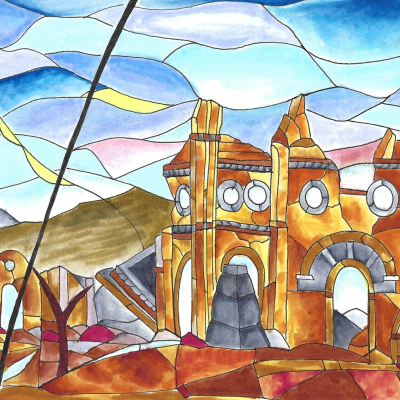
Episode 10: The Bombing of Nagasaki & Catholics of Urakami
Episode 10: The Bombing of Nagasaki & the Catholics of Urakami Brief Chronology: 1549 - St. Francis Xavier arrives in Japan; Nagasaki eventually becomes heartland of Japanese Christianity 1587 - Persecution of Japanese Christians begins. 1865 - Hidden Christians reveal themselves at Nagasaki and are promptly persecuted. 1925 - Original Immaculate Conception Cathedral finished in Urakami 1930 - 1936 - St. Maximilian Kolbe in Nagasaki 1933 - Japanese takeover of Manchuria 1934 - Conversion of Takashi Nagai after living with Moriyama family, descendants of leaders of the Hidden Christians of Nagasaki 1937 - Beginning of Sino-Japanese War 1941 - Aug. 14 - St. Maximilan Kolbe dies at Auschwitz; Dec. 7 - Japanese attack on Pear Harbor leading to U.S. entry into WWII 1945 * Night of March 9-10: Firebombing of Tokyo, killing approx. 80 to 100,000 * May 8 - Germany surrenders * Aug. 6: First atomic bomb dropped on Hiroshima, killing approx. 70,000 * Aug. 9, 11:02 AM: Second atomic bomb dropped on Urakami valley area of Nagasaki, killing approx. 30,000 * Aug. 15: Japan surrenders 1951 - Death of Takashi Nagai 1958 - Reconstruction of cathedral in Urakami 1981 - Pope John Paul II visits Japan Summary: We discussed the story of the dropping of an atomic bomb on the historic Catholic area of Urakami in Nagasaki on August 9, 1945 at 11:02 AM. The bomb exploded extremely close to the area where the Immaculate Conception Cathedral stood, and where Catholics were gathered in preparation for the upcoming Feast of the Assumption. The cathedral was reduced to ruins which burned through the night. Catholic priests and nuns, as well as about two thirds (about 8,000) of the city's Catholics perished in the bombing, in which approximately 30,000 people total were killed instantly. Ironically, the commander and pilot of the B-29 bomber which dropped the atomic bomb was an American Catholic, Major Charles Sweeney (then only 25 years old), who professed to never regret the bombing. Those who survived faced many struggles - they were stigmatized as irradiated persons, called hibakusha; they faced local pressure to leave the devastated cathedral in ruins as a peace memorial; they experienced "survivor guilt"; and struggled with traumatic memories of losing family and homes. Although the writings of Dr. Takashi Nagai explained the bombings as providential, many Catholics felt dissatisfied with his views . These different perspectives began to be shared after Pope St. John Paul II's 1981 visit to Japan, in which he spoke of the evils of atomic warfare and stated at Hiroshima, "War is the work of humanity; war is destruction of human life; war is death." (Dangerous Memory, p. 75). Survivors took this message to mean they did not need to accept uncritically Nagai's sacrificial theory of the bombing. Among the survivors we discussed were: • Dr. Takashi Nagai - He was a radiologist working in a hospital at the time of the bombing. He was diagnosed with leukemia shortly before the bombing due to his exposure to radiation in his work and nearly died of his injuries after rallying the survivors from the hospital to help the wounded in and around Nagasaki. He eventually returned to Urakami with his two young children to live in a hut where he wrote the first book allowed to be published providing an eyewitness account of the bombing, The Bells of Nagasaki. Nagai used proceeds from the book to plan cherry trees throughout the city. He is controversial for his theory that the bombing of Nagasaki was providential and provided an acceptable burnt offering of the good and innocent to God for the sins of mankind in waging World War II. He has been designated a "Servant of God," meaning he has an open sainthood cause. • Brother Ozaki Tomei (Tagawa Koichi) - A Franciscan monk who was working in an underground factory at the time of the bombing. He was haunted by his turning away from helping others in the immediate aftermath of the bombing as he desperately tried to get home. In his home he was unable to find his mother's remains, only what was left of her rosary. He later entered a monastery founded by St. Maximilian Kolbe, about whom Ozaki has written a book. Sources and Further Reading Movie: All that Remains (Ignatius 2016) - Includes a short documentary with Paul Glynn. Specific Focus on Nagasaki Bombing: • The Bells of Nagasaki by Takashi Nagai, translated by William Johnston (Kodansha International, 1984) (originally published in Japanese in 1949 as Nagasaki no kane). • We of Nagasaki: The Story of Survivors in an Atomic Wasteland by Takashi Nagai, translated by Ichiro Shirato and Herbert B.L. Silverman (Duell Sloan and Pearce, 1951). • A Song for Nagasaki: The Story of Takashi Nagai by Paul Glynn, S.M. (Ignatius Press, 1988). • Dangerous Memory in Nagasaki: Prayers, Protests and Catholic Survivor Narratives by Gwyn McClelland (Routledge, 2020) • Nagasaki: Life After Nuclear War by Susan Southard (Penguin Books, 2016). • Nagasaki: The Massacre of the Innocent and Unknowing by Craig Collie (Allen & Unwin 2012) • Resurrecting Nagasaki: Reconstruction and the Formation of Atomic Narratives by Chad R. Diehl (Cornel Univ. Press, 2018). General Background on the end of WWII in the Pacific and the atomic bombings: • The Fall of Japan: The Final Weeks of World War II in the Pacific by William Craig (Open Roads Media, 2015)(originally published in 1967). • Downfall: The End of the Imperial Japanese Empire by Richard B. Frank (Random House, 1999). • Hiroshima Nagasaki: The Real Story of the Atomic Bombings and Their Aftermath by Paul Ham (Thomas Dunne Books, 2011). • The Most Controversial Decision: Truman, the Atomic Bombs, and the Defeat of Japan by Wilson D. Miscamble, C.S.C. (Cambridge Univ. Press, 2011). • War's End: An Eyewitness Account of America's Last Atomic Mission by Charles W. Sweeney (memoir of the pilot on the Nagasaki mission). Image Credit: **"Urakami Cathedral" by Jake (based on stained glass image at Nagasaki's Immaculate Conception Cathedral) **Music Credit: *Special Thank You to Paul Spring for allowing us to use his song "Itasca" from the album Borderline EP (2014)!
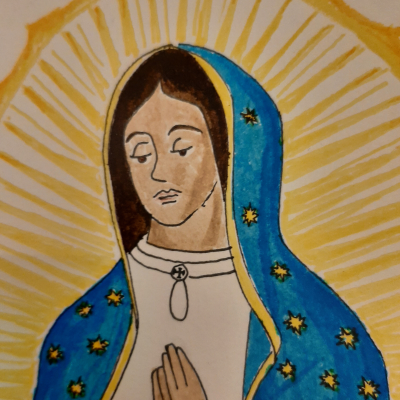
Episode 9: The Virgin of Guadalupe & St. Juan Diego
*Episode 9: The Virgin of Guadalupe & St. Juan Diego * Brief Chronology: Early 1300s - Marian apparition and founding of shrine for Virgin of Guadalupe of Extremadura in Spain 1474 - Cuauhtlatoatzin ("Eagle that Speaks"), later known as Juan Diego, is born at Cuautitlan in the Texcoco Kingdom. 1521 - Conclusion of Spanish conquest of the Mexica ("Aztec") empire in central Mexico 1531 - December 9th through 12th - Apparitions of Blessed Virgin Mary to Juan Diego; appearance of image of Virgin of Guadalupe on Juan Diego's tilma on December 12. 1545-48 - The Nican Mopohua, recounting the apparition story in the native language Nahuatl, likely written. 1548 - Juan Diego dies. 1666 - Formal investigation of the tilma and apparition story by the Church 1795 - Acid spilled accidentally on the tilma during cleaning of its frame. 1810 - Image of the Virgin of Guadalupe used as banner of the Hidalgo rebellion. 1921 - Bomb explodes in flower display in front of the tilma, but does not harm the image. 2002 - Canonization of St. Juan Diego on July 31. (Based mainly on Appendix B of Our Lady of Guadalupe, cited below). Summary: We discuss the Virgin of Guadalupe (Feast say December 12) and St. Juan Diego (Feast day December 9). Just as millions of northern and western Europeans left the Catholic Church as a result of the Protestant Reformation(s), millions of Native Americans entered the Catholic Church. One witness reported that by his count as many as nine million baptisms occurred in Mexico in the space of about 15 years in the early 16th century. The flood of conversions came after the image of the Virgin of Guadalupe appeared on the cloak (the "tilma") of an Indian named Eagle that Speaks, baptized as "Juan Diego." Over time the image has become iconic and ubiquitous in Mexican Catholicism. But hasn't modern science probably debunked the "miraculous" image on the tilma by now? Listen to our discussion of this vivid, unique Marian apparition and why it is something you need to know about. We also discuss how the Church generally evaluates Marian apparitions and private revelation. Sources and Further Reading: • Our Lady of Guadalupe: Mother of the Civilization of Love by Carl Anderson and Eduardo Chavez (Image, 2009) - Includes the Nican Mopohua in an appendix. • Mexican Phoenix: Our Lady of Guadalupe: Image and Tradition Across Five Centuries by D.A. Brading (Cambridge University Press, 2001). • Conquest: Montezuma, Cortes, and the Fall of Old Mexico by Hugh Thomas (Simon & Schuster, 1993). • A Still, Small Voice: A Practical Guide on Reported Revelations by Fr. Benedict Groeschel (Ignatius Press, 1993). Documentary: Guadalupe: A Living Image (2009) Music Credit: *Special Thank You to Paul Spring for allowing us to use his song "Itasca" from the album Borderline EP (2014)!
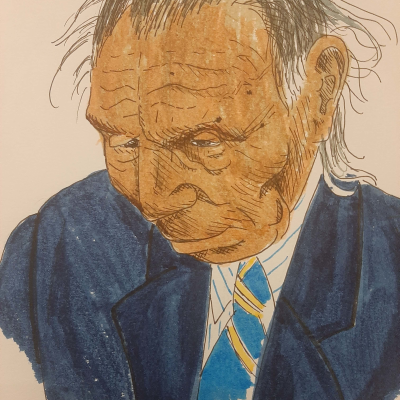
Episode 8: Nicholas Black Elk: Lakota Mystic and Servant of God
Show Notes : Image Credit: "Nick Black Elk" by Jake. Music Credit: *Special Thank You to Paul Spring for allowing us to use his song "Itasca" from the album Borderline EP (2014)! Episode 8: Nicholas Black Elk, Lakota Mystic and Servant of God Brief Chronology: 1863 - Black Elk born. 1865 - End of U.S. Civil War. 1866 - Battle of the Hundred Slain / the Fetterman Massacre, in which Black Elk's father is wounded. 1872 - Around this time, at about age 9, Black Elk experiences his great vision. 1876 - Battle of the Little Bighorn; Black Elk, about age 12, kills a soldier. 1877 - Crazy Horse killed. 1886 - 1889 - Travels to Europe with Buffalo Bill's Wild West show. 1890 - Sitting Bull killed; Massacre at Wounded Knee on Dec. 29. 1892 - Black Elk marries Katie War Bonnet 1899 - Birth of son Benjamin Black Elk, who will become important for interpreting Nicholas Black Elk's legacy. 1904 - Conversion to Roman Catholicism; he is baptized Dec. 6, the Feast of St. Nicholas. 1906 - Marriage to Anna Brings White, mother to Lucy Looks Twice 1907 - Black Elk begins travelling as a catechist. 1930 - Interviews with John G. Neihardt which will become the basis of Black Elk Speaks, published in 1932. 1936 - Black Elk begins managing Duhamel Indian Pageant. 1945-46 - Interviews with Joseph Epes Brown which will become basis for The Sacred Pipe, published in 1953, after Black Elk has died. 1950 - Death of Nicholas Black Elk on Aug. 17, followed by a vivid display of the northern lights. Summary: In this episode we discuss a modern candidate for sainthood, Nicholas Black Elk (ca. 1863-1950). Black Elk was a Lakota Sioux medicine man whose journey took him from traditional Lakota religion and the Ghost Dance movement to Roman Catholicism. He was probably born in 1863, at a time when his people, the Lakota, still lived independently hunting buffalo on the Northern Great Plains, in what is now the Dakotas and Montana. He relates the story of the first few decades of his life in Black Elk Speaks, a book written by and formed out of a series of conversations with a Nebraskan poet, John G. Neihardt in the early 1930s. Included in the book are his memories of Crazy Horse, the battle of Little Big Horn, meeting Queen Victoria as part of Buffalo Bill's Wild West Show, the Ghost Dance movement, and witnessing the tragic massacre of Lakota civilians at Wounded Knee. And that was only the first part of his long life. Black Elk's life was full of prayer and intense religious questioning. He experienced visions from a young age and eventually became a medicine man. After marrying a Catholic, he eventually converted and became a catechist and missionary, travelling and speaking across the country. At the same time, he passed on Lakota traditions by sharing his life experiences and knowledge with Neihardt (Black Elk Speaks) and anthropologist Joseph Epes Brown (author of The Sacred Pipe), as well as performing traditional dances for tourists. His legacy and claims about his personal religious beliefs remain controversial. Scholars continue to debate whether he continued to believe traditional Lakota religion alongside Christianity, was a sincere orthodox Catholic who rejected the traditional past, and how he reconciled different belief systems and chapters of his life. Two clarifications/corrections to the episode - We checked again on the Two Roads chart and are still unclear on the exact story of its origins, but you can learn more about it in Black Elk: Holy Man of the Oglala by Steltenkamp. Also, the speech by Benjamin Black Ellk and separate comments by Benjamin Black Elk's nephew concerning the practice of Christianity alongside traditional religion were connected in the retelling in our conversation, but would best be understood (and parsed out) by reading/listening to them in context in the sources below, the documentary Walking the Good Red Road and the first chapter of Black Elk Lives. Finally, a disclaimer: this episode covers some controversial episodes in American history as well as a controversial religious thinker. We hope you find this a useful addition to the conversation about Black Elk. Of course we always recommend going back to the sources - ad fontes - and forming your own judgment about this fascinating candidate for sainthood. Link to the Documentary: Walking the Good Red Road [https://vimeo.com/420363725] Sources and Further Reading: • Black Elk Speaks: Being the Life Story of a Holy Man of the Oglala Sioux by John G. Neihardt (Lincoln: Univ. of Nebraska Press 1988). • The Sacred Pipe: Black Elk's Account of the Seven Rites of the Oglala Sioux by Joseph Epes Brown (Norman: Univ. of Oklahoma Press, 1953). • Black Elk: Holy Man of the Oglala by Michael F. Steltekamp (Norman: Univ. of Oklahoma Press, 1993) - Written by a Jesuit priest, this book presents extensive material from Black Elk's daughter Lucy Looks Twice and other people who knew him concerning his Catholic faith. • Black Elk Lives: Conversations with the Black Elk Family by Esther Black Elk DeSersa, Olivia Black Elk Poirier, Aaron DeSersa Jr., and Clifton DeSersa; edited by Hilda Neihardt and Lori Utrecht (Lincoln: Univ. of Nebraska Press, 2000) - This book is composed of recollections and anecdotes from descendants of Benjamin Black Elk and contains the speech by Benjamin Black Elk brief referenced in the episode. • Black Elk: The Life of an American Visionary by Joe Jackson (New York: Farrar, Straus and Giroux, 2016). - A biography that takes a more skeptical stance towards Catholicism and Black Elk's orthodoxy, but provides a very readable and detailed narrative history of Black Elk's full life. • Black Elk's Religion: The Sun Dance and Lakota Catholicism by Clyde Holler ( Syracuse: Syracuse Univ. Press, 1995). • Bury My Heart at Wounded Knee by Dee Brown (Holt, Rinehard and Winston, 1971)- This history of the 19th century wars that led to resettlement of many Native American tribes on reservations has chapters that provide useful background on the war for the Black Hills, the Ghost Dance religion, and Wounded Knee massacre.
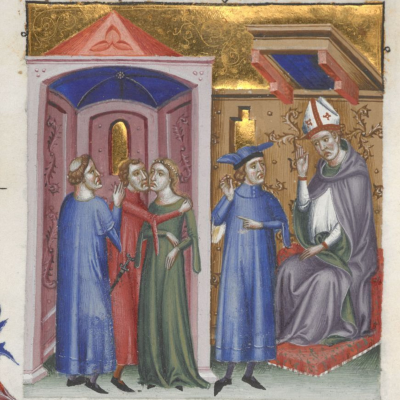
Episode 7: Celibacy: From the Apostles to Lateran II
*Image Credit: *"Marriage," Detail from a 14th century manuscript originating in Catalonia, Spain, available online from the British Library, Catalogue of Illuminated Manuscripts [http://www.bl.uk/catalogues/illuminatedmanuscripts/ILLUMIN.ASP?Size=mid&IllID=60803]. (Public Domain) Music Credit: *Special Thank You to Paul Spring for allowing us to use his song "Itasca" from the album Borderline EP (2014)! Episode 7: Celibacy - Summary: In this episode we discussed the history of celibacy in the Church, from Jewish roots in 1st century Palestine up to the Second Lateran Council in the high middle ages. Celibacy in some form seems to exist in the apostolic and early church. So too did the ordination of married men. The debates are what the situation looked like: was celibacy required for all priests after ordination, even married ones? Did married priests separate from their wives, live Josephite marriage with them, or continue to have sexual relations with them? How did it come to the point that different parts of the Church developed different practices? The Dead Sea Scrolls and other ancient historians show that some members of the Jewish sect known as the Essenes practiced celibacy. The Levitical priesthood also abstained from sexual relations with their wives during their service in the temple. The New Testament must be understood in this context, where sexual continence and even a more monastic form of celibate life were already known. As we stated in the episode, we tried to carefully limit our theological discussion. But for your reference, here are some of the key Bible passages to be aware of: • 1 Samuel 21:4-5- David and his men eat the bread of the presence, having assured Ahimelek the priest that they have "kept themselves from women." • Luke 4:38-39 - Jesus heals Simon Peter's mother in law. This episode indicates Peter was married at some point, but it is unknown if he was a widower or still married. • Matthew 19:12 - "For there are eunuchs who were born that way, and there are eunuchs who have been made eunuchs by others--and there are those who choose to live like eunuchs for the sake of the kingdom of heaven. The one who can accept this should accept it." • Matthew 19:29 - "And everyone who has left houses or brothers or sisters or father or mother or wife or children or fields for my sake will receive a hundred times as much and will inherit eternal life." • Philippians 4:3 - Paul asks his "yoke mate," to help resolve a conflict between some Christian women named in the letter to the Philippians. Some see this as a reference to Paul's wife. • 1 Corinthians 7:8 - "Now to the unmarried and the widows I say: It is good for them to stay unmarried, as I do. But if they cannot control themselves, they should marry, for it is better to marry than to burn with passion." • 1 Timothy 4:3 - Paul tells Timothy that prohibiting people from getting married is a sign of false teachers. • 1 Timothy 3:1-2 - Paul tells Timothy that overseers (bishops) should be, "husband of one wife." Some church fathers see this as a negative criteria; in other words, bishops must not be husband of more than one wife, since remarrying may have suggested a lack of sexual self-discipline in their culture. Celibacy in the early Church seems to have been connected with the Eucharistic celebration, not the ascetic ideals of monasticism which emerged a little later. This being the case, the practice may ultimately be traceable back to the Jewish roots of Christianity and is not as likely to be derived from sects that were against marriage or despised the body. Church fathers drew parallels between the Old Testament high priests, priests and Levites, and the bishops, presbyters, and deacons of the New Testament. That said, we have to largely infer the practice of the early church in the 2nd and 3rd centuries indirectly. Based on the statements of local councils in the 4th century, as Jesuit scholar Christian Cochini explains, it seems that the likely expected practice was for priests to separate from their wives or live chastely with them following ordination. This was not practiced consistently in reality, prompting numerous councils to reiterate the discipline expected for deacons, priests and bishops. In the West, local councils such as the Council of Elvira, held around 305 in what is now Granada, Spain unequivocally called for priests to abstain from sexual relations with their wives after ordination. It was followed by other local councils in Arles and Carthage (390). The first ecumenical council, the Council of Nicaea in 325, may have touched on the issue as well in its ambiguous third canon. Some excerpts from these councils read as follows: • Council of Elvira (circa 305), Canon 33: "It has seemed good absolutely to forbid the bishops, the priests, and the deadons, i.e. all the clerics in the service of the ministry, to have [sexual] relations with their wives and procreate children; should anyone do so, let him be excluded from the honor of the clergy." (Cochini, p. 159). • *Council of Nicaea (325), Canon 3 *"On the women who live with clerics": "The great Council has absolutely forbidden bishops, priests, and deacons - in other words, all the members of the clergy - to have with them a sister-companion with the exception of a mother, a sister, an aunt, or, lastly, only those persons who are beyond any suspicion." (Cochini, p. 185) • Council of Carthage (390): "Bishop Genethlius says: As was previously said, it is fitting that the holy bishops and priests of God as well as the Levites, i.e., those who are in the service of the divine sacraments, observe perfect continence, so that they may obtain in all simplicity what they are asking from God; what the apostles taught and what antiquity itself observed, let us also endeavor to keep. "The bishops declared unanimously: It pleases us all that bishop, priest, and deacon, guardians of purity, abstain from [conjugal intercourse] with their wives, so that those who serve at the altar may keep a perfect chastity."(Cochini, p. 5) • 2nd Council of Arles (442-506) Canon 2: "One cannot elevate to the priesthood a man bound by marriage unless he has first converted to continence." Canon 3: "If a cleric, starting for order of the diaconate, dates to take with him a woman to 'console himself,' let him be rejected from communion. An exception is to be made for his grandmother [mother], sister, niece, or a wife who has converted [to continence]. If she refuses to separate [from the cleric], the woman will also be punished in the same way." (compare with Canon 3 form Nicaea). (Cochini, p. 273). But what did the fathers of Nicaea mean? Were priests' wives included or excluded from the category of women allowed to still live with priests? One Byzantine historian said that a respected confessor named Paphnutius intervened to convince the council not to impose celibacy on married priests. Yet Norman Tanner, in his book The Councils of the Church, notes that some scholars believe the canon refers not to celibacy at all, but to the scandalous practice of some religious teachers living with their female disciples, as Paul of Samosata notoriously did (Tanner, 38). As centuries past and the middle ages dawned, amidst widespread upheaval, differences emerged between Eastern and Western practice. One attempt at reform and compromise in recognition of the status quo in some regards for the Eastern church occurred at the Qunisext Council, also called the Council in Trullo (held in 691). Today it remains foundational for Eastern canon law. The full text of Canon 13 from Trullo reads: • " *Canon 13: *"Since we know it to be handed down as a rule of the Roman Church that those who are deemed worthy to be advanced to the diaconate or presbyterate should promise no longer to cohabit with their wives, we, preserving the ancient rule and apostolic perfection and order, will that the lawful marriages of men who are in holy orders be from this time forward firm, by no means dissolving their union with their wives nor depriving them of their mutual intercourse at a convenient time. Wherefore, if anyone shall have been found worthy to be ordained subdeacon, or deacon, or presbyter, he is by no means to be prohibited from admittance to such a rank, even if he shall live with a lawful wife. Nor shall it be demanded of him at the time of his ordination that he promise to abstain from lawful intercourse with his wife: lest we should affect injuriously marriage constituted by God and blessed by his presence, as the Gospel says: "What God has joined together let no man put asunder;" and the Apostle says, "Marriage is honourable and the bed undefiled;" and again, "Are you bound to a wife? Seek not to be loosed." But we know, as they who assembled at Carthage (with a care for the honest life of the clergy) said, that subdeacons, who handle the Holy Mysteries, and deacons, and presbyters should abstain from their consorts according to their own course [of ministration]. So that what has been handed down through the Apostles and preserved by ancient custom, we too likewise maintain, knowing that there is a time for all things and especially for fasting and prayer. For it is meet that they who assist at the divine altar should be absolutely continent when they are handling holy things, in order that they may be able to obtain from God what they ask in sincerity. "If therefore anyone shall have dared, contrary to the Apostolic Canons, to deprive any of those who are in holy orders, presbyter, or deacon, or subdeacon of cohabitation and intercourse with his lawful wife, let him be deposed. In like manner also if any presbyter or deacon on pretence of piety has dismissed his wife, let him be excluded from communion; and if he persevere in this let him be deposed." Despite maintaining that celibacy even for married priests was the norm, various social and political factors combined with lack of priestly formation continued to cause this norm to not be followed consistently in the West either well into the middle ages. But whereas the Council in Trullo had allowed married priests to continue to have sex with their wives, the Gregorian Reformers and Second Lateran Council (1139) took the opposite approach. Desiring to enforce canon law and a vision of apostolic life, as well as crack down hard on the entanglement of the clergy in the secular feudal order, Lateran II forbade the ordination of married men, prohibited anyone from claiming a position in the church as their inheritance, and forbade the faithful to attend the masses of married priests. It is important to remember that these canons were part of a larger reform program which also targeted simony and lay investiture in an effort to fight corruption and scandal in the Church. Lateran II (1139): • Canon 6 - "We also decree that those who in the subdiaconate and higher orders have contracted marriage or have concubines, be deprived of their office and ecclesiastical benefice. For since they should be and be called the temple of God, the vessel of the Lord, the abode of the Holy Spirit, it is unbecoming that they indulge in marriage and in impurities." • Canon 16 - "It is beyond doubt that ecclesiastical honors are bestowed not in consideration of blood relationship but of merit, and the Church of God does not look for any successor with hereditary rights, but demands for its guidance and for the administration of its offices upright, wise, and religious persons. Wherefore, in virtue of our Apostolic authority we forbid that anyone appropriate or presume to demand on the plea of hereditary right churches, prebends, deaneries, chaplaincies, or any ecclesiastical offices. If anyone, prompted by dishonesty or animated by ambition, dare attempt this, he shall be duly punished and his demands disregarded." You can read about the Church's current teaching on clerical celibacy in paragraphs 1579 and 1580 of the Catechism of the Catholic Church. Sources and Further Reading: • The Councils of the Church by Norman Tanner (The Crossroad Publishing Company, 2016). • Renewing the Church: The Signifance of the Council in Trullo by Demetrios J. Constantelos (Holy Cross Orthodox Press, 2006) - An Orthodox perspective on the Council in Trullo. • The Apostolic Origins of Priestly Celibacy by Christian Cochini, S.J. , translated by Nelly Arans (Ignatius Press, 1990 - original French edition published 1981) - Foundational for the modern Catholic perspective on the history of celibacy. • Celibacy in the Early Church: The Beginnings of a Discipline of Obligatory Continence for Clerics the East and West by Stefan Heid, translated by Michael J. Miller (Ignatius Press, 2000 - original German edition published 1997). • A Short History of Byzantium by John Julius Norwich (Alfred A. Knopf, 1997) - Includes succinct sketch of the historical context of the Council in Trullo. • The Civilization of the Middle Ages by Norman F. Cantor (Harper Collins, 1993) - Includes general background on the Gregorian Reforms and society in the middle ages. • Medieval Christianity: A New History by Kevin Madigan (Yale University Press, 2015). • Jesus and the Dead Sea Scrolls: Revealing the Jewish Roots of Christianity by John Bergsma (Image, 2019). • The Body and Society: Men, Women, and Sexual Renunciation in Early Christianity by Peter Brown (Columbia University Press, 1988). • From the Depths of Our Hearts: Priesthood, Celibacy, and the Crisis of the Catholic Church by Benedict XVI and Robert Cardinal Sarah, translated by Michael J. Miller (Ignatius Press, 2020) • _The History of the Church _by Eusebius, translated by G.A. Williamson, revised and edited by Andrew Louth (Penguin, 1989). • Medieval Sourcebook, Fordham University- Canons of Lateran II [https://sourcebooks.fordham.edu/basis/lateran2.asp] • New Advent (Online Catholic Encyclopedia) - Canons of the Council in Trullo [https://www.newadvent.org/fathers/3814.htm]
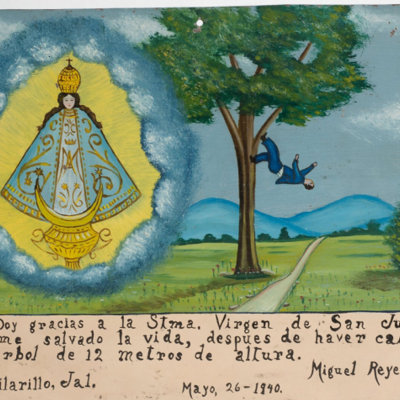
Episode 6: Holy Dirt, Posadas and Other Catholic Traditions
Episode 6: Holy Dirt, Posadas, and More Catholic Customs - Show Notes Image Credit: "Vow Gift to the Virgin of the Candelaria '[the Virgin of San Juan de los Lagos], Image and license info available at the website of the National Museum van Wereldculturen and Wereldmuseum, The Netherlands [https://collectie.wereldculturen.nl/#/query/d4d0c333-b50b-4eec-9c04-19937656e3eb]. (image dimensions modified). Episode Summary: We revisit the topic of holy dirt from our Bede episode again and have a more informal conversation on the history of some Catholic customs. Some of these customs are backed by solid tradition, while others are more controversial. We discuss the interplay of fact and legend, the possible pre-Christian roots of some traditions, and whether any of these cross the line into superstition. We are sure there is much more to learn and understand about each of these traditions, so please take our speculations with at least a small grain of salt this time around. For example, one correction to the episode: the Virgin of San Juan de Los Lagos is a statue/figurine and was not originally connected with an apparition per se, but rather a famous healing credited to the Blessed Virgin Mary. All that said, we hope this discussion is thought provoking. Here are some customs and beliefs we discussed: • Posadas and devotions to baby Jesus in Mexican culture • Food, such as obleas (Latin American candy based on communion wafers) • Devotion to St. Christopher, patron saint of safe travels • Burying a St. Joseph statute to sell a house and possible origins (for example, St. Andre Bessette) • More sacred dirt - eating the dust from San Juan de los Lagos; St. Helena's use of dirt from Jerusalem at Santa Croce in Rome; and the story of Naaman from the Old Testament (see 2 Kings 5:17). Sources Books: • A History of the Church in 100 Objects by Mike Aquilina and Grace Aquilina (Notre Dame: Ave Maria Press, 2017). • The Catholic All Year Compendium: Living Liturgically for Real Life _by Kendra Tierney (San Francisco: Ignatius Press, 2018). • _The Golden Legend by Jacobus de Vroagine - Includes the traditional story of St. Christopher and many, many other saints. (Available online from Fordham University [https://sourcebooks.fordham.edu/basis/goldenlegend/]). Articles Online: • "Night Adoration Growing among Hispanics" [https://denvercatholic.org/night-adoration-growing-among-hispanics/] (Denver Catholic, Dec. 7, 2013) • "Geofagia: por que hay gente que no puede parar de comer tierra" [https://www.bbc.com/mundo/vert-fut-36750202] by Josh Gabbatiss (BBC News Mundo, July. 13, 2016) • "El Bable: Geofagia: La 'tierrita' de San Juan y la extrana costumbre de comer tierra" [http://vamonosalbable.blogspot.com/2013/06/la-tierrita-de-san-juan-y-la-extrana.html?m=1] (El Bable, Jun. 12, 2013). • "Mexican Christmas Traditions" [https://blog.xcaret.com/en/mexican-christmas-traditions/] by Dante Arias (Xcaret Blog, Dec. 21, 2016). • "St. Christopher" [http://www.newadvent.org/cathen/03728a.htm] (New Advent Catholic Encylcopedia) • "Whatever Happened to St. Christopher? Is He Still a Saint?" [http://catholicstraightanswers.com/whatever-happened-to-st-christopher-is-he-still-a-saint/] (Catholic Straight Answers) • "Did the Church declare that St. Christopher is a myth?" [https://www.catholic.com/qa/did-the-church-declare-that-st-christopher-is-a-myth] (Catholic Answers) • "The Sellers' Saint" [https://www.washingtonpost.com/archive/realestate/1990/10/06/the-sellers-saint/9463ef55-f3ab-4571-b217-fc030e3e3129/] (Washington Post, Oct. 6, 1990) • "Saint André Bessette: Montreal’s Miracle Worker" [https://catholicism.org/br-andre.html] by Brother Andre Marie (Catholicism.org, Oct. 25, 2004) Intro Music Credit: *Special Thank You to Paul Spring for allowing us to use his song "Itasca" from the album Borderline EP (2014)!
Choose your subscription
Most popular
Limited Offer
Premium
20 hours of audiobooks
Podcasts only on Podimo
No ads in Podimo shows
Cancel anytime
1 month for 9 kr.
Then 99 kr. / month
Premium Plus
Unlimited audiobooks
Podcasts only on Podimo
No ads in Podimo shows
Cancel anytime
Start 7 days free trial
Then 129 kr. / month
Only on Podimo















Popular audiobooks




1 month for 9 kr. Then 99 kr. / month. Cancel anytime.