Words That Burn
engelsk
Videnskab & teknologi
Begrænset tilbud
2 måneder kun 19 kr.
Derefter 99 kr. / månedOpsig når som helst.
- 20 lydbogstimer pr. måned
- Podcasts kun på Podimo
- Gratis podcasts
Læs mere Words That Burn
Are you curious about poetry but find it a bit intimidating? Tune into Words that Burn, the podcast that aims to demystify poetry, one captivating poem at a time.Hosted by Ben, an Irish poetry enthusiast, this podcast takes a closer look at the world of poetic expression and technique.Each episode offers a comprehensive analysis of a selected poem, exploring the poet's biography, the cultural and historical backdrop, and the literary techniques that make these works profoundly moving.Whether you're a seasoned poetry aficionado or a curious beginner, Words that Burn provides an engaging and approachable way to enhance your appreciation and understanding of poetry. Hosted on Acast. See acast.com/privacy for more information.
Alle episoder
89 episoder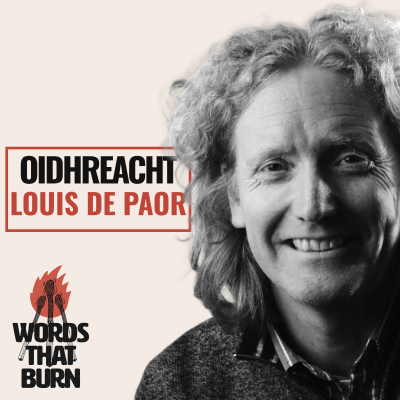
Oidhreacht by Louis De Paor
Celebrate Seachtain na Gaeilge with a closer look at "Oidhreacht" (Heredity), a powerful piece by Irish poet and Gaeilgeoir, Louis De Paor. In this episode of Words That Burn, we explore the complex psychogeography of Ireland and the tension between holding onto the past and embracing the future of the Irish language. Discover how De Paor captures generational trauma and linguistic lineage through striking metaphors, from an ancient, shouting Ogham stone to a snarled tooth that evokes the myth of the Salmon of Knowledge (Bradán Feasa). We also unpack the cultural tug-of-war that helped shape modern Gaeilge, highlighting how the modernization of the language is not a betrayal, but a necessity. This episode takes a loot at: * An in-depth analysis of the poem "Oidhreacht" (Heredity) and its exploration of Irish identity and guilt. * The history of Innti, a radical 1970s literary journal that brought beat poetry techniques to Irish language literature. * The historic clash between "old school" Nativists seeking to preserve a pure, pastoral form of Gaeilge and the progressive movement striving for modern European influence. * How De Paor expertly weaves the folklore of Fionn mac Cumhaill and the Salmon of Knowledge into his modern reflections. Theo Dorgan Essay [https://www.researchgate.net/publication/378867446_AN_LEABHAR_MOR_THE_GREAT_BOOK_OF_GAELIC/link/65ef1d659ab2af0ef8aed944/download?_tp=eyJjb250ZXh0Ijp7ImZpcnN0UGFnZSI6InB1YmxpY2F0aW9uIiwicGFnZSI6InB1YmxpY2F0aW9uIn19] Follow the Podcast: Read the Script on Substack [https://open.substack.com/pub/wordsthatburn/p/oidhreacht-by-louis-de-paor?r=th4eb&utm_campaign=post&utm_medium=web&showWelcomeOnShare=true] Follow the Podcast On Instagram [https://www.instagram.com/wordsthatburnpodcast/] Follow the Podcast on X/Twitter [https://twitter.com/wordsthatburn] Follow the Podcast on Tiktok [https://www.tiktok.com/@wordsthatburn2?lang=en] Follow the podcast on Bluesky [https://bsky.app/profile/wordsthatburn.bsky.social] The Music In This Week's Episode: 'Memories Of Stone' by Scott Buckley - released under CC-BY 4.0. www.scottbuckley.com.au ---------------------------------------- Hosted on Acast. See acast.com/privacy [https://acast.com/privacy] for more information.
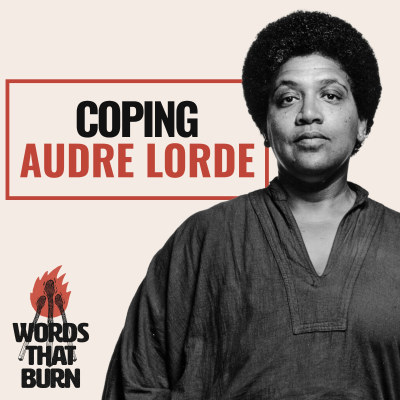
Coping by Audre Lorde
Does the constant barrage of global news make you want to turn off the screens and bury your head? You aren’t alone. In a world that feels like a "round puddle of sunless water," how do we keep going? In this episode of Words That Burn, I analyse Audre Lorde’s powerful poem, "Coping." Written by the self-described "Black lesbian mother warrior poet," this piece from The Black Unicorn collection offers a vital lesson on resilience, parenting as revolution, and the refusal to drown easily. We explore Lorde’s legacy as a "bridge builder" and how her seminal philosophies, including The Master's Tools Will Never Dismantle The Master's House; inform this seemingly simple image of a boy bailing rainwater from a garden. In this episode, I cover: * The Poem: A line-by-line analysis of "Coping" and its biblical vs. humanist metaphors. * The Context: How Lorde’s travels to Benin and her experience with motherhood shaped her activism. * The Philosophy: Understanding the "architecture of difference" and intersectionality. * The Takeaway: Why preserving "young seeds" is crucial for the future of society. If you are feeling the weight of the world, let Audre Lorde’s words be the spark you need to keep doing the work. Follow the Podcast: Read the Script on Substack [https://wordsthatburn.substack.com/p/coping-by-audre-lorde] Follow the Podcast On Instagram [https://www.instagram.com/wordsthatburnpodcast/] Follow the Podcast on X/Twitter [https://twitter.com/wordsthatburn] Follow the Podcast on Tiktok [https://www.tiktok.com/@wordsthatburn2?lang=en] Follow the podcast on Bluesky [https://bsky.app/profile/wordsthatburn.bsky.social] The Music In This Week's Episode: 'Penumbra' by Scott Buckley - released under CC-BY 4.0. www.scottbuckley.com.au ---------------------------------------- Hosted on Acast. See acast.com/privacy [https://acast.com/privacy] for more information.
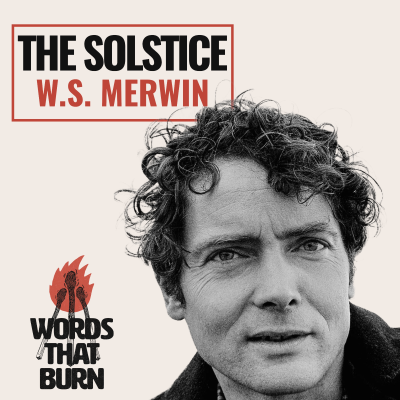
The Solstice by W.S. Merwin
In the final episode of Words That Burn for 2025, we turn our attention to the Winter Solstice, the shortest day of the year, and the American poet who captured its delicate balance of darkness and light: W.S. Merwin. This episode's poem "The Solstice," a work of minimalist verse that explores the intersection of nature, personal vulnerability, and the cyclical nature of time. This episode traces Merwin’s evolution from a rigid formalist to an experimental voice for environmental activism. It looks at how the poet was heavily influenced by the Vietnam War and the ecological fragility of his adopted home in Hawaii. As we close out a difficult year marked by global conflict and uncertainty, this episode asks: How do we find hope when the days seem at their darkest? Merwin’s work reminds us that even when the sun goes away, it always comes back. Topics Explored: * W.S. Merwin’s Evolution: From the classical influence of W.H. Auden to the stark, grounded style of The Lice. * Ecopoetry & Activism: How the Vietnam War and the destruction of Hawaiian flora (like the ʻōhiʻas and honeycreepers) radicalised Merwin’s work. * Poetic Analysis: Deconstructing the structure of "The Solstice" and how its shrinking stanzas mimic the dwindling daylight of December 21st. Follow the Podcast: Read the Script on Substack [https://open.substack.com/pub/wordsthatburn/p/the-solstice-by-ws-merwin?r=th4eb&utm_campaign=post&utm_medium=web&showWelcomeOnShare=true] Follow the Podcast On Instagram [https://www.instagram.com/wordsthatburnpodcast/] Follow the Podcast on X/Twitter [https://twitter.com/wordsthatburn] Follow the Podcast on Tiktok [https://www.tiktok.com/@wordsthatburn2?lang=en] Follow the podcast on Bluesky [https://bsky.app/profile/wordsthatburn.bsky.social] The Music In This Week's Episode: 'Penumbra' by Scott Buckley - released under CC-BY 4.0. www.scottbuckley.com.au ---------------------------------------- Hosted on Acast. See acast.com/privacy [https://acast.com/privacy] for more information.
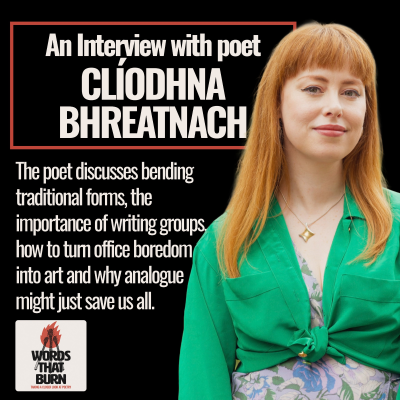
An Interview with Irish Poet Clíodhna Bhreatnach
In this episode of Words That Burn, I'm joined by Irish poet Clíodhna Bhreatnach to discuss her debut pamphlet, Pink Roses and Green. Together, we chat about a collection that sits at the intersection of the "nine-to-five grind," Millennial burnout, and a deep, tactile longing for the natural world. Clíodhna breaks down her unique approach to the "Millennial Lyric"; moving away from the pastoral and into the office kitchenette. We discuss how she navigates the Post-Celtic Tiger landscape, using poetry to document the deformation of human time under late-stage capitalism. We cover other topics like: * The Romantic Office: Applying the philosophy of Keats and Wordsworth to photocopiers and Excel spreadsheets. * Digital Intimacy: Finding beauty in the "randomised screensavers" of Windows desktops. * The "Sick Addiction to Soft Things": Why tactile textures (paper, nature) are vital in a digital world. * Writers Groups: The importance of community (specifically the Frustrated Writers Group) in banishing impostor syndrome. REFERENCES & RECOMMENDATIONS: * Bandit Country by James Conor Patterson * Unstoppable Utopia by Cassandra Moss * The Perfect Season by Sean Pearson * The Lover's Discourse by Anahid Nersessian (Criticism on Keats) About the poet: Clíodhna Bhreatnach is from Waterford and lives in Dublin. Her poems have appeared in Poetry Ireland Review, The Stinging Fly, and The Forward Book of Poetry 2023. She has recently been awarded a Dublin City Council Arts Bursary for 2025. She is the former poetry editor of Frustrated Writers Group. Find the book and the poet: https://cliodhnabhreatnach.com [https://cliodhnabhreatnach.com/] https://greenbottlepress.com/product/pink-roses-green-by-cliodhna-bhreatnach/ [https://greenbottlepress.com/product/pink-roses-green-by-cliodhna-bhreatnach/] Follow the Podcast: Read the Interview on Substack [https://open.substack.com/pub/wordsthatburn/p/an-interview-with-irish-poet-cliodhna?r=th4eb&utm_campaign=post&utm_medium=web&showWelcomeOnShare=true] Follow the Podcast On Instagram [https://www.instagram.com/wordsthatburnpodcast/] Follow the Podcast on X/Twitter [https://twitter.com/wordsthatburn] Follow the Podcast on Tiktok [https://www.tiktok.com/@wordsthatburn2?lang=en] Follow the podcast on Bluesky [https://bsky.app/profile/wordsthatburn.bsky.social] ---------------------------------------- Hosted on Acast. See acast.com/privacy [https://acast.com/privacy] for more information.
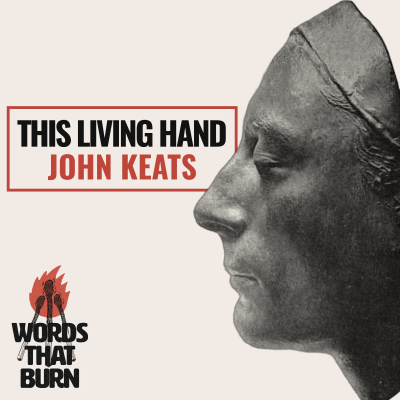
This Living Hand by John Keats
For Halloween 2025, Words That Burn resurrects one of the most chilling poems in English literature: "This Living Hand" by John Keats. This short, macabre poem wasn't published until 77 years after Keats's death, making it feel like a genuine message from beyond the grave. In this special episode, we explore the poem's dark, gothic imagery and the terrifying "strange bargain" it offers the reader. We dissect its uncanny duality, its sense of dread, and the horrifying biographical context of Keats's final days; a "posthumous existence" of body horror that forged this masterpiece. I look at the poem's vampiric mechanism and Keats's desperate plea, not only for a transfusion of life, but for the artistic immortality he feared he'd never achieve. This episode covers: * The dark history of Keats's "This Living Hand." * How Keats's embrace of darkness ("the burden of mystery") set him apart from other Romantic poets. * A close reading of the poem's body horror, from "earnest grasping" to the "icy silence of the tomb." * The link between Keats's final, agonising days and the poem's "vampiric" plea for life. * Why this poem is a perfect, terrifying read for the Halloween season. Follow the Podcast: Read the Script on Substack [https://open.substack.com/pub/wordsthatburn/p/this-living-hand-by-john-keats?r=th4eb&utm_campaign=post&utm_medium=web&showWelcomeOnShare=true] Follow the Podcast On Instagram [https://www.instagram.com/wordsthatburnpodcast/] Follow the Podcast on X/Twitter [https://twitter.com/wordsthatburn] Follow the Podcast on Tiktok [https://www.tiktok.com/@wordsthatburn2?lang=en] Follow the podcast on Bluesky [https://bsky.app/profile/wordsthatburn.bsky.social] The Music In This Week's Episode: 'Soul Searcher' by Scott Buckley - released under CC-BY 4.0. www.scottbuckley.com.au ---------------------------------------- Hosted on Acast. See acast.com/privacy [https://acast.com/privacy] for more information.
Vælg dit abonnement
Mest populære
Begrænset tilbud
Premium
20 timers lydbøger
Podcasts kun på Podimo
Ingen reklamer i podcasts fra Podimo
Opsig når som helst
2 måneder kun 19 kr.
Derefter 99 kr. / måned
Premium Plus
100 timers lydbøger
Podcasts kun på Podimo
Ingen reklamer i podcasts fra Podimo
Opsig når som helst
Prøv gratis i 7 dage
Derefter 129 kr. / måned
Kun på Podimo












Populære lydbøger




2 måneder kun 19 kr. Derefter 99 kr. / måned. Opsig når som helst.