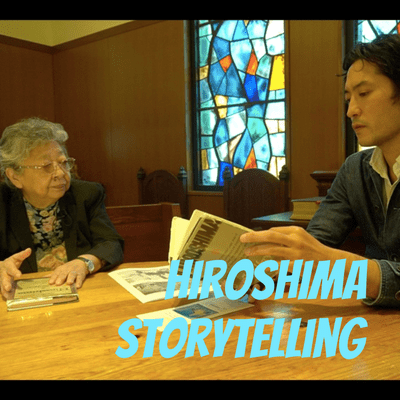
HIROSHIMA by John Hersey / Storytelling
inglés
Cultura y ocio
Disfruta 30 días gratis
4,99 € / mes después de la prueba.Cancela cuando quieras.
- 20 horas de audiolibros / mes
- Podcasts solo en Podimo
- Podcast gratuitos
Acerca de HIROSHIMA by John Hersey / Storytelling
HIROSHIMA is a book written by an American journalist John Hersey, documented six survivors who experienced the atomic bombing on August 6, 1945, in Hiroshima, Japan. This reportage is precisely illustrating the people’s perspectives and perceptions who were on the ground at that time. On this Podcast, 6 artists from Japan and UK. will read the simultaneous stories of 6 survivors. Readers Junya Ishii, Noriko Okaku, Hisashi Yamauchi, Jon Bonnici, Koichi Yamanoha, Sayaka Botanic Music: Koichi Ymnha Produce: Junya Ishii Special Thanx: Koko Kondo, The Tanimoto Peace Foundation, Sam LaBonte
Todos los episodios
7 episodios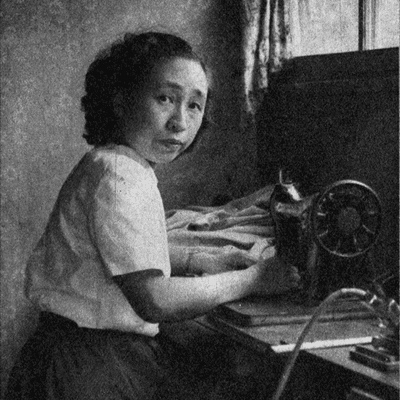
Chapter 1. / 7 / Ms. Toshiko Sasaki / read by Sayaka Botanic
Miss Toshiko Sasaki, the East Asia Tin Works clerk, who is not related to Dr. Sasaki, got up at three o’clock in the morning on the day the bomb fell. There was extra housework to do. Her eleven-month-old brother, Akio, had come down the day before with a serious stomach upset; her mother had taken him to the Tamura Pediatric Hospital and was staying there with him. Miss Sasaki, who was about twenty, had to cook breakfast for her father, a brother, a sister, and herself, and—since the hospital, because of the war, was unable to provide food—to prepare a whole day’s meals for her mother and the baby, in time for her father, who worked in a factory making rubber earplugs for artillery crews, to take the food by on his way to the plant.... read by Sayaka Botanic
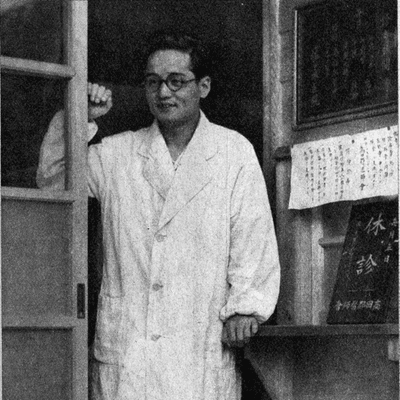
Chapter 1. / 6 / Dr. Terafumi Sasaki / read by Koichi Ymnha
On the train on the way into Hiroshima from the country, where he lived with his mother, Dr. Terufumi Sasaki, the Red Cross Hospital surgeon, thought over an unpleasant nightmare he had had the night before. His mother’s home was in Mukaihara, thirty miles from the city, and it took him two hours by train and tram to reach the hospital. He had slept uneasily all night and had wakened an hour earlier than usual, and, feeling sluggish and slightly feverish, had debated whether to go to the hospital at all; his sense of duty finally forced him to go, and he had started out on an earlier train than he took most mornings. The dream had particularly frightened him because it was so closely associated, on the surface at least, with a disturbing actuality.....
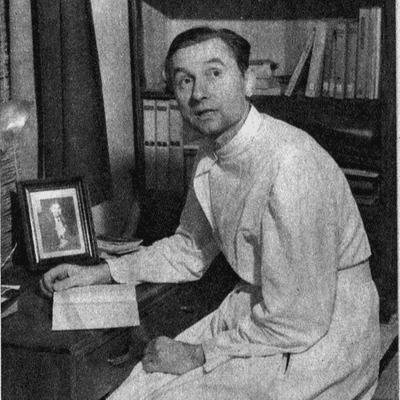
Chapter 1. / 5 / Father Wilhelm Kleinsorge / read by Jon Bonnici
Father Wilhelm Kleinsorge, of the Society of Jesus, was, on the morning of the explosion, in rather frail condition. The Japanese wartime diet had not sustained him, and he felt the strain of being a foreigner in an increasingly xenophobic Japan; even a German, since the defeat of the Fatherland, was unpopular. Father Kleinsorge had, at thirty-eight, the look of a boy growing too fast—thin in the face, with a prominent Adam’s apple, a hollow chest, dangling hands, big feet. He walked clumsily, leaning forward a little. He was tired all the time. To make matters worse, he had suffered for two days, along with Father Cieslik, a fellow-priest, from a rather painful and urgent diarrhea, which they blamed on the beans and black ration bread they were obliged to eat. Two other priests then living in the mission compound, which was in the Nobori-cho section—Father Superior LaSalle and Father Schiffer—had happily escaped this affliction.... Read by Jon Bonnici Music by Koichi Ymnha
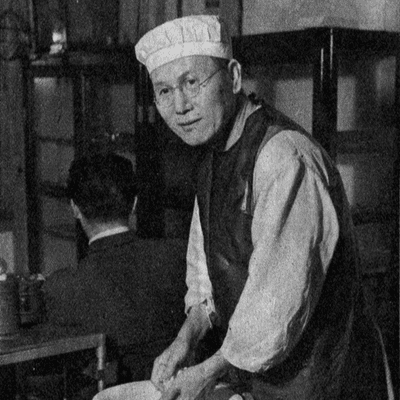
Chapter 1. / 4 / Dr. Masakazu Fujii / read by Hisashi Yamauchi
In the days right before the bombing, Dr. Masakazu Fujii, being prosperous, hedonistic, and, at the time, not too busy, had been allowing himself the luxury of sleeping until nine or nine-thirty, but fortunately he had to get up early the morning the bomb was dropped to see a house guest off on a train. He rose at six, and half an hour later walked with his friend to the station, not far away, across two of the rivers. He was back home by seven, just as the siren sounded its sustained warning. He ate breakfast and then, because the morning was already hot, undressed down to his underwear and went out on the porch to read the paper. This porch—in fact, the whole building—was curiously constructed. Dr. Fujii was the proprietor of a peculiarly Japanese institution, a private, single-doctor hospital..... Read by Hisashi Yamauchi Music by Koichi Ymnha

Chapter 1. / 3 / Mrs. Hatsuyo Nakamura / read by Noriko Okaku
At nearly midnight, the night before the bomb was dropped, an announcer on the city’s radio station said that about two hundred B-29s were approaching southern Honshu and advised the population of Hiroshima to evacuate to their designated “safe areas.” Mrs. Hatsuyo Nakamura, the tailor’s widow, who lived in the section called Nobori-cho and who had long had a habit of doing as she was told, got her three children—a ten-year-old boy, Toshio, an eight-year-old girl, Yaeko, and a five-year-old girl, Myeko—out of bed and dressed them and walked with them to the military area known as the East Parade Ground, on the northeast edge of the city. There she unrolled some mats and the children lay down on them. They slept until about two, when they were awakened by the roar of the planes going over Hiroshima.... Read by Noriko Okaku Music by Koichi Ymnha
Elige tu suscripción
Premium
20 horas de audiolibros
Podcasts solo en Podimo
Podcast gratuitos
Cancela cuando quieras
Disfruta 30 días gratis
Después 4,99 € / month
Premium Plus
100 horas de audiolibros
Podcasts solo en Podimo
Podcast gratuitos
Cancela cuando quieras
Disfruta 30 días gratis
Después 9,99 € / month
Sólo en Podimo










Audiolibros populares





Disfruta 30 días gratis. 4,99 € / mes después de la prueba. Cancela cuando quieras.