ProductLed Podcast
inglés
Negocios
Empieza 7 días de prueba
$99 / mes después de la prueba.Cancela cuando quieras.
- 20 horas de audiolibros al mes
- Podcasts solo en Podimo
- Podcast gratuitos
Acerca de ProductLed Podcast
The ProductLed Podcast is a weekly interview series with both product-led growth leaders and practitioners who have real knowledge to share on what it takes to use their product to grow a business.
Todos los episodios
309 episodios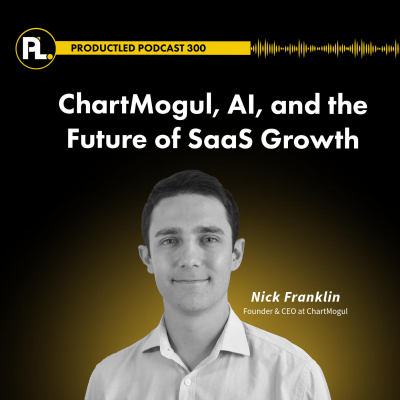
ChartMogul, AI, and the Future of SaaS Growth
In this episode of the ProductLed Podcast, Wes Bush and Esben Friis-Jensen sit down with Nick Franklin, founder and CEO of ChartMogul, to talk about what is really happening in SaaS right now. Nick shares what he is seeing across 3,000+ subscription businesses and why the last three years have been the most disruptive period in SaaS history. He explains why AI startups are still buying traditional SaaS tools, why subscription pricing is far from dead, and how customer expectations have changed fast. Faster time to value, more functionality, and lower prices are now the baseline. The conversation also gets into how ChartMogul is adapting. Nick talks about their move into CRM, why combining revenue analytics with customer context creates new opportunities, and how AI can unlock deeper insights from complex subscription data. He also responds to the big question facing analytics companies today: if LLMs can query data directly, what role does a platform like ChartMogul play? Beyond strategy, Nick shares a grounded view on moats, competition, and what actually matters most in building a durable SaaS company. His answer is refreshingly simple: build a great product, charge fairly, support customers well, and keep improving every day. It is a thoughtful conversation on SaaS survival, product strategy, and what it takes to stay relevant in an AI-first world. Key Highlights: * 02:43 - AI Startups Are Still Buying SaaS Nick shares one of the more surprising trends from ChartMogul’s customer base. A big share of new customers are AI startups, and many of them are still using classic subscription pricing. * 03:53 - Why SaaS Has Had Its Hardest 3 Years Nick explains why the last few years have been so tough for SaaS, from the post-COVID reset to higher interest rates and tighter funding. * 08:03 - More Value, Less Money, Faster Delivery Wes and Nick unpack how buyer expectations have changed. SaaS products now need to deliver more value, reduce friction, and help customers get results much faster. * 10:45 - Why ChartMogul Went Multi-Product Nick breaks down the move into CRM and why bringing together revenue analytics, customer history, and interactions creates a much stronger product. * 12:35 - How AI Can Unlock Deeper Analytics Rather than replacing analytics tools, Nick sees AI as a way to help customers get more value from complex data through more natural questions and faster insight discovery. * 15:25 - Can LLMs Replace Subscription Analytics Tools? Wes pushes on the biggest threat facing analytics platforms, and Nick explains why clean data, normalized metrics, domain expertise, and strong tooling still matter. * 21:25 - Why Vibe Coding Won’t Replace SaaS The team talks about why most founders should use AI to speed up their own roadmap instead of trying to rebuild products like Slack, Notion, or HubSpot internally. * 26:28 - Moats, Benchmarks, and the Bloomberg of SaaS Nick shares how ChartMogul thinks about defensibility through benchmarking data, expert-led content, partner networks, and long-term trust. * 33:39 - The New “Wow” for Analytics Products Nick talks about why basic metrics are no longer enough, what customers expect now, and how ChartMogul is thinking about creating more signal and insight. * 46:16 - What Keeps Nick Building After 10+ Years To close, Nick reflects on why he is still building, what gives the work meaning, and why creating something lasting matters more than chasing an exit. Resources: * 🚀 ChartMogul [https://chartmogul.com]: Subscription analytics platform * 💼 Connect with Nick Franklin [https://www.linkedin.com/in/nickfranklin/] on LinkedIn: * 💼 Connect with Wes Bush [https://www.linkedin.com/in/wesbush/]on LinkedIn * 💼 Connect with Esben Friis-Jensen [https://www.linkedin.com/in/esbenfriisjensen/] on LinkedIn: * 🧠 Sign up for the ProductLed Newsletter [https://www.productled.com/newsletter]

The GPU Gold Rush: How Vast.ai Scaled With AI Demand
In this episode of the ProductLed Podcast, Wes Bush and Esben Friis-Jensen sit down with Travis Cannell, CEO and first employee at Vast.ai, the marketplace for on-demand, low-cost GPUs powering AI workloads around the world. Travis breaks down one of the biggest shifts happening in AI right now: the rise of inference. He explains why inference demand is exploding, how that shift is fueling Vast.ai’s rapid growth, and why more teams are looking for flexible, affordable GPU access outside of traditional cloud platforms. The conversation also gets into how Vast.ai built a two-sided GPU marketplace with 20,000 GPUs, why its pricing model creates powerful marketplace dynamics, and what makes its software-first approach difficult to replicate. Travis shares how the company thinks about competition, customer support, GPU hosting economics, and why winning in a fast-growing marketplace depends on much more than just low prices. They also explore how AI is changing org design inside high-growth companies. Travis talks candidly about pausing hiring, using AI to accelerate engineering work, and why Vast.ai has leaned into an in-office culture while staying extremely lean. If you want a clearer picture of where AI infrastructure is heading, and how one company is scaling quickly with a software-first model, this episode is packed with insight. Key Highlights: * 02:34 - Why Inference Is Fueling the Next AI Boom * 04:15 - Inference Explained in Plain English * 06:15 - The Moment Vast.ai Hit Hypergrowth * 10:04 - Why Teams Choose Vast Over AWS * 12:34 - Building a Two-Sided GPU Marketplace * 17:03 - Competing on More Than Just Price * 18:52 - The Real Economics of Hosting GPUs * 25:21 - The Network Effects Behind Vast.ai * 31:31 - Building a Lean Team During Hypergrowth * 36:09 - Why AI Changed Their Hiring Strategy Resources: * 🚀 Vast.ai: Marketplace for low-cost GPUs: https://vast.ai [https://vast.ai] * 💼 Connect with Travis Cannell on LinkedIn: https://www.linkedin.com/in/traviscannell/ [https://www.linkedin.com/in/traviscannell/] * 💼 Connect with Wes Bush on LinkedIn: https://www.linkedin.com/in/wesbush/ [https://www.linkedin.com/in/wesbush/] * 💼 Connect with Esben Friis-Jensen on LinkedIn: https://www.linkedin.com/in/esbenfriisjensen/ [https://www.linkedin.com/in/esbenfriisjensen/] * 🧠 Sign up for the ProductLed Newsletter: https://www.productled.com/newsletter [https://www.productled.com/newsletter]
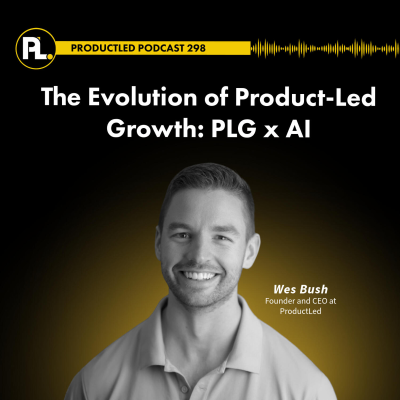
The Evolution of Product-Led Growth: PLG x AI
In this episode, Wes breaks down how PLG is evolving and why the fastest-growing AI companies are still using it, just with a completely different playbook. The old model was about reducing friction. The new model is about doing the work for the user. It starts with Shutterstock, a company that had PLG nailed for years. But once AI image generators arrived, everything changed. Users no longer wanted to browse and compare endless options. They wanted to type what they needed and get the result instantly. That same shift is now reshaping software everywhere. You’ll also hear examples like Google Slides vs. Gamma, Stack Overflow vs. Cursor, and Westlaw vs. Harvey, where AI-native products are not just easier to use. They are taking on more of the actual work. The episode also breaks down the three versions of PLG. PLG 1.0 is built for builders. PLG 2.0 is powered by AI and built for editors. PLG 3.0 goes even further, with agents completing work on the user’s behalf. As products move through these stages, time to value drops and market potential grows. If you are building a product-led company, this episode will challenge how you think about growth, user expectations, and what it takes to win in an AI-first market. Key Highlights: 0:00 - Why PLG is evolving 0:19 - The Shutterstock example 1:24 - From reducing friction to doing the work 1:32 - Google Slides vs. Gamma 2:23 - Stack Overflow vs. Cursor 2:39 - Westlaw vs. Harvey 3:23 - The three versions of PLG 4:32 - What defines PLG 2.0 5:24 - How AI expands TAM 7:53 - What PLG 3.0 looks like 11:03 - Which version are you building for? Resources: Shutterstock: https://www.shutterstock.com [https://www.shutterstock.com] Gamma: https://gamma.app [https://gamma.app] Cursor: https://www.cursor.com [https://www.cursor.com] Harvey: https://www.harvey.ai [https://www.harvey.ai] Westlaw: https://legal.thomsonreuters.com/en/products/westlaw [https://legal.thomsonreuters.com/en/products/westlaw] 💼 Connect with Wes Bush on LinkedIn: https://www.linkedin.com/in/wesbush/ [https://www.linkedin.com/in/wesbush/] 🧠 Sign up for the ProductLed Newsletter: https://www.productled.com/newsletter [https://www.productled.com/newsletter]
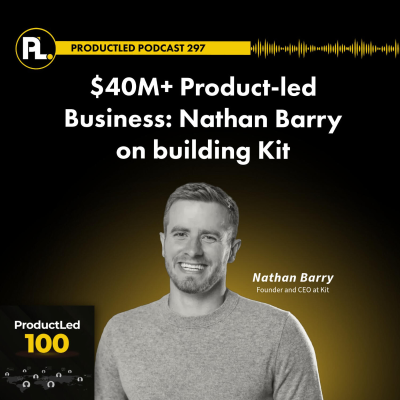
$40M+ Product-led Business: Nathan Barry on building Kit
What does it really take to build a great product? In this episode, Wes Bush talks with Nathan Barry, CEO of Kit, about how they’ve built a product-led business doing $40M+ in revenue. Nathan shares why staying close to customers matters so much, how Kit builds empathy across the team, and why the best product insights often come from watching users, not just collecting requests. They also get into what makes a product feel great to use, how Kit reduces friction with session recordings and gradual rollouts, and why free plans can be a smart long-term growth move. If you’re building a product-led company, this episode is full of practical lessons on product quality, customer understanding, and playing the long game. Key Highlights: * 0:54 - Kit’s transparency as a growth lever * 02:26 - The successful product flywheel * 02:37 - Why analytics only tell part of the story * 06:29 - How Kit builds empathy across the team * 12:58 - What “best product” really means * 14:04 - Designing speed and polish users can feel * 18:29 - Building a culture that cares about quality * 23:08 - Reducing friction with data and rollouts * 30:19 - Free plans, moats, and long-term growth Resources: * Kit: https://kit.com [https://kit.com] * Connect with Nathan Barry on LinkedIn: https://www.linkedin.com/in/nathanbarry/ [https://www.linkedin.com/in/nathanbarry/] * 💼 Connect with Wes Bush on LinkedIn: https://www.linkedin.com/in/wesbush/ [https://www.linkedin.com/in/wesbush/] * 💼 Connect with Esben Friis-Jensen on LinkedIn: https://www.linkedin.com/in/esbenfriisjensen/ [https://www.linkedin.com/in/esbenfriisjensen/] * 🧠 Sign up for the ProductLed Newsletter: https://www.productled.com/newsletter [https://www.productled.com/newsletter]
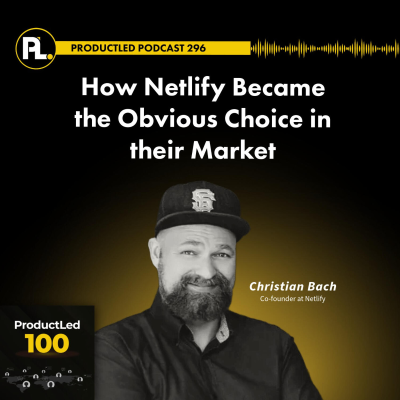
How Netlify Became the Obvious Choice in their Market
Chris Bach, founder of Netlify, joins Wes Bush and Esben Friis-Jensen to break down how Netlify became a default choice in modern web development. Chris shares how Netlify started as a bet on a new web architecture that moved beyond monolithic applications, and why bottom-up adoption through developers was not optional, but the only viable go-to-market path. They dig into what many founders skip: building a clear worldview of how the market is evolving, then reverse-engineering what needs to exist for that future to become real. Chris explains how this approach shaped Netlify’s early product decisions, its ecosystem strategy, and the narrative that helped attract users, partners, and investors. The conversation also tackles a common founder dilemma: product-led vs. sales-led. Chris offers a simple filter, if you cannot deliver a “magic moment” quickly for an individual user, PLG may be the wrong motion. He also argues that trying to do both sales-led and product-led at the same time often leads to doing neither well. Finally, Chris shares how his investing approach grew out of ecosystem-building, why learning requires asking “stupid” questions, and how he now thinks about the next wave: agents as the new “user,” and the infrastructure required to support them. Key Highlights * 00:00 – Why Netlify Became the “Obvious Choice” Wes introduces Chris and tees up the core theme: building a compelling worldview and executing it until the market sees your product as the default. * 00:00:59 – Netlify’s Mission: Escape the Monolith Chris explains Netlify’s original bet on a new web architecture and why early enterprise use cases were limited without a supporting ecosystem. * 00:03:34 – When PLG Works: Start With the “Magic Moment” A practical filter for founders: if an individual user cannot quickly experience value, PLG may be a mismatch. * 00:07:31 – Pick a Motion First: Hybrid Comes Later Chris warns against trying to do sales-led and product-led at the same time, especially with limited startup resources. * 00:11:17 – The Worldview Advantage: Context Before Product How Netlify spent serious time mapping where the web was headed, then reverse-engineered what they needed to build first. * 00:15:41 – Storytelling That Wins: Small Story vs. Big Story Why messaging must change depending on the audience, and how Netlify avoided being boxed in as “just hosting.” * 00:25:17 – Category Creation: Why Jamstack Mattered * Chris shares how coining “Jamstack” worked because it benefited the whole ecosystem, not just Netlify’s marketing. * 00:29:08 – Ecosystem Fuel: Directories, OSS, and Deploy Previews * Tactics that helped win developer mindshare, including community resources and making open source easy to deploy. * 00:32:31 – The First 20: Targeting Influential Early Adopters * Netlify’s early focus was literally a list of 20 key people, then expanding in concentric circles from there. * 00:35:34 – The Next Shift: Agents, Dynamic Web, and AX * Chris outlines his view of an AI-generated, on-the-fly web and why “agent experience” becomes a critical product frontier. Resources * 🚀 Netlify: https://www.netlify.com/ [https://www.netlify.com/] * 💼 Connect with Chris Bach on LinkedIn: https://www.linkedin.com/in/chrisbach/ [https://www.linkedin.com/in/chrisbach/] * 💼 Connect with Wes Bush on LinkedIn: https://www.linkedin.com/in/wesbush/ [https://www.linkedin.com/in/wesbush/] * 💼 Connect with Esben Friis-Jensen on LinkedIn: https://www.linkedin.com/in/esbenfriisjensen/ [https://www.linkedin.com/in/esbenfriisjensen/] * 🧠 Sign up for the ProductLed Newsletter: https://www.productled.com/newsletter [https://www.productled.com/newsletter]
Elige tu suscripción
Más populares
Premium
20 horas de audiolibros
Podcasts solo en Podimo
Disfruta los shows de Podimo sin anuncios
Cancela cuando quieras
Empieza 7 días de prueba
Después $99 / mes
Sólo en Podimo






















Audiolibros populares













Empieza 7 días de prueba. $99 / mes después de la prueba. Cancela cuando quieras.