Growing the Future
Engels
Technologie en Wetenschap
Tijdelijke aanbieding
1 maand voor € 1
Daarna € 9,99 / maandElk moment opzegbaar.
- 20 uur luisterboeken / maand
- Podcasts die je alleen op Podimo hoort
- Gratis podcasts
Over Growing the Future
CONVERSATIONS THAT MATTER. The Growing the Future Podcast features conversations on innovation, entrepreneurship, and personal and professional growth in the agriculture community.
Alle afleveringen
154 afleveringen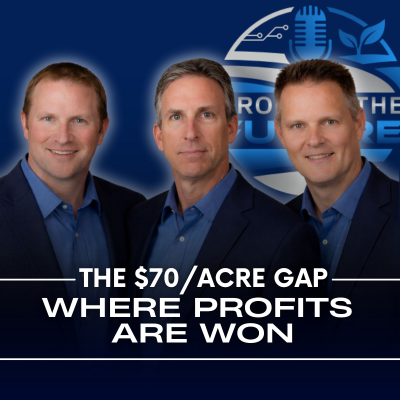
The $70/Acre Gap: What Separates Good Farms from Great Ones
The data is in. Farms that perform better... perform a lot better. And the gap isn't luck. In this live webinar event from Growing the Future Productions, host Dan Aberhart sits down with three of the sharpest minds working on Saskatchewan farms right now — Darren Sander of Crop-Aid Nutrition, Dave Norris of Norris Crop Consulting, and Todd Rowan of IXL Innovations — for a frank, no-sugarcoating conversation about what separates the producers clearing big margins from the ones leaving money on the table. The number? Somewhere between $50 and $100 per acre. Every single year. Compounded over a decade — it's not a number. It's a different life. What gets covered in this episode: Soil Health & the First 30 Days — Darren makes the case that the first 30 days of a crop dictates maximum yield potential. Not the last 30. The first. That reframe alone is worth your time. He also talks about how a soil health program let his operation move from a three-crop rotation to two — and pencil out better. Earthworms optional, but encouraged. (00:04:00) — Darren breaks down the incremental gains philosophy: fertilizer protection, stress reduction, nutrient use efficiency, and how every acre should be growing the crop it's best suited to grow. Grain Marketing & the Probability Game — Dave Norris and Todd Rowan don't predict the future. They work with probabilities. And when warships started heading toward the Strait of Hormuz, they texted their clients to fill their fuel tanks. Fuel was $1.02. The downside risk was 93 cents. The upside was $1.50. That's not a prediction. That's a risk-reward conversation — and the producers who had that conversation in advance came out a lot better than the ones who watched the news. (00:09:00) — The panel unpacks why so many producers make decisions after it feels urgent, and why the best time to act is almost always when it doesn't. Crop Insurance, In-Season Pricing & the 2025-26 Landscape — It's the worst crop insurance environment since before 2021. The panel digs into what that means for in-season pricing on canola, wheat, and durum, and how to think about layering agri-stability on top when the base numbers aren't what they used to be. (00:22:00) — Dave and Todd walk through the mechanics of in-season pricing, the cash flow timing issue with SCIC payments, and how to think about selling new crop canola when fertilizer costs are still wildly elevated. The Fertilizer Problem Nobody's Talking About Enough — An estimated 400,000-tonne shortage of urea in Saskatchewan this year. Producers who didn't pre-buy are scrambling. The panel discusses how this reshapes planting decisions, top-dressing options, foliar programs as a partial substitute, and why the supply-demand models for yield estimates may be fundamentally broken this season. (00:33:00) — Todd flags what this means for crop rotation flexibility. When the only crop penciling out is canola, what happens to everything else? Macroeconomics, Gold, Oil & the Commodity Supercycle — Dave Norris had a supercycle bias since November. He didn't have a war in March as the trigger — he thought it would be El Niño. He wasn't entirely wrong. The panel talks about money flowing into commodities, what governments printing money means for grain prices, and why canola at $700 a tonne may not be the ceiling. (00:40:00) — The canary in the coal mine: when gold and silver started ripping, the smart money was already watching inflation and currency hedges. Farmers paying attention to macros have a structural edge over those only watching local basis. The $70 Poll — What the Audience Said — Dan ran a live poll with over 150 producers on the call. The majority landed between $50 and $100 per acre as the value of strong management decisions. Todd shared a real-world example: in 2021-22, clients who didn't over-contract and took in-season crop insurance pricing pocketed $18/bushel versus $12. Clients who panicked after 2021 and froze in 2022 took $17 off the combine when $22 was on the board. The math on those decisions — compounded over 10 years — is a different farm. (00:56:00) — The close. Dan pulls together the final takeaways from the audience word cloud, and the panel leaves producers with the most important thing of all: knowing when to act, and not waiting until it's obvious. Featured in this episode: * Dan Aberhart — Host, Growing the Future Productions * Darren Sander — Crop-Aid Nutrition * Dave Norris — Norris Crop Consulting * Todd Rowan — IXL Innovations More from Growing the Future: * Podcast: growingthefuturepodcast.ca * YouTube: Growing the Future Productions * Ground Truth Daily: Available wherever you listen to podcasts Register for the Convergence Conference at convergence.ag and stay updated by subscribing to the Growing the Future Podcast at growingthefuturepodcast.ca.
What Breaks First | Jeff Bennett's Raw Truth About Farming
2,333 days ago, Jeff Bennett was the second guest I ever had on this show. Different world. Different market. Different men. Since then we've lived through bull markets, bear markets, a pandemic, and all kinds of crazy in our personal lives. Jeff runs a grain farm in Saskatchewan while quietly building a parallel business out of his garage — custom laser engraved glass and wood pieces, high-end 3D crystal branding work. He didn't start building because it was trendy. He started building because five rough crop years forced a simple question: what do you control when the weather and the banks don't care? This conversation is not polished. It's not motivational. It's a farmer sitting across from me telling the truth about debt, structure, generational disconnect, and what it actually takes to keep going when the math doesn't work. If you farm, you'll feel this one. If you don't, you'll understand something about resilience you didn't before. Timestamps [00:00:00] Cold open — "What breaks first in your life?" [00:01:00] Dan's intro — 2,333 days since Jeff's first episode [00:03:00] What breaks first — Jeff on why breaking isn't an option [00:04:00] What Jeff refuses to depend on anymore [00:05:00] If your kids copied your current operating model [00:07:00] Why Jeff rates himself "just below jaded" on the industry [00:08:00] Five rough crop years and the financial reality no one talks about [00:10:00] "Agriculture is not struggling. Farmers are struggling." [00:11:00] What makes a good farmer — passing it to the next generation [00:13:00] Diversification that isn't just more agriculture [00:15:00] The difference between being tough and being stubborn [00:17:00] Why Dad can't help — the generational disconnect in farming [00:20:00] The economics gap — when a $100K off-farm job won't cover your nitrogen [00:24:00] Succession planning and the kind of help that actually works [00:25:00] "I don't think farming is a good business" — the structural problem [00:27:00] Who's actually making the money in agriculture? [00:29:00] The equipment deal Jeff regrets — and what it cost him [00:32:00] What Jeff would do with $5 million (the answer is boring and brilliant) [00:34:00] What people romanticize about farming that's just wrong [00:36:00] If everything works, what does Jeff's life actually look like? [00:38:00] His son Axel, a 3D printer, and teaching your kids they're not just farmers [00:41:00] If the farm disappeared tomorrow [00:43:00] Has Jeff ever thought about quitting? [00:45:00] "Farmers feed the world" — a belief Jeff doesn't hold [00:50:00] Advice to his younger self: "Buckle up kid. She's about to get rocky." Connect with us Growing the Future Podcast Website: https://www.growingthefuture.ca YouTube: https://www.youtube.com/@GrowingtheFuturePodcast LinkedIn: https://www.linkedin.com/company/growing-the-future Instagram: https://www.instagram.com/growingthefuturepodcast Join the Growing the Future Mastermind on Skool: https://www.skool.com/growing-the-future Register for the Convergence Conference at convergence.ag and stay updated by subscribing to the Growing the Future Podcast at growingthefuturepodcast.ca.
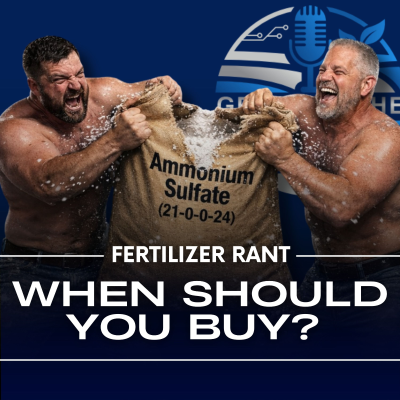
Fertilizer Rant with Mario Gaudet and Josh Linville
Spring 2026 is arriving with a fertilizer market that looks nothing like anything most producers have seen. Urea at $700 a short ton. Elemental sulfur up nearly 8x in 18 months. Global ammonia production down 30–35%. China not exporting. India running at 50–60% production capacity because they can't get LNG shipments through the Persian Gulf. And retailers across Saskatchewan are 30–40% behind on bookings. Josh Linville, one of the most followed voices in fertilizer on X, joined from a ski condo in Colorado. Mario Gaudet has been in the thick of the elemental sulfur trade and has the kind of inside knowledge that doesn't show up in the headlines. Together, they broke down what's actually happening, what even the best-case scenario looks like if the Strait reopens tomorrow (answer: not great), and what decisions producers need to be making right now. This one got into places you don't hear about in mainstream ag media. Why you can't have a green energy mandate without oil and gas refining. Why Morocco building a massive triple super phosphate plant now looks like genius. Why the US imports over 5 million tons of urea per year when North America is sitting on some of the cheapest natural gas in the world. And why the retailer down the road isn't willing to hold inventory anymore, even if he thinks you're going to need it. The practical advice coming out of this conversation was clear: talk to your retailer now, build a forecast together, buy in chunks to spread your risk, and don't cut the nutrition inputs that will cost you two bushels of corn per acre to save $5 upfront. As Josh put it, the market is undefeated, and nobody has ever sold every bushel of grain in one shot. Why would fertilizer be any different? Timestamps * [00:00:46] Setting the stage: Urea nearly doubled since December, global ammonia down 30–35%, spring is here * [00:02:16] Josh Linville's call: the worst economic environment for farmers he's ever seen * [00:05:18] Josh joins from a ski condo in Colorado; the market doesn't stop * [00:06:04] Audience poll: Where are you at with your 2026 crop plan? * [00:09:34] Mario's rant begins: how elemental sulfur went from $70 to nearly $580 a ton * [00:10:31] The connection nobody's making: sulfur, battery production, lithium, and why green mandates need oil and gas * [00:13:34] Geopolitics, the Strait of Hormuz, and 40–50% of global sulfur supply at risk * [00:14:33] The 10-million-ton sulfur stockpile in Fort McMurray and why it can't get to market * [00:15:40] Buying patterns: how procrastinating on fertilizer decisions became the industry's biggest self-inflicted wound * [00:19:39] Josh on sulfur: how cleaner air created a new farm input problem * [00:20:46] Phosphate and the Strait: Iran, Qatar, Saudi Arabia, three of the top 10 anhydrous exporters, all behind the closure * [00:22:23] Tampa Index negotiations, phosphate production costs, and why summer fill pricing won't go down * [00:23:22] Josh: we have already seen the cheapest phosphate price we are going to see * [00:25:20] Even when the Strait reopens, the tail of this thing will last longer than people think * [00:28:29] Morocco's triple super phosphate expansion: playing chess while everyone else played checkers * [00:30:21] How high input costs are going to change what farmers buy this season * [00:34:15] Josh's biggest rant: don't make a cut that feels good today and feels terrible in October * [00:40:17] Alberta's 10-million-ton sulfur block, the LNG pipeline we didn't build, and the opportunity we've squandered * [00:43:13] Is this the moment North America gets serious about fertilizer self-sufficiency? * [00:45:21] The global food security conversation: who really pays when fertilizer prices go to the moon * [00:48:31] Iran, the Strait, and the proxy war between the US and China * [00:49:20] Why N-46 is at $1,250 Canadian when we make it in Indian Head, SK * [00:54:04] Final advice from Mario: talk to your retailer, forecast what you need, buy in chunks * [00:55:19] Final advice from Josh: no farmer sells all their grain at once, so stop treating fertilizer differently Connect with our guests: * Josh Linville, VP of Fertilizer at StoneX. Follow him on X for daily fertilizer market updates: @JoshLFert * Mario Gaudet, Busy Salt. Elemental sulfur supply across North America Growing the Future platform partners: * Crop-Aid Nutrition, soil health and crop nutrition: cropaidnutrition.com * Hammond Realty, Saskatchewan agricultural real estate, succession and tax planning: hammondrealty.ca * Gripp, farm management software for tracking equipment, logging maintenance, and keeping your team aligned: gripp.ag * Bone Trail Originals, handcrafted live edge resin art from a 110-year-old family farm in Saskatchewan: bonetrail.store Growing the Future: Subscribe on YouTube. Follow on LinkedIn and Instagram: growingthefuture.ca Register for the Convergence Conference at convergence.ag and stay updated by subscribing to the Growing the Future Podcast at growingthefuturepodcast.ca.

Double Protection Options + Production Insurance
Canola ran hard. The question wasn't whether to celebrate — it was whether to protect what you'd built. This session came out of a real conversation with a GARS advisor who pointed out something most producers have never heard explained clearly: options and production insurance don't just coexist — they can amplify each other. If you structure it right, you can protect your floor, leave your ceiling open, and potentially have the government subsidize the cost of the strategy through AgriStability. That's the thesis Ryan Bonnett walked through live. He's been trading futures and coaching producers through options for 20 years. He was joined by Derek Tallon — a central Saskatchewan grain farmer who sold 400 tons of canola the week before this session — for a real-world producer perspective on how these tools actually get used. And David Sullivan from Global Ag Risk Solutions rounded out the room with everything you need to know about where production insurance fits into the picture. Nobody was selling anything theoretical here. This was a working session. Topics covered: * How to quantify your bullish or bearish position before you ever place a trade — and why gut feelings without numbers will get you burned * The difference between call and put options, and when each one belongs in your marketing plan * How a collar strategy works in practice: buying a $700 put and selling an $800 call for a net cost of around $10/ton — and what you're giving up to get it * Why "I'll hold the option a little longer after I sell the grain" is where hedgers become speculators * How paper trades through your RBC or STONEX account interact differently with your GARS policy than a delivery-tied contract does — and why that distinction matters * The AgriStability angle: how your option strategy cost becomes an eligible expense, and what that means if you're one of the many producers sitting close to a claim this year * What a "whole farm put" actually looks like and how it covers commodities you can't hedge on the exchange * The fertilizer and fuel hedging conversation nobody else is having Useful timestamps: * 00:04:17 — Ryan introduces the bullish/bearish framework and canola market context * 00:07:00 — Crowd poll results: where producers' heads are at on canola prices * 00:13:00 — Technical analysis walkthrough: support, resistance, and where this market could run to * 00:26:22 — Call and put options explained cleanly * 00:35:10 — How put options work as price insurance without elevator contracts * 00:39:33 — The collar strategy: how to cheapen your protection * 00:42:36 — Derek Tallon's producer perspective on using options as farm insurance * 00:46:46 — David Sullivan: how options interact with your GARS production insurance * 00:50:00 — The AgriStability layer: how your option cost could be 80% subsidized * 00:59:32 — When and how to exit the strategy properly * 01:04:29 — Fertilizer and fuel: the hedging conversation farmers aren't having yet * 01:17:00 — The hardest part: closing your hedge the same day you make your physical sale Guests in this episode: Ryan Bonnett — independent commodity trading advisor, 20 years of experience coaching Western Canadian producers through options and futures strategies. Derek Tallon — grain producer, central Saskatchewan. Grows canola, wheat, and durum. Brings a grounded, practical lens on how these tools work at the farm level. David Sullivan — production insurance advisor, Global Ag Risk Solutions (GARS). Expert in how production insurance, AgriStability, and marketing strategies interact. One thing that stuck: David put it plainly — a 5,000-acre producer is sitting long on $2.5 to $3 million of grain the moment they plant. Most traders would never carry a position that size unhedged. Most producers do it every single year without thinking about it that way. That framing alone is worth the listen. Follow Growing the Future: Instagram: @growingthefutureproductions LinkedIn: Growing the Future Productions YouTube: Growing the Future Website: growingthefuture.ca Register for the Convergence Conference at convergence.ag and stay updated by subscribing to the Growing the Future Podcast at growingthefuturepodcast.ca.
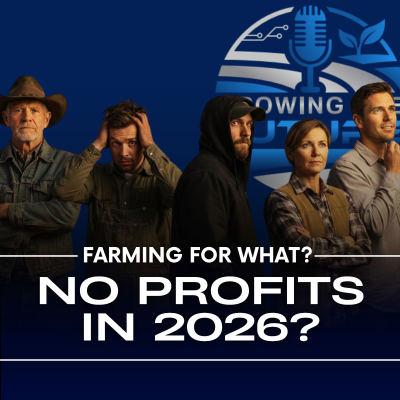
Farming For What? Profit, Pride or Survival in Modern Culture
The post came after a long drive home from a production show. Jay Peterson had spent the day talking to people at booths, catching up with friends, listening to the Manitoba and Saskatchewan numbers come out on the radio. And somewhere between Saskatoon and Swift Current, something settled on him. Nobody was really having the conversation. Not out loud. Not honestly. So he made a video. Johnny Cash in the background. A simple question underneath it. Why is nobody talking about the fact that nothing we can grow in 2026 is going to make us money? The comments came in five flavors. Some farmers said they'd never quit, no matter what. Some were close to a breaking point. Some said it was just another cycle. Some thought bigger forces were reshaping the whole industry. And some were just trying to make sense of it. This episode is the conversation that followed. Four farmers. Real numbers. No prescriptions. No easy answers. The question underneath all of it: when the math stops working, what are we actually farming for? Guests Jay Peterson — JSP Farms Chris Allam — Allen Farms Norm Shoemaker — Shoemaker Ag Ventures Partnership Jeff Bennett — Bone Trail Land Company Timestamps 00:00 — Jay's TikTok, the long drive home from the production show, and why the comments hit a nerve. 08:34 — The live poll. How does your farm pencil out for 2026? 26% profitable. 42% break even at best. 16% likely a loss. 09:14 — Jay on what he was actually feeling when he made the post. Inputs still high. Prices not following. The sense that everyone was in the same position but nobody was saying it. 13:48 — Norm on the math. It used to take a metric ton of durum to break even. Now it takes close to two. Costs went one way and didn't come back. 15:22 — Jeff on why he stopped trying to predict what the year would bring. Four tough years before a good one. The numbers change every two months. You still show up. 17:09 — Chris makes the case it's not that dire, at least in Alberta. Average contribution margin, a little bit of profit. But he's clear: this was never a one-year home run industry. 19:18 — Cycles. Nobody agrees on where we are. Norm says we got used to good years and probably over-invested in iron. Jay says he might just be a year-by-year guy. 21:44 — Jay on why he never wanted to be a home run farmer. Singles and doubles. The rare triple. What it felt like to watch the bottom fall out mid-harvest last fall. 28:53 — The second poll. What's putting the most pressure right now? Inputs at 55%. Commodity prices at 42%. Land costs at 36%. Equipment at 27%. 29:45 — Whether cutting production costs to meet the market is actually a strategy. Chris says you produce more, not less. Jeff says fertilizing for disaster is its own kind of disaster. 31:43 — Jay on buying base chemical components instead of prepackaged. Why he grows mustard and not canola. Efficiency over volume when the rain isn't coming. 34:24 — Norm on land values. A million dollars a quarter. A son and a son-in-law coming into the operation. The math on return when you run those numbers. 36:32 — What farmers are actually doing differently this year. Variable rate fertilizing. Weekly peer group meetings. Cost benchmarking. Lean Six Sigma on the farm. 43:18 — Jeff on switching acres to canary seed and specialty canola. Crop rotation as a profit strategy. Finally back to a third, third, third rotation after years of disease pressure. 46:00 — The last question. What are you farming for when the numbers don't work? 47:27 — Chris: the next generation, and watching marginal land get better year after year. 48:16 — Jeff: fourth or fifth generation on this land. Leaving a starting point better than the one he was handed. 49:38 — Norm: the kids, the grandkids, and the table. Number six on the way. Who's at the table is what matters. 50:32 — Jay: he got into it because he loves farming. Loves farming with his dad. Loves doing it as well or better than the generations before him. 52:27 — Why Dan wanted to create a room for this conversation. And why it matters that farmers are willing to say it out loud. Platform partners Bone Trail Originals — www.instagram.com/bonetrailoriginals/ Hammond Realty — hammondrealty.ca Crop-Aid Nutrition Gripp — gripp.ag Connect with Growing the Future growingthefuture.ca Register for the Convergence Conference at convergence.ag and stay updated by subscribing to the Growing the Future Podcast at growingthefuturepodcast.ca.
Kies je abonnement
Meest populair
Tijdelijke aanbieding
Premium
20 uur aan luisterboeken
Podcasts die je alleen op Podimo hoort
Geen advertenties in Podimo shows
Elk moment opzegbaar
1 maand voor € 1
Daarna € 9,99 / maand
Premium Plus
Onbeperkt luisterboeken
Podcasts die je alleen op Podimo hoort
Geen advertenties in Podimo shows
Elk moment opzegbaar
Probeer 30 dagen gratis
Daarna € 11,99 / maand
Alleen bij Podimo

















Populaire luisterboeken

















1 maand voor € 1. Daarna € 9,99 / maand. Elk moment opzegbaar.