The Decibel
Engels
Nieuws & Politiek
Tijdelijke aanbieding
2 maanden voor € 1
Daarna € 9,99 / maandElk moment opzegbaar.
- 20 uur luisterboeken / maand
- Podcasts die je alleen op Podimo hoort
- Gratis podcasts
Over The Decibel
Context is everything. Join us Monday to Friday for a Canadian daily news podcast from The Globe and Mail. Explore a story shaping our world, in conversation with reporters, experts, and the people at the centre of the news.
Alle afleveringen
996 afleveringen
What war in Iran means for Canadian oil
Since the U.S. and Israel started a war with Iran [https://www.theglobeandmail.com/world/article-iran-war-us-israel-strait-of-hormuz-oil/], the price of oil has spiked. That’s largely because oil tankers are no longer travelling through the Strait of Hormuz, meaning roughly one fifth of the world’s oil and gas supply remains stranded in the Gulf region. This is having an effect in Canada [https://www.theglobeandmail.com/business/article-canadas-energy-superpower-status-protect-us-oil-crisis/], even though Canada is the world’s fourth-largest oil producer and exporter. Jeffrey Jones [https://www.theglobeandmail.com/authors/jeffrey-jones/] is a journalist in The Globe’s Report on Business, who has been covering the global oil market for decades. He joins the show today to explain why Canada is seeing domestic energy prices rise as a result of the war. Questions? Comments? Ideas? Email us at thedecibel@globeandmail.com [thedecibel@globeandmail.com] Hosted by Simplecast, an AdsWizz company. See pcm.adswizz.com [https://pcm.adswizz.com] for information about our collection and use of personal data for advertising.
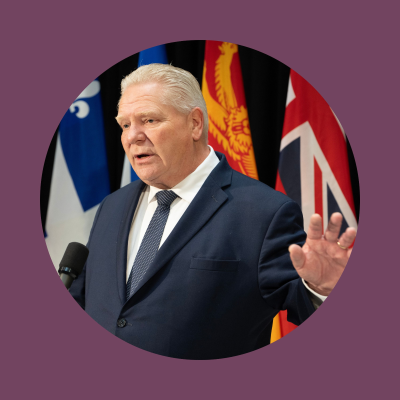
Why holding government to account in Ontario could get harder
Late last week, the Ontario government announced it would introduce legislation exempting the Premier, cabinet ministers and their offices from responding to freedom of information requests [https://www.theglobeandmail.com/canada/article-ontario-freedom-of-information-requests-premier-cabinet/]. The province said these changes are needed to protect privacy [https://www.theglobeandmail.com/politics/article-doug-ford-foi-cell-phone-records-privacy/] and to allow ministers to discuss policy decisions in confidence. Critics say [https://www.theglobeandmail.com/opinion/article-ontario-steps-back-into-the-information-dark-ages/] it’s an anti-democratic move designed to shield the government from accountability. Jeff Gray [https://www.theglobeandmail.com/authors/jeff-gray/] reports on Ontario politics for the Globe. He’s on the show to talk about how freedom of information requests have revealed past controversies in Ontario, and how the proposed changes could make government business less transparent to the public. Questions? Comments? Ideas? Email us at thedecibel@globeandmail.com [thedecibel@globeandmail.com] Hosted by Simplecast, an AdsWizz company. See pcm.adswizz.com [https://pcm.adswizz.com] for information about our collection and use of personal data for advertising.

Behind schedule and over budget: Why do we keep building LRTs?
Building cities for the future means building a lot more public transit – and lately, Canadian cities have been planning LRTs, or light rail transit. While these projects are introduced with great promise of moving people around more efficiently, in practice, these projects have a history of disappointment [https://www.theglobeandmail.com/canada/article-canadian-transit-projects-mired-in-delays-and-cost-overruns-force-a/]. There’s Ottawa’s LRT project, which opened to great frustration from riders [https://www.theglobeandmail.com/opinion/article-ottawas-lrt-didnt-go-wrong-it-started-wrong/]. Then, Toronto’s Finch West line, upon opening, couldn’t quite keep pace with a local runner [https://www.theglobeandmail.com/opinion/article-a-transit-blunder-in-the-name-of-equity/]. Most recently, there was Toronto’s Eglinton Crosstown, which opened this past February, six years later than initially planned [https://www.theglobeandmail.com/canada/article-eglinton-crosstown-lrt-railway-project-wrong-toronto/], and a billion dollars over budget. Oliver Moore [https://www.theglobeandmail.com/authors/oliver-moore/] writes for the Globe’s Editorial Board. Previously, he was an urban affairs reporter. He’s here to talk about why we keep building LRTs and how we should think about transit that will take us into the future. Questions? Comments? Ideas? Email us at thedecibel@globeandmail.com [thedecibel@globeandmail.com] Hosted by Simplecast, an AdsWizz company. See pcm.adswizz.com [https://pcm.adswizz.com] for information about our collection and use of personal data for advertising.
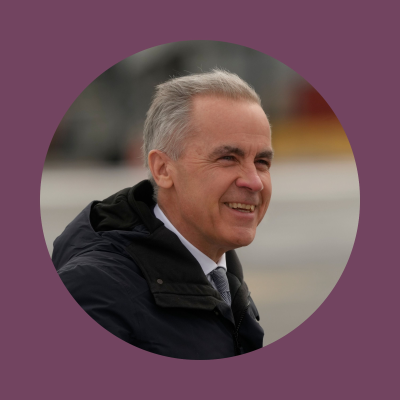
An analysis of Mark Carney’s first year as Prime Minister
It’s been one year since Mark Carney [https://www.theglobeandmail.com/topics/mark-carney/] became Prime Minister. He was long known as a technocrat, having held the position of central banker for both Canada and the United Kingdom. But when Justin Trudeau resigned, Liberals – and later, Canadians – decided Carney was the man for the moment. One year later, his popularity is holding strong: an Angus Reid poll found that 60 per cent [https://angusreid.org/federal-politics-carney-receives-post-davos-bump-in-approval/] of Canadians held a positive view of him as Prime Minister. How has Carney managed to keep Canadians onside despite having so little experience in elected politics? Shannon Proudfoot [https://www.theglobeandmail.com/authors/shannon-proudfoot/] is a feature writer and columnist for The Globe. She’ll unpack what she’s observed about how Carney has cultivated his political persona, and whether there are any signs that his honeymoon phase with Canadians might be coming to an end. Questions? Comments? Ideas? Email us at thedecibel@globeandmail.com [thedecibel@globeandmail.com] Hosted by Simplecast, an AdsWizz company. See pcm.adswizz.com [https://pcm.adswizz.com] for information about our collection and use of personal data for advertising.
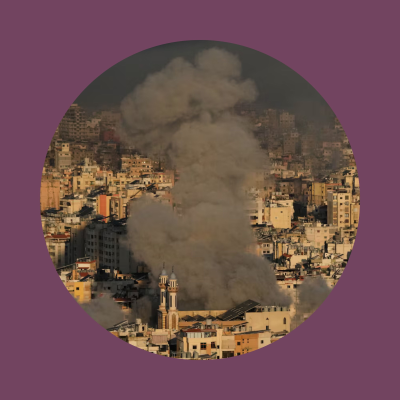
Why Israel’s war with Iran is spreading to Lebanon
On February 28th, the US and Israel struck Iran – and Iran fired back at military bases and allies in the region. The war has since dominated global attention, but it’s not just playing out in Iran [https://www.theglobeandmail.com/world/article-iran-us-war-hezbollah-israel/]. After the Iran-backed militia group, Hezbollah, fired into Israel in solidarity with Iran, a second front in the war opened up in Lebanon. Now, hundreds of thousands have been displaced in Lebanon [https://www.theglobeandmail.com/world/article-hezbollah-war-anger-confusion-lebanese-shia-community/] and hundreds of others are dead as a third war between Hezbollah and Israel escalates. The Globe’s senior international correspondent Mark MacKinnon [https://www.theglobeandmail.com/authors/mark-mackinnon/] was in Lebanon this past week. He joins The Decibel to explain how this latest conflict between Israel and Hezbollah is impacting the people of Lebanon [https://www.theglobeandmail.com/world/article-fighting-in-lebanon-expands-to-areas-that-are-not-traditional/], and why this round of fighting feels different [https://www.theglobeandmail.com/world/article-israel-may-be-splitting-lebanon-in-two-lebanese-cabinet-minister-says/]. Questions? Comments? Ideas? Email us at thedecibel@globeandmail.com [thedecibel@globeandmail.com] Hosted by Simplecast, an AdsWizz company. See pcm.adswizz.com [https://pcm.adswizz.com] for information about our collection and use of personal data for advertising.
Kies je abonnement
Meest populair
Tijdelijke aanbieding
Premium
20 uur aan luisterboeken
Podcasts die je alleen op Podimo hoort
Geen advertenties in Podimo shows
Elk moment opzegbaar
2 maanden voor € 1
Daarna € 9,99 / maand
Premium Plus
Onbeperkt luisterboeken
Podcasts die je alleen op Podimo hoort
Geen advertenties in Podimo shows
Elk moment opzegbaar
Probeer 30 dagen gratis
Daarna € 11,99 / maand
Alleen bij Podimo
























Populaire luisterboeken






















2 maanden voor € 1. Daarna € 9,99 / maand. Elk moment opzegbaar.