
Aging-US
engelsk
Teknologi og vitenskap
Prøv gratis i 14 dager
99 kr / Måned etter prøveperioden.Avslutt når som helst.
- 20 timer lydbøker i måneden
- Eksklusive podkaster
- Gratis podkaster
Les mer Aging-US
Aging-US is dedicated to advancing our understanding of the biological mechanisms that drive aging and the development of age-related diseases. Our mission is to serve as a platform for high-quality research that uncovers the cellular, molecular, and systemic processes underlying aging, and translates these insights into strategies to extend healthspan and delay the onset of chronic disease. Read about the Aging (Aging-US) Scientific Integrity Process: https://aging-us.com/scientific-integrity
Alle episoder
500 Episoder
Using Machine Learning to Identify Senescence-Inducing Drugs for Resistant Cancers
Treating aggressive cancers that do not respond to standard therapies remains one of the most significant challenges in oncology. Among these are basal-like breast cancers (BLBC), which lack hormone receptors and HER2 amplification. This makes them unsuitable for many existing targeted treatments. As a result, therapeutic options are limited, and patient outcomes are often poor. One emerging strategy is to induce senescence, a state in which cancer cells permanently stop dividing but remain metabolically active. This approach aims to slow or stop tumor growth without killing the cells directly. Although promising, the clinical application of senescence-based therapies has been limited by several challenges. Senescence is typically identified using biomarkers such as p16, p21, and beta-galactosidase activity. However, these markers are often already present in aggressive cancers like BLBC (Sen‑Mark+ tumors), making it difficult to determine whether a treatment is truly inducing senescence or merely reflecting the tumor’s existing biology. Moreover, conventional screening methods may mistake reduced cell growth for senescence, cell death, or temporary growth arrest, leading to inaccurate assessments. This is especially problematic in large-scale drug screening, where thousands of compounds must be evaluated quickly and reliably. To overcome these issues, researchers from Queen Mary University of London and the University of Dundee have developed a new machine learning–based method to improve the detection of senescence in cancer cells. Their findings were recently published in Aging-US. The Study: Developing the SAMP-Score The study, titled “SAMP-Score: a morphology-based machine learning classification method for screening pro-senescence compounds in p16-positive cancer cells,” was led by Ryan Wallis and corresponding author Cleo L. Bishop from Queen Mary University of London. This paper was featured on the cover of Aging-US Volume 17, Issue 11, and highlighted as our Editors’ Choice. Full blog - https://aging-us.org/2025/12/using-machine-learning-to-identify-senescence-inducing-drugs-for-resistant-cancers/ Paper DOI - https://doi.org/10.18632/aging.206333 Corresponding author - Cleo L. Bishop - c.l.bishop@qmul.ac.uk Abstract video - https://www.youtube.com/watch?v=qXI_KI3EgHE Sign up for free Altmetric alerts about this article - https://aging.altmetric.com/details/email_updates?id=10.18632%2Faging.206333 Subscribe for free publication alerts from Aging - https://www.aging-us.com/subscribe-to-toc-alerts Keywords - aging, SAMP-Score, senescence, senescent marker positive cancer cells, Sen-Mark+, machine learning, pro-senescence, high-throughput compound screening To learn more about the journal, please visit https://www.Aging-US.com and connect with us on social media at: Bluesky - https://bsky.app/profile/aging-us.bsky.social ResearchGate - https://www.researchgate.net/journal/Aging-1945-4589 Facebook - https://www.facebook.com/AgingUS/ X - https://twitter.com/AgingJrnl Instagram - https://www.instagram.com/agingjrnl/ YouTube - https://www.youtube.com/@Aging-US LinkedIn - https://www.linkedin.com/company/aging/ Pinterest - https://www.pinterest.com/AgingUS/ Spotify - https://open.spotify.com/show/1X4HQQgegjReaf6Mozn6Mc MEDIA@IMPACTJOURNALS.COM
Aging-US Editors' Choice
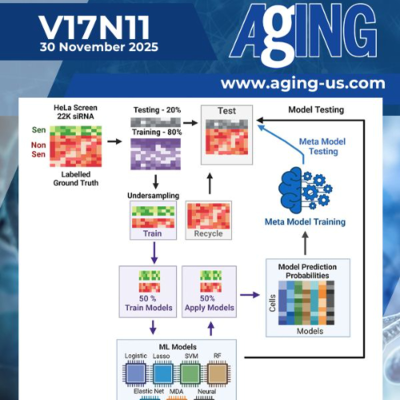
The paper featured on the cover of this issue of Aging-US, published on October 30, 2025, entitled “SAMP-Score: a morphology-based machine learning classification method for screening pro-senescence compounds in p16-positive cancer cells,” represents an important methodological and conceptual advance at the interface of senescence biology, imaging and drug discovery. In this study, led by first author Ryan Wallis and corresponding author Cleo L. Bishop (Queen Mary University of London), the authors introduce SAMP-Score, a machine-learning–based framework designed to identify bona fide senescence induction in cancer cells where canonical markers fail. This is a timely and much-needed contribution to the field. Therapy-induced senescence has emerged as a powerful strategy to restrain tumor growth, yet its reliable detection in cancer cells remains a major bottleneckIn these contexts, cells often already display features associated with cellular aging, rendering conventional senescence markers ambiguous or misleading. Distinguishing true senescence from toxicity, stress responses or baseline “aged” phenotypes is therefore a critical unmet need. Rather than relying on predefined molecular readouts, the authors take a different approach and train a machine-learning model to recognize senescence-associated morphological profiles (SAMPs) which are subtle but reproducible changes in cellular architecture captured through high-content microscopy. By learning directly from image-based phenotypes, SAMP-Score is able to identify senescence with a level of precision that is difficult to achieve using marker-based strategies alone. The strength of the platform demonstrated through a large-scale screen of over 10,000 novel chemical entities in p16-positive basal-like breast cancer cells. From this screen, the compound QM5928 emerged as a robust inducer of senescence across multiple cancer models, notably without inducing cytotoxicity. Importantly, QM5928 retains activity in cellular contexts that are resistant to CDK4/6 inhibition, including palbociclib-refractory, p16-high tumors. Mechanistically, the authors show that QM5928 promotes nuclear relocalization of p16, consistent with a functional engagement of cell-cycle arrest pathways. These nuanced phenotypic changes would likely have gone undetected without the resolution and discrimination provided by SAMP-Score, underscoring the platform’s ability to separate true senescence from confounding cellular states. This work exemplifies how machine learning and quantitative imaging can be harnessed to solve long-standing problems in senescence research, moving the field beyond binary marker expression toward phenotype-driven classification. Beyond its immediate relevance for cancer therapy, SAMP-Score offers a broadly applicable framework for senescence-based screening efforts across biological contexts. DOI - https://doi.org/10.18632/aging.206333 Corresponding author - Cleo L. Bishop - c.l.bishop@qmul.ac.uk Abstract video - https://www.youtube.com/watch?v=qXI_KI3EgHE Sign up for free Altmetric alerts about this article - https://aging.altmetric.com/details/email_updates?id=10.18632%2Faging.206333 Subscribe for free publication alerts from Aging - https://www.aging-us.com/subscribe-to-toc-alerts To learn more about the journal, please visit https://www.Aging-US.com and connect with us on social media at: Bluesky - https://bsky.app/profile/aging-us.bsky.social ResearchGate - https://www.researchgate.net/journal/Aging-1945-4589 Facebook - https://www.facebook.com/AgingUS/ X - https://twitter.com/AgingJrnl Instagram - https://www.instagram.com/agingjrnl/ YouTube - https://www.youtube.com/@Aging-US LinkedIn - https://www.linkedin.com/company/aging/ Pinterest - https://www.pinterest.com/AgingUS/ Spotify - https://open.spotify.com/show/1X4HQQgegjReaf6Mozn6Mc MEDIA@IMPACTJOURNALS.COM
Young and Old Mice Blood Differently Shapes Alzheimer’s-Related Brain Changes
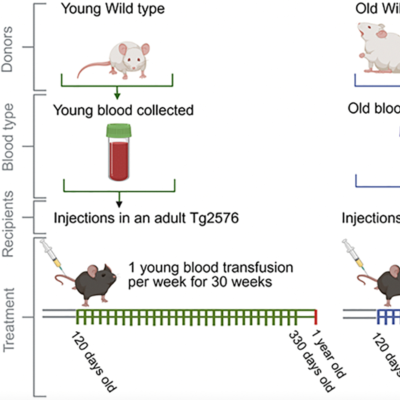
BUFFALO, NY — December 8, 2025 — A new #research paper was #published in Volume 17, Issue 11 of Aging-US on September 12, 2025, titled “Infusion of blood from young and old mice modulates amyloid pathology.” This study was led by co-first authors Matias Pizarro from Universidad Adolfo Ibáñez and Ruben Gomez-Gutierrez from The University of Texas Health Science Center at Houston, alongside corresponding authors Claudia Duran-Aniotz from Universidad Adolfo Ibáñez and Rodrigo Morales from The University of Texas Health Science Center at Houston and Universidad Bernardo O’Higgins. The goal was to investigate how blood from young and old mice influences Alzheimer’s-related changes in a transgenic mouse model. The findings indicate that age-dependent circulating factors can either worsen or mitigate brain changes associated with dementia, highlighting blood and its components as potential therapeutic targets. Alzheimer’s disease is a progressive neurodegenerative disorder characterized by misfolded amyloid proteins, inflammation, and gradual cognitive decline, with aging as its main risk factor. In this work, whole blood from young adult or very old wild-type mice was repeatedly infused into Tg2576 mice, a well-established model of amyloid accumulation and memory impairment. Over several months, recipient mice received 30 weekly blood infusions, followed by behavioral testing and detailed neuropathological analyses. “Tg2576 mice express the human APP harboring the Swedish mutation.” Mice that received blood from old donors performed worse in both short- and long-term spatial memory tasks than mice infused with young blood, suggesting that aged blood contains factors that impair cognition. When the team examined brain tissue, they found more cortical amyloid deposits detected by a specific antibody in mice treated with old blood, while overall amyloid levels measured biochemically did not change, suggesting differences in plaque type or compactness rather than total amount. The expression of amyloid precursor protein in the brain was also higher after old-blood infusion, which may partly explain the shift in amyloid pathology. Despite these changes in plaques and memory, classical markers of astrocyte activation, a sign of brain inflammation, did not differ between groups, pointing to more subtle molecular shifts. A broad proteomic analysis of brain samples revealed dysregulation of proteins involved in synapse formation, calcium signaling, and the endocannabinoid system, pathways important for neuronal communication and plasticity. Among them, the calcium channel–related protein CACNA2D2 and the signaling protein BRAF were increased in mice that received old blood, confirming that aged blood circulation can reshape key signaling networks linked to neuronal function and degeneration. Overall, this study supports the idea that blood is not just a passive carrier but a powerful modulator of brain health during aging and disease. While young blood has been associated in previous work with improved synaptic function and reduced amyloid and tau changes, this study emphasizes the harmful impact of old blood, particularly on cortical amyloid patterns and memory. The identification of CACNA2D2 and BRAF as potential mediators of these effects suggests new avenues for targeting blood-borne factors or downstream brain pathways to slow or modify Alzheimer’s-related decline. DOI - https://doi.org/10.18632/aging.206319 Corresponding authors - Claudia Duran-Aniotz - Claudia.Duran@uai.cl, and Rodrigo Morales - Rodrigo.MoralesLoyola@uth.tmc.edu Abstract video - https://www.youtube.com/watch?v=zsBDSAipH3w To learn more about the journal, visit https://www.Aging-US.com . MEDIA@IMPACTJOURNALS.COM
How Two Russian Scientists Changed the Way We Understand Aging and Cancer
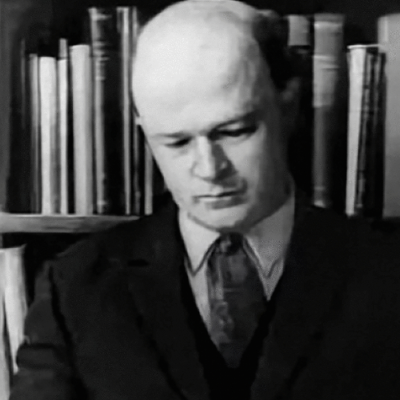
BUFFALO, NY — December 3, 2025 — A new #essay was #published in Volume 17, Issue 11 of Aging-US on November 19, 2025, titled “On the intergenerational transfer of ideas in aging and cancer research: from the hypothalamus according to V.M. Dilman to the mTOR protein complex according to M.V. Blagosklonny.” In this work, Aleksei G. Golubev from the N.N. Petrov National Medical Research Center of Oncology reflects on the legacy of two influential Russian scientists, Vladimir M. Dilman and his son Mikhail V. Blagosklonny, who each introduced groundbreaking ideas about aging and cancer. Drawing from his own experience working in Dilman’s lab, Golubev explores how their ideas remain deeply relevant to today’s scientific understanding. The essay connects Dilman’s “elevation theory” with Blagosklonny’s “hyperfunction theory,” two frameworks that challenge the conventional view of aging as a process of decline. Instead, both propose that aging results from continued biological processes that once supported growth but eventually become harmful when left unchecked. Dilman believed that aging begins with reduced sensitivity in the hypothalamus, a brain region that regulates the body’s balance. This desensitization disrupts metabolism and hormone levels, setting the stage for many chronic illnesses. Decades later, Blagosklonny expanded on this idea at the molecular level. Central to his theory is the mTOR protein complex, which regulates growth and metabolism and is now a major focus in aging research. Golubev also explores the historical and personal connections between the two scientists. Dilman, an endocrinologist trained in the Soviet Union, and Blagosklonny, a molecular biologist educated during the post-Soviet period, represent two generations shaped by a shared scientific tradition. “Dilman’s scientific legacy is not as well recognized as it should be, partly due to bias in citation practices.” The essay also draws attention to a troubling trend in science: the tendency to overlook early contributions, especially from non-Western scholars. Many of Dilman’s insights, such as the connection between high blood sugar, insulin resistance, and cancer, have since been validated by modern tools, yet his work is rarely cited. Golubev points out how citation practices, language barriers, and historical isolation have contributed to this lack of recognition. Finally, Golubev encourages the scientific community to look back and acknowledge the foundational work that shaped modern aging science. It also highlights the importance of cross-generational knowledge in moving science forward. By tracing the intellectual journey from hormonal regulation in the brain to molecular pathways in cells, this essay demonstrated the relevance of old ideas in a new biological era. DOI - https://doi.org/10.18632/aging.206338 Corresponding author - Aleksei G. Golubev - lxglbv@rambler.ru Abstract video - https://www.youtube.com/watch?v=LvrdghTKGws Sign up for free Altmetric alerts about this article - https://aging.altmetric.com/details/email_updates?id=10.18632%2Faging.206338 Subscribe for free publication alerts from Aging - https://www.aging-us.com/subscribe-to-toc-alerts Keywords - aging, gerontology, history of science, hyperfunction, mTOR, hypothalamus, cancer, metabolism, immunity To learn more about the journal, please visit https://www.Aging-US.com and connect with us on social media: Facebook - https://www.facebook.com/AgingUS/ X - https://twitter.com/AgingJrnl Instagram - https://www.instagram.com/agingjrnl/ YouTube - https://www.youtube.com/@Aging-US LinkedIn - https://www.linkedin.com/company/aging/ Bluesky - https://bsky.app/profile/aging-us.bsky.social Pinterest - https://www.pinterest.com/AgingUS/ Spotify - https://open.spotify.com/show/1X4HQQgegjReaf6Mozn6Mc MEDIA@IMPACTJOURNALS.COM
Machine Learning Identifies Senescence-Inducing Compound for p16-Positive Cancer Cells
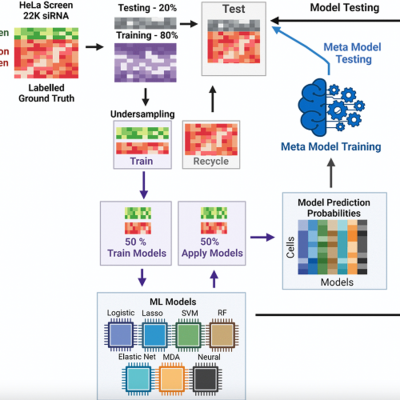
BUFFALO, NY — December 1, 2025 — A new #research paper featured on the #cover of Volume 17, Issue 11 of Aging-US was #published on October 30, 2025, titled “SAMP-Score: a morphology-based machine learning classification method for screening pro-senescence compounds in p16 positive cancer cells.” In this study led by first author Ryan Wallis along with corresponding author Cleo L. Bishop, from Queen Mary University of London, researchers developed a machine learning tool to identify compounds that induce cancer cells into senescence. The tool, called SAMP-Score, offers a new strategy for drug discovery in cancers with poor treatment options like basal-like breast cancer. Senescence is a process where damaged or aged cells stop dividing. In cancer therapy, inducing senescence is an approach to control tumor growth. However, it is difficult to detect true senescence in cancer cells that already appear aged. These cancers, often called Sen-Mark+ cancers, include basal-like breast cancer and typically lack reliable markers to confirm senescence. SAMP-Score was designed to address this problem. Instead of relying on traditional markers, the researchers built a machine learning model trained to recognize patterns based on senescent cells’ shape and structure under a microscope. These visual patterns, known as senescence-associated morphological profiles (SAMPs), allowed the model to distinguish real signs of aging from other effects such as toxicity or normal variation. By analyzing thousands of cell images, the model learned to classify whether a cell had truly entered senescence. “To demonstrate the potential application of SAMP-Score in p16 positive cancer therapeutic discovery, we assessed a diversity screen of 10,000 novel chemical entities in MB-468 cells (p16 positive BLBC).” The team used SAMP-Score to screen more than 10,000 experimental compounds. One compound, QM5928, consistently triggered senescence in several cancer cell types without killing them, making it a promising candidate for further study. Importantly, it worked in cancers resistant to known drugs like palbociclib, which are often ineffective in cancers with high p16 expression like basal-like breast cancer. Further analysis revealed that QM5928 caused the p16 protein to move into the nucleus of cancer cells, a possible sign that the protein is helping stop cell division. This subtle effect was only detectable using the detailed imaging and analysis made possible by SAMP-Score, highlighting the tool’s ability to distinguish true senescence from toxic responses and making it a powerful resource in cancer drug discovery. By combining machine learning with high-resolution imaging, this study introduces a new way to find and evaluate cancer therapies. SAMP-Score could accelerate efforts to develop treatments that exploit the body’s natural aging processes to fight cancer, especially for patients with resistant tumors. The tool is openly available at GitHub, making it accessible for other researchers exploring senescence-based cancer therapies. DOI - https://doi.org/10.18632/aging.206333 Corresponding author - Cleo L. Bishop - c.l.bishop@qmul.ac.uk Abstract video - https://www.youtube.com/watch?v=qXI_KI3EgHE Subscribe for free publication alerts from Aging - https://www.aging-us.com/subscribe-to-toc-alerts To learn more about the journal, please visit https://www.Aging-US.com and connect with us on social media at: Facebook - https://www.facebook.com/AgingUS/ X - https://twitter.com/AgingJrnl Instagram - https://www.instagram.com/agingjrnl/ YouTube - https://www.youtube.com/@Aging-US LinkedIn - https://www.linkedin.com/company/aging/ Bluesky - https://bsky.app/profile/aging-us.bsky.social Pinterest - https://www.pinterest.com/AgingUS/ Spotify - https://open.spotify.com/show/1X4HQQgegjReaf6Mozn6Mc MEDIA@IMPACTJOURNALS.COM
Velg abonnementet ditt
Premium
20 timer lydbøker
Eksklusive podkaster
Gratis podkaster
Avslutt når som helst
Prøv gratis i 14 dager
Deretter 99 kr / month
Premium Plus
100 timer lydbøker
Eksklusive podkaster
Gratis podkaster
Avslutt når som helst
Prøv gratis i 14 dager
Deretter 169 kr / month
Bare på Podimo










Populære lydbøker






















Prøv gratis i 14 dager. 99 kr / Måned etter prøveperioden. Avslutt når som helst.