
Nutrition History (From Parts Unknown)
engelsk
Helse og personlig utvikling
Prøv gratis i 14 dager
99 kr / Måned etter prøveperioden.Avslutt når som helst.
- 20 timer lydbøker i måneden
- Eksklusive podkaster
- Gratis podkaster
Les mer Nutrition History (From Parts Unknown)
the histories behind nutrition
Alle episoder
15 Episoder
The History of Beriberi
This is the story of beriberi. For more than 1500 years, beriberi was known as poison wind affliction, a sickness produced by chronic exposure todamp winds.In reality, beriberi is caused by the absence of a vital nutrient in the diet (vitamin B1) the human body requires in amounts less than one thousandth of a gram per day— the same amount that could fill a standard vitamin capsule 500 times. It would take decades of gruelling and relentless front-line work to establish the connection of the beriberi and the diet—work pioneered by physicians and medical thinkers who bucked the rigid medical dogma of their time. The story of beriberi, from its first description through the discovery and synthesis of vitamin B1, plays out in the context of Japan's transformation from a premodern feudal society into an industrialized nation.
Sugar: Superfood of Medieval Times
In Episode 13 of Nutrition History from Parts Unknown, we're talking on sugar, the unlikely superfood of medieval times. We'll be tracing the emergence of sugar in fine medieval cuisine and discussing its importance in maintaining a health humoural complexion, as well as its many medicinal applications.
Medieval Plague Regimens for Bubo-Free Living Pt. 2
In Episode 12 of Nutrition History from Parts Unknown, we're continuing where we left off in Episode 11, talking on the 14th century medical community's response to the Black Death of 1347-51. This response was most exhaustively detailed in a genre of literature known as 'Plague Regimen'. These were popular medical manuals which provided the reader an understanding of the pestilence's origins, and advised on lifestyle interventions to prevent catching the disease. The advice of the Plague Regimen focused on the six medieval lifestyle factors, or "non-naturals" : air quality, sleep, physical activity, excretion and retention (this included bathing and sex), emotional health, and diet.

Medieval Plague Regimens for Bubo-Free Living Pt. 1
In Episode 11 of Nutrition History from Parts Unknown, we're talking the 14th century medical community's response to the Black Death of 1347-51. This response was most exhaustively detailed in a genre of literature known as 'Plague Regimen'. These were popular medical manuals which provided the reader an understanding of the pestilence's origins, and advised on lifestyle interventions to prevent catching the disease. The advice of the Plague Regimen focused on the six medieval lifestyle factors, or "non-naturals" : air quality, sleep, physical activity, excretion and retention (this included bathing and sex), emotional health, and diet.
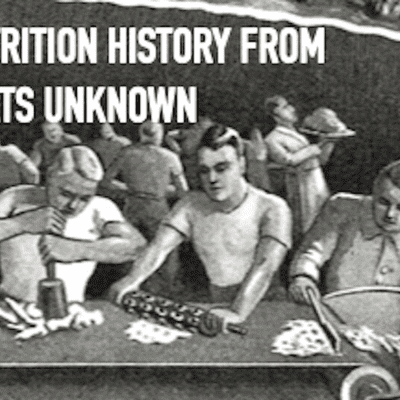
Medieval Plague Regimens for Bubo-Free Living Pt. 1
In Episode 11 of Nutrition History from Parts Unknown, we're talking the 14th century medical community's response to the Black Death of 1347-51. This response was most exhaustively detailed in a genre of literature known as 'Plague Regimen'. These were popular medical manuals which provided the reader an understanding of the pestilence's origins, and advised on lifestyle interventions to prevent catching the disease. The advice of the Plague Regimen focused on the six medieval lifestyle factors, or "non-naturals" : air quality, sleep, physical activity, excretion and retention (this included bathing and sex), emotional health, and diet.
Velg abonnementet ditt
Premium
20 timer lydbøker
Eksklusive podkaster
Gratis podkaster
Avslutt når som helst
Prøv gratis i 14 dager
Deretter 99 kr / month
Premium Plus
100 timer lydbøker
Eksklusive podkaster
Gratis podkaster
Avslutt når som helst
Prøv gratis i 14 dager
Deretter 169 kr / month
Bare på Podimo







Populære lydbøker


















Prøv gratis i 14 dager. 99 kr / Måned etter prøveperioden. Avslutt når som helst.