Sleep Science Podcast
engelsk
Helse og personlig utvikling
Prøv gratis i 14 dager
99 kr / Måned etter prøveperioden.Avslutt når som helst.
- 20 timer lydbøker i måneden
- Eksklusive podkaster
- Gratis podkaster
Les mer Sleep Science Podcast
We spend a third of our lives sleeping, and this podcast is all about understanding sleep. We know a lot about what the brain does in sleep, but we are just starting to understand why it does some of these things, and even more excitingly, how we can take full advantage of sleep and also manipulate it for our own ends. In each episode, neuroscientist Penny Lewis interviews a different sleep researcher, talking about a various aspect of sleep science. Topics include sleep physiology and medicine, circadian rhythm, how sleep impacts on our memories and creativity, Sleep Engineering for enhanced health and cognition, and the most recent technologies to promote sleep.©SleepSciencePodcast 2021. These materials may be downloaded for personal use only. They may not be shared, distributed or reproduced in any form or for any reason without express permission
Alle episoder
27 Episoder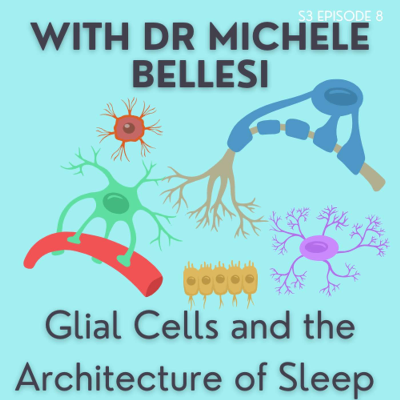
S3E8 - Michele Bellesi - Glial Cells and the Architecture of Sleep
Send us a text [https://www.buzzsprout.com/twilio/text_messages/787211/open_sms] In this episode, we welcome neuroscientist Michele Bellesi from the University of Camerino to explore the fascinating world of glial cells and their dynamic role in sleep. Michele guides us through the four types of glial cells: * Astrocytes: Regulators of synaptic function and help form the blood brain barrier (BBB) * Oligodendrocytes: Crucial for myelination and fast signal transmission * Microglia: The brain's immune sentinels, important for responding to infection and injury as well as shaping the synaptic landscape * Ependymal Cells: Involved in cerebrospinal fluid (CSF) production and CFS movement around the brain We dive into how each of these cells types behaves differently across wake, sleep and sleep deprivation and the impacts on each cell types function. Find out more about Michele's work here [https://www.bsr-laboratory.org/] and see relevant papers below. * The role of sleep and wakefulness in myelin plasticity, 2019, Glia [https://onlinelibrary.wiley.com/doi/full/10.1002/glia.23667] * Sleep loss promotes astrocytic phagocytosis and microglial activation in mouse cerebral cortex, 2017, Journal of Neuroscience [https://www.jneurosci.org/content/jneuro/37/21/5263.full.pdf] * Effects of sleep and wake on astrocytes: clues from molecular and ultrastructural studies, 2015, BMC Biology [https://link.springer.com/article/10.1186/s12915-015-0176-7] Check out our NaPS website to find out more about the podcast, our research and events. [https://www.sleepengineering.co.uk/] This recording is the property of the Sleep Science Podcast and not for resale.
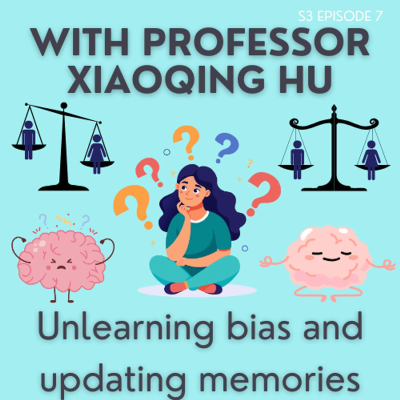
S3E7 - Can sleep help us unlearn negative bias and update disturbing memories?- Xiaoqing Hu
Send us a text [https://www.buzzsprout.com/twilio/text_messages/787211/open_sms] Can sleep help us unlearn biases and make our memories more positive? Implicit biases are unconscious stereotypes that influence our judgments and decisions - like assuming a particular gender for a specific job role. But what if we could change these biases? In this episode, we explore how manipulations of sleep might help reshape our implicit attitudes. We speak with Professor Xiaoqing Hu, a leading researcher in the use of Targeted Memory Reactivation (TMR) during sleep to alter implicit bias and make memories more positive. Xiaoqing shares his journey of applying Implicit Association Tasks (IATs) to sleep research, and how conflict biases, congruent vs. incongruent data, and task design play a role in measuring and modifying bias. We also dive into the nitty gritty of memory consolidation in sleep — examining how REM and NREM stages contribute to emotional memory consolidation, and how recency vs. saliency affects which memories get updated. Prof. Hu discusses his groundbreaking study demonstrating the ability to update unwanted emotional memories during sleep, and we explore the potential for applying this research to clinical populations. We also consider how individual schemas might influence the effectiveness of TMR across different people. If you would like to find out more about Prof. Hu's work, please see the lab website here. [https://www.psychology.hku.hk/scnlab/home.html] You can find relevant papers below: * Unlearning implicit social biases during sleep, 2015 [https://www.science.org/doi/10.1126/science.aaa3841] * Updating memories of unwanted emotions during human sleep [https://pmc.ncbi.nlm.nih.gov/articles/PMC9979073/], 2022 * Targeted memory reactivation during sleep influences social bias as a function of slow-oscillation phase and delta power, 2023 [https://pubmed.ncbi.nlm.nih.gov/36458473/] * Reactivating cue approached positive personality traits during sleep promotes positive self-referential processing, 2024 [https://www.sciencedirect.com/science/article/pii/S2589004224015669] * Aversive memories can be weakened during human sleep via the reactivation of positive interfering memories. 2024 [https://www.pnas.org/doi/pdf/10.1073/pnas.2400678121] * Disarming emotional memories using Targeted Memory Reactivation during Rapid Eye Movement sleep, 2024 [https://www.biorxiv.org/content/10.1101/2024.09.25.614960v1] * Targeted memory reactivation in REM but not SWS selectively reduces arousal responses, 2021 [https://www.nature.com/articles/s42003-021-01854-3] Glossary IAT - Implicit Association Task - a test used to measure the strength of automatic associations between our concepts that we may not be consciously aware of. TMR - Targeted Memory Reactivation - A technique used to modify memory processing, through the use of presenting cues (audio or smell) that were associated with learning, whilst a person sleeps. These cues can modify select memories and in recent research is being used in emotional memory. __________________________________ Host Professor Penny Lewis Produced by Sophie Smith Check out our NaPS website to find out more about the podcast, our research and events. [https://www.sleepengineering.co.uk/] This recording is the property of the Sleep Science Podcast and not for resale.
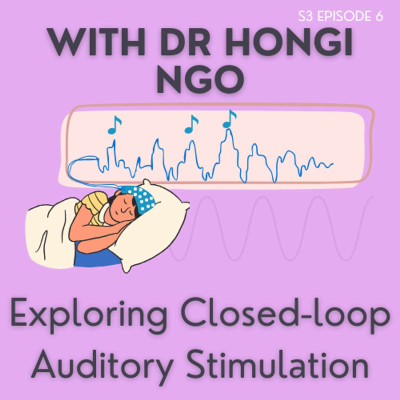
S3E6 - Hongi Ngo: Exploring Closed-Loop Auditory Stimulation
Send us a text [https://www.buzzsprout.com/twilio/text_messages/787211/open_sms] We're joined by Hongi Ngo, who developed a revolutionary technique for manipulating sleep oscillations during his PhD. Closed-loop Auditory Stimulation (CLAS), which uses bursts of pink noise which are carefully timed to a particular phase of an existing brain oscillation to either boost or dampen the target oscillation. It has been used to selectively strengthen or weaken memories, improve the immune response, reduce epileptic seizures, and even potentially to slow down age related cognitive decline. Hongi tells us how he got got the idea for CLAS, explains how it works, and tells us about some of his existing studies. He talks about combining CLAS with Targeted Memory Reactivation (TMR) and discusses the ideas for future of brain modulation methods with techniques such as transcranial magnetic stimulation (TMS). Some of the key papers discussed are: Auditory closed-loop stimulation of the sleep slow oscillation enhances memory (2013) [https://tinyurl.com/2p8xnt4n] Auditory closed-loop stimulation of EEG slow oscillations strengthens sleep and signs of its immune-supportive function (2017) [https://www.nature.com/articles/s41467-017-02170-3] Thalamic spindles promote memory formation during sleep thrugh triple phase-locking of cortical, thalamic and hippocampal rhythms (2017) [https://tinyurl.com/7bfcff42] Examining the optimal timing for closed-loop auditory stimulation of slow-wave sleep in young and older adults [https://academic.oup.com/sleep/article/43/6/zsz315/5686285](2019) Auditory stimulation during sleep suppresses spike activity in benign epilepsy with centrotemporal spikes (2021) [https://www.sciencedirect.com/science/article/pii/S2666379121002949?via%3Dihub] Shaping overnight consolidation via slow-oscillation closed-loop targeted memory reactivation [https://www.pnas.org/doi/epdf/10.1073/pnas.2123428119] (2022) Check out our NaPS website to find out more about the podcast, our research and events. [https://www.sleepengineering.co.uk/] This recording is the property of the Sleep Science Podcast and not for resale.
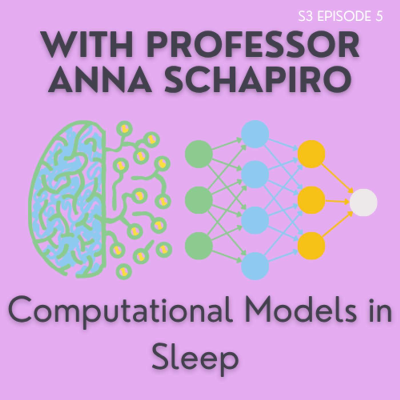
S3E5 - Anna Schapiro - Can we model the way REM and NREM replay consolidate memories?
Send us a text [https://www.buzzsprout.com/twilio/text_messages/787211/open_sms] How are memories represented in the brain and how can we model this? Professor Anna Schapiro from University of Pennsylvania as we discuss her work on computational modelling of sleep and memory. In this episode, we discuss several kinds of Neural Network models as well as diving into the history of Jay McClleland's Complementary Learning Systems theory and Anna's recent work on combining neural network modeling with EEG. Find out more about Anna Schapiro and her research group here. [https://www.schapirolab.org/] Links to articles discussed in this episode: * Why there are Complementary Learning Systems in the hippocampus and neocortex [https://pubmed.ncbi.nlm.nih.gov/7624455/] * Methods for reducing interference in the Complementary Learning Systems model [https://www.sciencedirect.com/science/article/pii/S0893608005001930] * Self-recovery of memory via generative replay [https://arxiv.org/abs/2301.06030] * A unifying account of reply as context-driven memory reactivation [https://elifesciences.org/reviewed-preprints/99931] Host: Penny Lewis Editor: Sophie Smith Check out our NaPS website to find out more about the podcast, our research and events. [https://www.sleepengineering.co.uk/] This recording is the property of the Sleep Science Podcast and not for resale.

S3E4 - Rebecca Spencer - Sleep across a lifetime - infant to old age
Send us a text [https://www.buzzsprout.com/twilio/text_messages/787211/open_sms] How does our sleep change as we age and what could this mean for memory and cognition? In this episode, we discuss with Professor Rebecca Spencer her research exploring how our sleep patterns evolve over the course of our lives. We explore the phenomenon of infantile amnesia - why we can't remember our earliest childhood experiences - and unpack the theories behind it. We discuss how hippocampal development changes as we age and how this links to memory consolidation and sleep. We also dive into Rebecca's work on emotional processing in children and how naps and sleeping are able to aid in emotional regulation. Rebecca runs the Somneuro Lab at the University of Massachusetts Amherst. Find out more about Rebecca and her research group here. [https://www.somneurolab.com/] Links to studies in the episode: * Napping reduces emotional attention bias during early childhood [https://onlinelibrary.wiley.com/doi/10.1111/desc.12411] * Unhealthy diet is associated with poor sleep in preschool-aged children [https://www.tandfonline.com/doi/full/10.1080/00221325.2021.1905598] * Television use and its effects on sleep in early childhood [https://www.sciencedirect.com/science/article/pii/S2352721819300580?via%3Dihub] Host: Professor Penny Lewis Editor: Sophie Smith Check out our NaPS website to find out more about the podcast, our research and events. [https://www.sleepengineering.co.uk/] This recording is the property of the Sleep Science Podcast and not for resale.
Velg abonnementet ditt
Premium
20 timer lydbøker
Eksklusive podkaster
Gratis podkaster
Avslutt når som helst
Prøv gratis i 14 dager
Deretter 99 kr / month
Premium Plus
100 timer lydbøker
Eksklusive podkaster
Gratis podkaster
Avslutt når som helst
Prøv gratis i 14 dager
Deretter 169 kr / month
Bare på Podimo






Populære lydbøker














Prøv gratis i 14 dager. 99 kr / Måned etter prøveperioden. Avslutt når som helst.