Blood on Gold Mountain
engelsk
Personlige historier og samtaler
Prøv gratis i 14 dager
99 kr / Måned etter prøveperioden.Avslutt når som helst.
- 20 timer lydbøker i måneden
- Eksklusive podkaster
- Gratis podkaster
Les mer Blood on Gold Mountain
1871 Los Angeles was a dangerous place, especially for the refugees, migrants and troublemakers who lived on Calle De Los Negros, at the heart of Chinatown. Yut Ho, a beautiful young refugee, came to LA and fell in love, only to be drawn into a showdown between two of Chinatown's most notorious gangsters. Before long, the entire city was caught up in a life or death struggle where old-world values of kinship, honor and loyalty clashed with new-world issues of race, sex, and identity. The ensuing conflict would threaten the lives of Yut Ho and all the denizens of Chinatown– and would change the face of Los Angeles forever. This true but largely forgotten event from California's past is brought to you by the Holmes Performing Arts Fund of the Claremont Colleges, the Music Department of Scripps College, the Pacific Basin Institute of Pomona College, the Entrepreneurial Musicianship Department at The New England Conservatory, and the Public Events Office at Scripps College. Blood on Gold Mountain was written and produced by Yan-Jie Micah Huang, narrated by Hao Huang, introduced by Emma Gies, and features music composed by Micah Huang and performed by Micah Huang and Emma Gies. A special thanks to Evo Terra from Simpler Media Productions for his expertise and support.
Alle episoder
12 Episoder
Iron Horse Road: a Tale from Gold Mountain
Iron Horse Road: a Tale from Gold Mountain recounts one of the great untold epics of American history: The story of the Chinese laborers–neither truly enslaved nor truly free–who built the most rugged stretches of the Transcontinental Railroad. More than 150 years ago, these Gold Mountain Men tunneled through mountains, dangled over cliffs, and dragged entire trains over alpine summits where other Americans feared to tread. The prosperity of the gilded age was founded on their blood, sweat and grit, but their story has long been suppressed, minimized and forgotten. For Iron Horse Road, the father/son team behind Blood on Gold Mountain retrace the steps of these workers from the Sacramento hills to the snows of Donner Summit. Equal parts history and travelogue, Iron Horse Road uses binaural 3D audio to transport the listener to deep canyons, echoing caverns and windswept peaks–a world where adventure is always around the corner, and the past is carved in blood and stone. Note: I mention that Cantonese was a common language among the Railroad Chinese. This Is true, however, it is important to acknowledge that other dialects, such as Toishan, and languages, such as Hakka, were spoken by large numbers of Chinese laborers in the old west. Bibliography: Importance of Transcontinental Railroads: https://www.history.com/news/transcontinental-railroad-changed-america [https://www.history.com/news/transcontinental-railroad-changed-america] https://www.bls.gov/opub/mlr/2015/beyond-bls/railroads-old-industry-still-vital-in-todays-economy.htm [https://www.bls.gov/opub/mlr/2015/beyond-bls/railroads-old-industry-still-vital-in-todays-economy.htm] https://www.american-rails.com/i.html#:~:text=With%20World%20War%20I's%20outbreak,issues%20on%20the%20home%20front [https://www.american-rails.com/i.html#:~:text=With%20World%20War%20I's%20outbreak,issues%20on%20the%20home%20front] https://www.aar.org/wp-content/uploads/2022/09/AAR-Rail-Shutdown-Report-September-2022.pdf [https://www.aar.org/wp-content/uploads/2022/09/AAR-Rail-Shutdown-Report-September-2022.pdf] Union Pacific vs Central Pacific https://www.up.com/heritage/history/overview/construction/index.htm [https://www.up.com/heritage/history/overview/construction/index.htm] https://www.trains.com/trn/railroads/history/sherman-hill-the-first-rocky-mountain-railroad-pass/ [https://www.trains.com/trn/railroads/history/sherman-hill-the-first-rocky-mountain-railroad-pass/] https://www.truckeehistory.org/native-americans.html [https://www.truckeehistory.org/native-americans.html] John Henry https://www.hmdb.org/m.asp?m=165173 [https://www.hmdb.org/m.asp?m=165173] https://www.americanheritage.com/iron-spine [https://www.americanheritage.com/iron-spine] https://www.constructionequipmentguide.com/hand-built-railroad-defines-unites-nation/8310 [https://www.constructionequipmentguide.com/hand-built-railroad-defines-unites-nation/8310] https://railroad.lindahall.org/essays/tunnels-bridges.html [https://railroad.lindahall.org/essays/tunnels-bridges.html] https://www.trains.com/wp-content/uploads/2020/10/150transconrrebook.pdf [https://www.trains.com/wp-content/uploads/2020/10/150transconrrebook.pdf] Work Conditions https://books.google.com/books?id=Kig4DQAAQBAJ&pg=PA71&lpg=PA71&dq=central+pacific+120+degrees+railroad&source=bl&ots=TVLWIzO6xH&sig=ACfU3U3qrNRSX6nerMgudT2OYSAgIq3zSA&hl=en&sa=X&ved=2ahUKEwj8tPiKjcn_AhWliO4BHX-8Aj8Q6AF6BAhJEAM#v=onepage&q=central%20pacific%20120%20degrees%20railroad&f=false [https://books.google.com/books?id=Kig4DQAAQBAJ&pg=PA71&lpg=PA71&dq=central+pacific+120+degrees+railroad&source=bl&ots=TVLWIzO6xH&sig=ACfU3U3qrNRSX6nerMgudT2OYSAgIq3zSA&hl=en&sa=X&ved=2ahUKEwj8tPiKjcn_AhWliO4BHX-8Aj8Q6AF6BAhJEAM#v=onepage&q=central%20pacific%20120%20degrees%20railroad&f=false] https://www.youtube.com/watch?v=Pl2WDfkTa3g [https://www.youtube.com/watch?v=Pl2WDfkTa3g] https://www.freightwaves.com/news/freightwaves-classics-construction-of-the-transcontinental-railroad-depended-on-chinese-immigrants [https://www.freightwaves.com/news/freightwaves-classics-construction-of-the-transcontinental-railroad-depended-on-chinese-immigrants]
Jianchi/ Perseverance
Act One of the play Jianchi/Perseverance is based on the outbreak of bubonic plague in 1900 in San Francisco Chinatown, which led to suspicion and demonization of Chinese who were identified with the “China plague,” a term used to describe the bubonic plague. The history of Chinese in San Francisco is a fraught affair. Drawn at first by mid-nineteenth century stories of riches to be found in “Gold Mountain” (California) just for the working, many impoverished Chinese laborers left home to escape war and famine, and to earn money to send to their starving families. Most arrived too late for the Gold Rush, so many had no choice but to become laborers for the transcontinental railroad, doing the most dangerous and least remunerative work. Little by little the survivors drifted back to cities, to try to build a life for themselves. By 1880, nearly 16% of the population of San Francisco were Chinese immigrants. They experienced daily humiliations, persecution and segregation: the 1882 Chinese Exclusion Act was the first act to ban legal immigration rights to a country on the basis of race. After killing more than half the population of Europe during the Middle Ages, bubonic plague had taken a break as a pandemic, but it resurged in Asia in the mid-1800s, taking 6 million lives in India and millions more in southern China. Because of San Francisco’s position as America’s foremost Western port, Dr. Joseph J. Kinyoun, the chief quarantine officer of the Marine Hospital Service on Angel Island, anticipated that San Fransisco would be the first American city to experience plague cases before any other. Unilaterally, he instituted a new policy: all ships from Asia or Hawaii would be thoroughly inspected before disembarking in San Francisco. California’s businessmen, newspapers and politicians were derisive. They accused Kinyoun of overstepping his authority and dismissed any suggestion of a potential outbreak as a “plague fake” intended to create a panic that would boost demand for his medical services. Since ship checks focused on finding infected people, for several months, rats and their plague carrying fleas went ashore from ships onto San Francisco’s streets, concentrating in the city’s most squalid and poverty-stricken neighborhood - Chinatown. In March 1900, the first suspected plague victim died there. For many upper and middle-class white San Franciscans, the first sign something was wrong in Chinatown on March 7, 1900, were their empty kitchens. Switchboard operators noticed next, as lines lit up with angry callers, demanding to talk to their missing Chinese servants. From there, word began trickling out around the city: Chinatown was locked down. It was only then that white San Franciscans began to remember that they had started seeing dead rats — far more than the regular count — on the streets of Chinatown in January 1900. “The Chinese were not the only people who had to suffer,” huffed The San Francisco Chronicle. “The white employers of the Chinese awoke to find that there was nobody on hand to prepare breakfast.” Responding to white outrage, San Francisco Mayor James Phelan ordered a company of doctors to make a sweep of Chinatown to track down and identify every possible plague case. This provoked terror throughout the SF Chinese community, which was well aware that just a few months earlier, 4,000 homes had been burned to the ground in Honolulu’s Chinatown to eradicate a plague outbreak. After a year of waging a campaign of denunciations and denial, California Governor Henry Gage finally allowed federal officers in to inspect, test and diagnose Chinatown residents, on condition of Dr, Kinyoun’s immediate reassignment out of state. On June 1st 1901, he declared victory over the “China plague.” The epidemic’s official death toll is recorded as 119, but it’s likely that more cases were hidden, covered up or never discovered. In 1907, another bubonic plague outbreak recurred among white residents in Oakland and San Francisco. This time, officials jumped into action immediately, spending $2 million to trap and kill rats — the equivalent of over $55 million today. Such measures had not been taken to protect the lives of the Chinese in SF Chinatown seven years earlier. Chinese lives had not mattered except when they put white lives in jeopardy simply through proximity. What is certain is that Chinese were blamed for endangering white lives by bringing bubonic plague to San Francisco. Act Two of Jianchi/Perseverance is based on a true incident involving Denny Kim, a South Los Angeles resident. Knocked to the ground and berated with racial slurs and anti-Asian threats, the U.S. Air Force veteran spoke out about the assault in Los Angeles' Koreatown. Los Angeles police are now investigating this attack as a potential hate crime, investigators said. Denny Kim, told NBC Los Angeles [https://www.nbclosangeles.com/news/local/attack-asian-american-air-force-veteran-koreatown-violence-hate-crime/2534393/] that he was assaulted and knocked to the ground and that his nose was broken Feb. 16 by two men who hurled racial slurs like "ching chong" and "Chinese virus." The 27-year-old still wore a black eye and was breathing through a fractured nose a week after two men threatened to kill him and called him racial slurs, before knocking him to the ground in an unprovoked attack. Said Kim, "Started calling me 'ching chong' ... 'Chinese virus' ... All sorts of nasty stuff. They eventually struck me on my face. I fell down to the ground." “[It was] absolutely unprovoked. I didn’t know who these guys were,” Kim said. His friend, Joseph Cha, says he witnessed the incident. “When I was dropped off, I heard a bunch of screaming. I saw two suspects just beating him up,” Cha said. “So that’s when I was screaming. Cha, a community activist, said, "I was screaming, telling them to stop. Screaming, they were calling me racial slurs too… I was actually chasing them,” he explained. “They had seen my presence and they were scared.” Cha said the men also used racist slurs and profanity against him and told him to mind his own business. “And they said ‘all f—ing Asians gotta die,'” Cha said. “If it wasn’t for my friend that saved my life, my friend Joseph Cha, I’d probably be in a hospital right now in a coma or even possibly dead,” Kim said. Police Detective Hee Cho confirmed that an investigation is underway and that the Feb. 16 incident is being treated as a potential hate crime. "I was terrified for my life, as you can see the physical injuries on my face," Kim told NBC Los Angeles. "And I didn't know what to think of it. It was all just a blur. ... I was just trying to defend my life." In a text message, Kim credited Cha with ending the assault. "They told me they were going to kill me. That's when my friend Joseph Cha arrived and saved my life. He chased and scared the aggressors away," Kim wrote. In a text message to NBC News, Cha said he "deescalated the situation" by chasing away the two suspects. "I believe what Denny went through, no one should go through in any community, not just the Asian community," Cha said. Kim, who was born and raised in Los Angeles, was initially reluctant to report the crime. “I’m used to it. Growing up here in Los Angeles, I experienced all sorts of racist comments,” he said. “And even throughout my experience and career in the Air Force, I experienced a lot of microaggressions because of my race. I never felt like I fit in. I never felt like I belonged." A rally was recently held in L.A.’s Chinatown to raise awareness about a number of recent hate crimes against Asian Americans. It was at the rally that Kim decided he had to speak up. “It’s 2021. I feel like racism has gotten way too old at this point,” Kim said. “It’s just senseless. It breaks my heart because I don’t judge anybody based on their skin tone, their skin color.” From March to October 2020, 245 incidents in L.A. County were reported to Stop AAPI Hate, a center that collects data on hate incidents against Asian Americans and Pacific Islanders. “Not just the Asian community, but for all communities,” Cha said. “We’re all humans at the end of the day.” According to the Los Angeles Police Department, one of the suspect’s was described as a Hispanic male, with a bald head, about 5 feet 7 inches tall, weighing approximately 170 pounds and about 30-years-old. The second suspect was described as a Hispanic male with brown hair, about 5 feet 6 inches tall, weighing approximately 140 pounds and about 30-years-old. The Los Angeles Police Department said Kim’s case is being investigated as a hate crime. The suspects remain outstanding and authorities are searching for surveillance video. "I'm so glad to hear that he took the brave step of reporting it and talking about it because so many other Asian Americans are not doing that because they are scared," said Connie Chung Joe, CEO of Asian Americans Advancing Justice Los Angeles. Kim wants his attackers caught, but he also wants the hate to stop. "What they did was not fair and it was filled with hate, and that’s something we all need to bring awareness of," Kim said. Community advocates say those 3,000 cases reported are just the tip of the iceberg and that very few of those are actually prosecuted. Here is a list of resources like financial and legal help for victims: OCA Asian Pacific American Advocates Hate Incident Reporting: aapihatecrimes.org [https://urldefense.com/v3/__http:/aapihatecrimes.org__%3B!!PIZeeW5wscynRQ!8-qBc-4lrqEEmmzccNbQGq5tvh7wVDyzn8hup5gsbASJV-G3GToTA0to44jzKOe3MA$] Stop AAPI Hate Reporting Center: www.a3pcon.org/stopaapihate [https://urldefense.com/v3/__http:/www.a3pcon.org/stopaapihate__%3B!!PIZeeW5wscynRQ!8-qBc-4lrqEEmmzccNbQGq5tvh7wVDyzn8hup5gsbASJV-G3GToTA0to44iDdUfJiQ$] Asian Americans Advancing Justice's Stand Against Hatred: www.standagainsthatred.org/ [https://urldefense.com/v3/__http:/www.standagainsthatred.org/__%3B!!PIZeeW5wscynRQ!8-qBc-4lrqEEmmzccNbQGq5tvh7wVDyzn8hup5gsbASJV-G3GToTA0to44giJTFkwg$] ADL Hate Tracker: www.adl.org/reportincident [https://urldefense.com/v3/__https:/www.adl.org/reportincident__%3B!!PIZeeW5wscynRQ!8-qBc-4lrqEEmmzccNbQGq5tvh7wVDyzn8hup5gsbASJV-G3GToTA0to44jfwPzNHQ$] Los Angeles vs. Hate: lavshate.org [https://urldefense.com/v3/__http:/lavshate.org__%3B!!PIZeeW5wscynRQ!8-qBc-4lrqEEmmzccNbQGq5tvh7wVDyzn8hup5gsbASJV-G3GToTA0to44imd5E2vg$] State Assembly member Miguel Santiago of Los Angeles condemned the incident in a statement posted to Twitter. "Enough is enough and we cannot be bystanders," Santiago wrote. "We must step up to support our AAPI neighbors!" Jianchi/ Perseverance features the voices of Carin Chea as Hoi-Ting Yip and Hwei Ru Yao, Micah Huang as Ah Yip and Al Yao, Sarah Mass as Mabel, Officer Daniela Carter, and Esperanza Huertes, Gloria Tsai as Donaldina Cameron and Donnie Chau, Robert Van Reil as Narrator and TV Announcer. Directed, produced, and engineered by Micah Huang. Music by Micah Huang and Emma Gies. Written by Hao Huang. Jianchi/ Perseverance is brought to you by The Marian and Charles Holmes Performing Arts Fund, The Burger Institute at Claremont McKenna College, The Pacific Basin Institute at Pomona College, The Intercollegiate Department of Asian American Studies at The Claremont Colleges, The Asian American Resource Center, The Pomona College American Studies Program, The Intercollegiate Media Studies Program, and The Center for Asian Pacific American Students at Pitzer College.
Blood on Gold Mountain
By some lights, this episode is what Blood on Gold Mountain is all about. The Massacre. This episode has been very difficult in every way. How do you make something good or beautiful out of a mass murder? How do you take the experience of being a perpetual foreigner, persecuted and exploited, mocked and belittled, and turn it into something redemptive? This episode has taught me the answer: You don’t. You just do what you have to do. This episode is about love, and loss. It’s about the people who have everything torn away by the casual cruelty of others, the people who step outside their own front door and find themselves at the end of a noose. Certainly, it’s about the victims of the 1871 massacre, but the fate of these characters is not unique. It’s about everyone who has suffered in the same or similar situations, yesterday, today, and tomorrow. Who knows which of us will join that company? This episode is an ode to those who do, and to those they leave behind. It is an act of grieving, and of validation, through which we acknowledge that though their fate is hideous, these people are fundamentally no different from you or I. It is also an act of sacrifice. I have chosen to put a significant amount of life energy, which we can call Qi, and spirit, which we can call Shen into this story. It has also cost me in fundamental essence, Jing, which I would have preferred to keep, and which cannot be recovered once lost. We must give of ourselves to those who came before us, because we are one with them. They and We belong to each other. Our bond goes far beyond the scope of mere genetic kinship. We and They are different cells in the same creature, different nodes in a vast, four-or-more-dimensional network of interconnected consciousness. Our ways, which we take for granted, they established and invented. Our hopes and dreams would not be possible without their hopes and dreams, which were sometimes fulfilled, and sometimes perished with them in dust and despair. When Isaac Newton said he stood on the shoulders of giants, he was referring to a concrete (if technically metaphysical) reality, which is the underpinning principle of what the Gwailo call Ancestor Worship. I love these characters. They are strangely real in their fictionalized incarnation, and I hope that those of you who have stuck with this story to the end feel the same way. They are historical figures, resurrected from the traces they left behind, but they are also people I know and love; spirits that used me as a stepping stone on their way to their new homes in this story. Some of them used some of you as stepping stones before they reached me. The story is told, and will be told again and again. The energy, which has been pressurized under the weight of broadly enforced oblivion for 150 years has been released, at least in part. This is how we balance the scales that abide in our justice-loving hearts despite the injustice of reality. This is how we reckon the cost of human evil. By giving of ourselves, whatever it takes. With love. Thank you all for being a part of this process. I hope it has done something for you, whatever that something may be. We have all given a long-awaited gift to these spirits, and they will not forget us. In our time of need, in our darkest hour, they will be there to help us, to hold us, and to guide us either back to safety, or onward to the other side. They will be there for you. I have been with them, spoken to them, given to them what I had to give. You have given them your attention, your sympathy, and, hopefully, your love. They are with you now, waiting in the darkness, and they will be there for you when you call. I promise. Micah Huang If you have questions, thoughts, your own family stories, or historical context to share, please send us a message at @bloodongoldmountain on Facebook [http://www.facebook.com/bloodongoldmountain] or Instagram [http://www.instagram.com/bloodongoldmountain]. ----- Blood on Gold Mountain is brought to you by The Holmes Performing Arts Fund of The Claremont Colleges [https://services.claremont.edu/holmes-endowment/], The Pacific Basin Institute of Pomona College [https://www.pomona.edu/administration/pacific-basin-institute], The Office of Public Events and Community Programs at Scripps College [https://www.scrippscollege.edu/offices/officesservices/publicevents], The Scripps College Music Department [https://www.scrippscollege.edu/departments/music], The Entrepreneurial Musicianship Department at The New England Conservatory [https://necmusic.edu/em], and our Patreon patrons [https://www.patreon.com/bloodongoldmountain]. Blood on Gold Mountain is written and produced by Yan-Jie Micah Huang, narrated by Hao Huang, introduced by Emma Gies, and features music composed by Micah Huang and performed by Micah Huang and Emma Gies. A special thanks to Hao Huang and Rachel Huang for their musical contributions, Kusuma Tri Saputro [https://www.fiverr.com/kusumatsaputro] for the amazing artwork, Sheila Kolesaire [https://www.linkedin.com/in/sheilakolesaire/] for her critical PR guidance, Rachel Huang [https://www.scrippscollege.edu/academics/faculty/profile/rachel-vetter-huang] for her editing prowess, and Evo Terra [https://twitter.com/evoterra] from Simpler Media Productions [https://simpler.media] for his immense expertise and support. ----- More details at bloodongoldmountain.com [http://bloodongoldmountain.com] Connect with us on Facebook [http://www.facebook.com/bloodongoldmountain] and Instagram [http://www.instagram.com/bloodongoldmountain] Support the show on Patreon [https://bloodongoldmountain.com/support]
Heathens
In this episode, we are introduced to Christianity through the eyes of Yut-Ho’s Gwailo marriage to Lee Yong in a Christian church. Can you imagine being married in the holy place of a foreign religion without having any context for the iconography all around you? Understandably, Yut Ho is horrified by the sight of Jesus nailed to the cross, “his head hanging down in an attitude of infinite pain and weariness.” She understands the pendant cross hanging from his neck as the Chinese symbol for the number ten. And in Mother Mary, she sees Guan Yin, goddess of mercy and serenity. By this connection, she is deeply comforted and feels protected to continue with the marriage. For further reading on the connection between Guan Yin and Mary, read The Bodhisattva Guanyin and Virgin Mary [https://www.jstor.org/stable/1389874?read-now=1&seq=3#page_scan_tab_contents]. In late 1800s California, only Gwailo court-sanctioned marriages were seen as legitimate in the eyes of the law. Chinese “ritual” marriages were not readily acknowledged, and this was the very loop-hole that Yo-Hing used against Sam Yuen to lawfully kidnap Yut-Ho. After their escape, Yut Ho and Lee Yong take refuge at the residence of Dr. Tong and his wife Tong You. Yut Ho is shocked to see Tong You’s bound feet, or as she calls them, her Lotus feet. Foot binding originated in China during the 10th century and continued through the start of The People’s Republic of China in 1949 (Footbinding, Encyclopedia Britannica [https://www.britannica.com/science/footbinding]). It served as a right of passage for young women and conveyed status. In Western culture, foot-binding is understood as an oppressive practice, which confined Chinese women to lives of immobility and great suffering. We hear stories of young girls being forced to bind their feet, just as they are forced into being subservient to men. Wang Ping’s eye-opening book, “Aching for Beauty,” paints a much more complex picture. She describes her own childhood desire to bind her feet as being intricately tied to her close female relationships. She explores the connection between pain and beauty that resurfaces in myriad ways across many cultures. After all, it is socially celebrated for Western women to cut their bodies for breast implants, genital reconstructive surgery, and nose jobs, just to name a few. While the ideal of beauty changes, the insistence on painfully altering the female form to fit a more perfect image of beauty resurfaces again and again. In our story, Yut Ho learns that Tong You bound her feet by choice, to gain social status. Born into a low class family, Tong You was mesmerized by the luxuries of the upper class. Binding her feet brought her a path to a more luxurious existence, and for her, it was worth the sacrifice. If you have questions, thoughts, your own family stories, or historical context to share, please send us a message at @bloodongoldmountain on Facebook [http://www.facebook.com/bloodongoldmountain] or Instagram [http://www.instagram.com/bloodongoldmountain]. ----- Blood on Gold Mountain is brought to you by The Holmes Performing Arts Fund of The Claremont Colleges [https://services.claremont.edu/holmes-endowment/], The Pacific Basin Institute of Pomona College [https://www.pomona.edu/administration/pacific-basin-institute], The Office of Public Events and Community Programs at Scripps College [https://www.scrippscollege.edu/offices/officesservices/publicevents], The Scripps College Music Department [https://www.scrippscollege.edu/departments/music], The Entrepreneurial Musicianship Department at The New England Conservatory [https://necmusic.edu/em], and our Patreon patrons [https://www.patreon.com/bloodongoldmountain]. Blood on Gold Mountain is written and produced by Yan-Jie Micah Huang, narrated by Hao Huang, introduced by Emma Gies, and features music composed by Micah Huang and performed by Micah Huang and Emma Gies. A special thanks to Chi Wei Lo, Jonah Huang, and Muqi Li for their musical contributions, Kusuma Tri Saputro [https://www.fiverr.com/kusumatsaputro] for the amazing artwork, Sheila Kolesaire [https://www.linkedin.com/in/sheilakolesaire/] for her critical PR guidance, Shayna Krizan for her Instagram wizardry, Rachel Huang [https://www.scrippscollege.edu/academics/faculty/profile/rachel-vetter-huang] for her editing prowess, and Evo Terra [https://twitter.com/evoterra] from Simpler Media Productions [https://simpler.media] for his immense expertise and support. ----- More details at bloodongoldmountain.com [http://bloodongoldmountain.com] Connect with us on Facebook [http://www.facebook.com/bloodongoldmountain] and Instagram [http://www.instagram.com/bloodongoldmountain] Support the show on Patreon [https://bloodongoldmountain.com/support]
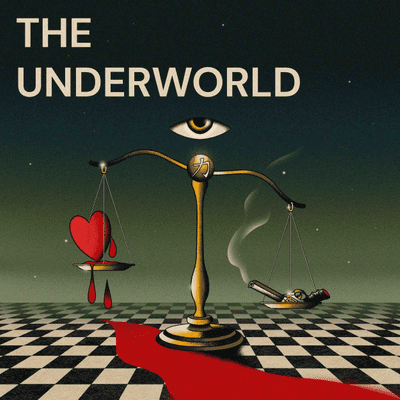
The Underworld
If there’s one person who could be said to truly be at the center of the 1871 LA Chinatown drama, it might be Yo Hing. While Yut Ho’s love intrigue was nominally the reason for the conflagration of Chinatown’s ongoing gang conflict, it would never have happened if it hadn’t aligned with Yo Hing’s plans. Yo Hing represents a side of Chinese America that both Western nativists and Chinese assimilationists are reluctant to face. Ironically, he also represents the embodiment of many of the nominal ideals of American society and the West in particular. Originality, adaptability, multiculturalism, and an almost populist outlook were among the characteristics that won him success in Wild West California. In many Anglo accounts, these characteristics are downplayed or presented as incongruous due to Anglo-Americans’ inability to accept the historical reality of a “Chinese cowboy.” Yo Hing’s outspoken, aggressive behavior is also presented as shameful from the point of view of real or imagined Chinese commentators. To anyone who believes in the ideal of rough men living by brains and brawn in a lawless West, Yo Hing seems almost too good to be true. However, like other larger-than-life Western figures, his winsome qualities are duly paired with more sinister ones. Chief among these was his affinity for violence. In this regard, the historical records are deceptively forgiving. They implicate Yo Hing in multiple incidences of fist fighting and not much else- at least not directly. However, circumstantial evidence seems to indicate that Yo Hing was complicit or involved in brutal beatings of Chinese men and women and possibly in murder. While this was by no means unusual in 1870s Los Angeles, it should be said that it is no more admirable in Yo Hing than in any of his Anglo or Latino counterparts. Another problematic attribute of Yo Hing’s was his blatant disregard for any semblance of law and order. In the case of figures such as Sam Yuen, a similar disregard could justifiably be chalked up to cultural values; China is not a culture in which the law is widely viewed as holding any moral authority. In Yo Hing’s case, however, his activities in the courts indicate that he had a clear understanding of the ostensible role of law within American society. Aside from his quip in the LA Star saying, “The police like money,” Yo Hing has left us with little insight into his internal attitudes towards legal process. However, his incessant legal skullduggery combined with recorded convictions for almost every imaginable crime speak volumes. Even in light of his many failings as a human being, it is very difficult not to like Yo Hing. Writing the story, Micah found that Yo Hing came to life in a very vibrant, sometimes even attractive way. In this, we may find ourselves in a position not too different from that of the denizens of 1871 Los Angeles. They knew what he was like, and they liked him anyway both inside of Chinatown and in the broader community. Perhaps this says something about human nature and what we really value in American society. After all, in a tired truism succinctly articulated by Game of Thrones author George R.R. Martin: “Everybody loves a rogue.” Composer’s Note: The final scene in this episode contains music derived from two mechanical player-piano scrolls, printed in Germany during the early 20th century and preserved by the Stanford University Libraries’ Player Piano Project. They are, in order of appearance, Hallelujah! : fox-trot from "Hit the deck" and Tea for two : fox-trot both composed by Vincent Youmans around the turn of the 20th century and performed or “encoded” by pianists Hans Sommer and Edward Johnson, respectively. The digitized scrolls are owned by Stanford University and licensed under a Creative Commons (CC) Attribution-NonCommercial-ShareAlike 4.0 International — CC BY-NC-SA 4.0. I transferred the digitized scroll audio to ¼ inch cassette tape via the redoubtable SSL2+ interface and a small valve phono amp, and then manipulated the vari-speed knob on a Sony TC-WE475 cassette deck to create the shifting, ghostly texture you hear during Yo Hing’s conference with the young lawyer Henry Hazard. While the music is admittedly from a later period than that in which the story is set, I loved the texture so much I decided to use it instead of the original guitar composition which I had initially slated for the spot. If Blood on Gold Mountain should ever appear in a commercial or non-educational context, I will happily replace this segment with the guitar material, unless Stanford Libraries see fit to make exception as they have done in some other cases. This interlude, in which the scrolls play back the motions entered by pianists long dead, has the distinction of being the only segment in the Blood on Gold Mountain soundtrack in which players outside my creative team are heard. I find it thrilling that these players were contemporaries of some of the characters in our story, and that the music was preserved in such an outlandish (by today’s standards) mechanical fashion. Truly, this is a case of the Ghost in the Machine. As usual, all the other music in this episode was composed and played by myself and my beautiful and talented fiancé, Emma. Thanks M If you have questions, thoughts, your own family stories, or historical context to share, please send us a message at @bloodongoldmountain on Facebook [http://www.facebook.com/bloodongoldmountain] or Instagram [http://www.instagram.com/bloodongoldmountain]. ----- Blood on Gold Mountain is brought to you by The Holmes Performing Arts Fund of The Claremont Colleges [https://services.claremont.edu/holmes-endowment/], The Pacific Basin Institute of Pomona College [https://www.pomona.edu/administration/pacific-basin-institute], The Office of Public Events and Community Programs at Scripps College [https://www.scrippscollege.edu/offices/officesservices/publicevents], The Scripps College Music Department [https://www.scrippscollege.edu/departments/music], The Entrepreneurial Musicianship Department at The New England Conservatory [https://necmusic.edu/em], and our Patreon patrons [https://www.patreon.com/bloodongoldmountain]. Blood on Gold Mountain is written and produced by Yan-Jie Micah Huang, narrated by Hao Huang, introduced by Emma Gies, and features music composed by Micah Huang and performed by Micah Huang and Emma Gies. A special thanks to Kusuma Tri Saputro [https://www.fiverr.com/kusumatsaputro] for the amazing artwork, Sheila Kolesaire [https://www.linkedin.com/in/sheilakolesaire/] for her critical PR guidance, Shayna Krizan for her Instagram wizardry, Rachel Huang [https://www.scrippscollege.edu/academics/faculty/profile/rachel-vetter-huang] for her editing prowess, and Evo Terra [https://twitter.com/evoterra] from Simpler Media Productions [https://simpler.media] for his immense expertise and support. ----- More details at bloodongoldmountain.com [http://bloodongoldmountain.com] Connect with us on Facebook [http://www.facebook.com/bloodongoldmountain] and Instagram [http://www.instagram.com/bloodongoldmountain] Support the show on Patreon [https://bloodongoldmountain.com/support]
Velg abonnementet ditt
Mest populær
Premium
20 timer lydbøker
Eksklusive podkaster
Ingen annonser i Podimo shows
Avslutt når som helst
Prøv gratis i 14 dager
Deretter 99 kr / måned
Premium Plus
100 timer lydbøker
Eksklusive podkaster
Ingen annonser i Podimo shows
Avslutt når som helst
Prøv gratis i 14 dager
Deretter 169 kr / måned
Bare på Podimo



















Populære lydbøker














Prøv gratis i 14 dager. 99 kr / Måned etter prøveperioden. Avslutt når som helst.