Gospel Tangents Podcast
engelsk
Historie & religion
Prøv gratis i 14 dager
99 kr / Måned etter prøveperioden.Avslutt når som helst.
- 20 timer lydbøker i måneden
- Eksklusive podkaster
- Gratis podkaster
Les mer Gospel Tangents Podcast
A 360-degree view of Mormonism. We interview the best Mormon scholars, scientists, and clergy from all restoration branches, including LDS, Community of Christ, Strangites, Bickertonites, Temple Lot, Remnant, etc.
Alle episoder
1176 Episoder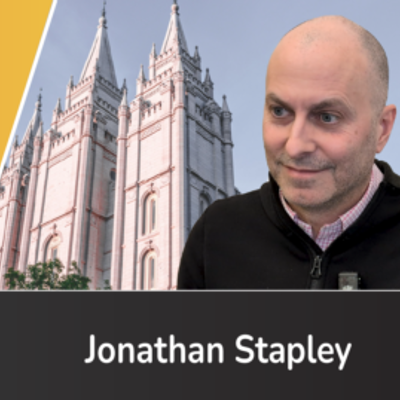
Best Temple Prep Ever! (Jonathan Stapley)
Chapter 1 is the best temple prep book ever. I sat down with Jonathan Stapley, an award-winning historian to discuss his newest book, Holiness to the Lord: Latter Day Saint Temple Worship [https://amzn.to/4143E0R]. During the show, Stapley was even surprised he won the “Best Temple Book of 2025 [https://gospeltangents.com/2026/01/2025-book-awards/]” award! I thi https://youtu.be/1bBMcqgKKdY 0:00 Award Winning Author on LDS Temple Worship 3:20 Is Temple Worship Taboo? 10:14 Required Reading for Temple Prep 17:52 Kirtland Temple Period DEMYSTIFYING THE TEMPLE EXPERIENCE/TEMPLE PREP For many, the LDS temple can feel like a secretive or taboo topic, but Stapley’s new book aims to change that. He designed his first chapter to be a transparent walkthrough for anyone preparing for the temple. It covers the practical, step-by-step process of going to the temple, from talking to a local bishop and purchasing garments to making an appointment and participating in the ceremonies. Stapley explains that this level of openness is highly beneficial. Not only does it help outsiders understand the faith’s practices, but it also gives practicing Latter-day Saints a much-needed framework for discussing the temple constructively, helping them avoid being unhelpfully “cagey” or silent about their worship. Furthermore, Stapley pushes back against critics who use the private nature of the temple as a “dig” against the church, noting that the creation of sacred, “insider/outsider” boundary-maintaining spaces is a common practice across many world religions and ancient Christianity. THE MYTH OF THE “OG” ENDOWMENT When it comes to the temple’s core ceremony—the endowment—Stapley makes a striking historical observation: there is no such thing as an “OG” (original) endowment. Before temples, bishops, or apostles were even fully established in the church, Joseph Smith taught that the saints would be “endowed with power from on high,” a concept pulled directly from the biblical books of Luke and Acts. Originally, this endowment was a charismatic experience rather than a set ritual. Over time, these biblical concepts were ritualized and performed, constantly adapting to the needs of the church. Because the ceremony was initially transmitted orally, Stapley notes that the ritual has continually changed and adapted throughout its entire history. He directly challenges fundamentalist attempts to reconstruct a supposedly “original” 8-hour endowment, stating that such a platonic ideal never actually existed, and that procedural changes are a historical reality, not proof of apostasy as fundamentalists allege. A “GOLDEN ERA” FOR LATTER-DAY SAINT HISTORY Stapley shared that we are currently living in a “golden era” of Latter-day Saint historical research. Compared to a couple of decades ago when archive access felt like the “wild west,” there is now sustained openness and transparency, with massive resources like the Brigham Young papers available freely online. While the church still naturally redacts specific details about the temple ceremonies from third-party historical documents, Stapley isn’t bothered by this. Instead of getting bogged down in reconstructing “ticky tack” changes to the ceremonies, he is far more interested in the bigger picture: understanding what these sacred rituals actually do in the lives, minds, and communities of the believers who participate in them. Have you read his book? What are your impressions?
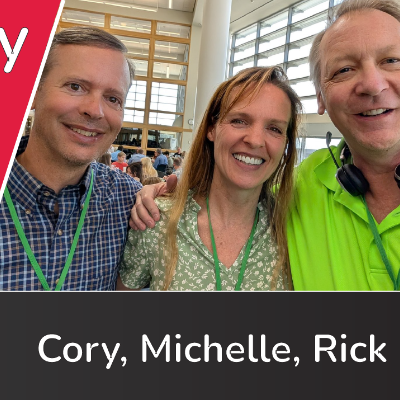
Polygamy Conference Controversies & Recap 2026
JOURNAL OF MORMON POLYGAMY CONFERENCE Here is a recap of the major highlights, controversies, and presentations. https://youtu.be/IekJUmx5qK4 THE 1886 JOHN TAYLOR REVELATION I was part of a panel discussing the 1886 John Taylor revelation, which was recently released by the Church History Library [https://catalog.churchofjesuschrist.org/record/3aec2ea6-fdeb-4866-9529-47e27f9cd3b9/0?view=browse&lang=eng]. This revelation was received around September 27, 1886, while President Taylor was in hiding from U.S. government officials due to the Edmunds Act. The original manuscript was discovered written in pencil in Taylor’s desk by his son, Apostle John W. Taylor, while settling his estate in 1887. The interpretation of this document causes a major split: * The Fundamentalist View: Fundamentalists view the 1886 revelation as an unequivocal mission statement. Because the text states, “I have not revoked this law nor will I,” they interpret this to mean the practice of plural marriage can never be suspended by earthly authority, rendering the 1890 and 1904 manifestos invalid. * The Mainstream LDS View: Mainstream theology focuses on the word revoked, viewing it as a commandment that can be suspended. Pointing to D&C 132:7, mainstream members argue that only one man on earth holds the keys of the sealing priesthood at a time, meaning the 1886 revelation grants no independent authority to individuals to perform plural marriages without the current Church President’s authorization. During the Q&A, I stated what I thought was an uncontroversial fact: a major difference between D&C 132 and the 1886 revelation is that section 132 was canonized, and the 1886 text was not. Surprisingly, this drew audible pushback and eye daggers from the audience. A ROOM FULL OF “REVISIONISTS” I estimate that 90% of the attendees at the conference were “polygamy revisionists”—individuals who believe Joseph Smith never practiced polygamy and that D&C 132 is a forgery. For many in attendance, their opposition to polygamy seems rooted in the moral belief that the practice is inherently wrong, leading to a strong desire to see section 132 decanonized. This dynamic created an ironic parallel at the conference: both polygamy revisionists and fundamentalists are currently facing excommunication from the mainstream Church for their opposing beliefs regarding Joseph Smith and plural marriage. STYLOMETRY, D&C 132, AND “STATISTICAL NOISE” One of the most highly anticipated presentations for me was from Ethan Lloyd, who recently published a paper utilizing stylometry [https://journalofmormonpolygamy.org/jmp/article/view/44] (wordprint analysis) to argue that the plural marriage verses of D&C 132 do not match Joseph Smith’s established voice. His study was presented as a direct counter to a recent Interpreter [https://cdn.interpreterfoundation.org/jnlpdf/fields-v67-2025-1-70-PDF.pdf] article by Fields [https://cdn.interpreterfoundation.org/jnlpdf/fields-v67-2025-1-70-PDF.pdf] et al., which used similar methods to argue that Joseph was the author. As a “math nerd” and statistician, I have serious issues with wordprint studies. While Lloyd rightly points out methodological flaws in the Interpreter study—such as artificially inflating their data by “bootstrapping” short texts—I believe the entire premise of stylometry is flawed. Here is why stylometry falls short on D&C 132: * Tone vs. Function Words: Lloyd argue that Joseph’s normal revelations have a “pastoral” tone, while D&C 132 sounds “judicial” and harsh. However, stylometry measures invisible, high-frequency function words (like the, and, of, unto.) You cannot use the frequency of the word “and” to objectively prove a shift from a pastoral to a judicial tone. * Lack of Statistical Variance: In Principal Component Analysis (PCA), which Lloyd used, you typically want your variables to explain 80% to 90% of the variance in the data. In Lloyd’s study, the variance explained was only in the 15% to 30% range. When that much variance is left unexplained, you aren’t finding a definitive signal or voiceprint”—you are just measuring statistical noise. Ultimately, I agree with historian John Hamer [https://gospeltangents.com/people/john-hamer/]: wordprint studies generally just reflect the bias of the author. OTHER CONFERENCE HIGHLIGHTS * Helen Mar Kimball: Michelle Stone gave a fascinating historiography arguing that Helen Mar Kimball never actually admitted to being a plural wife of Joseph Smith. She was never considered a possible plural wife until the 1930s “Jubilee letters” surfaced. Mainstream historians generally agree Helen was sealed to Joseph at age 14, but Stone’s paper disputes this. * The Moral Argument: Connor Boyack received a standing ovation for a presentation making a moral and theological case against concubines and polygamy. * Fundamentalist Representation: Major credit goes to David Patrick and others from the fundamentalist branch called Christ’s Church [https://gospeltangents.com/denominations/christs-church/] for proudly presenting their beliefs in the 1886 revelation to an audience that was overwhelmingly hostile to the practice of polygamy. LINGERING QUESTION FOR REVISIONISTS I’ll leave you with the same question I posed at the end of the episode regarding the revisionist movement. If you believe D&C 131 and 132 are forgeries that should be thrown out, how do you justify monogamous temple sealings? What scriptures justify monogamous sealings? William V Smith argues the doctrines of eternal monogamous sealings and plural marriage are so deeply intertwined within the text of section 132 that you cannot simply cut out the polygamy verses and keep the sealing power intact [https://gospeltangents.com/2018/03/how-132-affects-future-revelation-women-gays/]. If you remove section 132 entirely, where is the doctrinal foundation for temple work? What do you think of the 2nd Journal of Mormon Polygamy Conference?
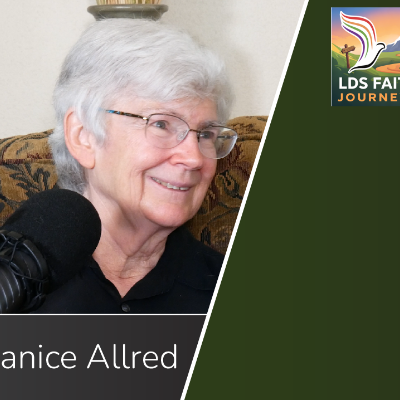
Why Janice Allred StaysWhy I Stay: Three Decades in the Pews as an Excommunicated Member
Janice Allred was excommunicated just over 30 years ago, but still attends the LDS Church!!! Why? She will talk about why she stays, and offer advice to others on how to stay if they want to. We’ll discuss how it affects her family, her testimony, and we’ll even dive into why current polygamy revisionists are getting into trouble with LDS Church leaders. Check out our conversation! https://www.youtube.com/watch?v=8O8H-QXlDPw WHY I STAY: THREE DECADES IN THE PEWS AS AN EXCOMMUNICATED MEMBER What does it look like to remain dedicated to a faith community that has formally cast you out? For Janice Allred [https://gospeltangents.com/people/janice-allred], a “philosophical theologian” who was excommunicated in 1995, the answer is found in showing up every Sunday for over thirty years. Allred, the sister of fellow scholar Margaret Toscano [https://gospeltangents.com/people/margaret-toscano], was disciplined primarily for her writings on “God the Mother [https://amzn.to/4sE0ht2]“ and her critiques of church authority, yet she remains a fixture in her local ward. WHY STAY? When asked the “Sunstone question” of why she stays, Allred’s first response is simple: “Because I want to”. Her deeper motivations are rooted in her identity as a follower of Jesus Christ, noting that He encouraged His followers to meet together often to strengthen one another. Furthermore, she feels a profound connection to the revelations of Joseph Smith, including the Book of Mormon and the Doctrine and Covenants, and wants to worship where those texts are accepted as scripture. FROM PARIAH TO PARTICIPANT The road has not been easy. For the first five to ten years after her excommunication, Allred describes being treated like a “pariah” and was largely ignored by her ward members. She recalls a poignant moment five years in when a fellow ward member simply said “Hello,” and she nearly broke into tears because so few had spoken to her during that time. The turning point was a house fire. While the community struggled to know how to respond to her theological dissent, they knew exactly how to help a family in a physical crisis. Today, she is a regular participant in Sunday school and Relief Society, though she is denied the sacrament, which she describes as the hardest part of her experience. THE “OBSERVER” STRATEGY Allred offers a unique perspective for those struggling with their faith: be an observer. She navigates the tension of hearing things she disagrees with—such as the “adulation” of church leadership or the Proclamation on the Family [https://www.churchofjesuschrist.org/study/scriptures/the-family-a-proclamation-to-the-world/the-family-a-proclamation-to-the-world?lang=eng]—by taking a step back and viewing the meetings through a sociological or theological lens. She does not feel the need to agree with everything said from the pulpit to feel that she belongs to the “invisible church” of true followers of Christ. A DIFFERENT KIND OF FUNDAMENTALISM Perhaps most surprising is Allred’s stance as a “polygamy revisionist.” Through her theological studies, she became convinced that Joseph Smith neither taught nor practiced polygamy, and she views Section 132 as a later forgery or a text contrary to the gospel. While this view challenges the lineage of authority from Brigham Young, she maintains that her primary goal is seeking what is true according to her own conscience and inspiration. Janice Allred’s journey is a testament to self-authorship in faith. She remains a “member of the ward” in spirit, even if not on the records, proving that for some, the community of Christ is worth the discomfort of dissent. What do you think of Janice’s persistence for 30+ years?
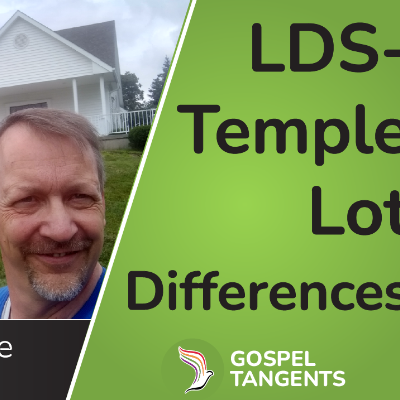
LDS-Temple Lot Differences (Daniel Malone 3 of 3)
LDS-TEMPLE LOT DIFFERENCES: UNIQUE PRIESTHOOD STRUCTURE We’re going to discuss LDS-Temple Lot differences. Unlike the LDS Church, the Church of Christ (Temple Lot) [https://www.churchofchrist1830.org/] does not divide its priesthood into Aaronic and Melchizedek branches. Furthermore, they do not have the office of High Priest, believing that Jesus Christ was and remains the last High Priest. https://youtu.be/WvM-kU-YDsI Don’t miss our other discussions about Hedrickites. https://gospeltangents.com/denominations/hedrickites [https://gospeltangents.com/denominations/hedrickites] Copyright © 2025 Gospel Tangents All Rights Reserved Their active priesthood offices consist of: * Elders: The spiritual heads of the church who have the authority to perform administrations, lay on hands, and perform baby blessings. The Twelve Apostles are also chosen from among the Elders. * Priests: Authorized to baptize and serve the sacrament. * Teachers: Authorized to preach and assist the Elders. * (Note: While the office of Deacon exists on record, there have been no active Deacons in the church for a long time). Another major difference is how men receive the priesthood. Priesthood callings are not treated as a coming-of-age milestone for young men; instead, every ordination requires a divine calling, spiritual witnesses, and the individual’s formal acceptance. Because not every father holds the office of Elder, baby blessings in the Church of Christ are typically performed by the older, ordained Elders of the congregation rather than the child’s father. LOCAL AUTONOMY AND GLOBAL REACH The Church of Christ is highly autonomous at the local level. As long as a local congregation has at least six members and one Elder, they are officially recognized and can elect their own pastor annually. These pastors have the freedom to set their own meeting schedules, which typically include Sunday worship and Wednesday evening prayer, testimony, or singing services. While historically rooted in Independence, Missouri, the church has experienced surprising global growth since the late 1990s, expanding into the Philippines, East Africa, Mexico, and even establishing contacts in places like Argentina and Dubai. Though Malone estimates the total church population is relatively small, they utilize a secure online system so that isolated global members can vote during the church’s annual General Conference, held around April 6th every year. MIRACLES AND SPIRITUAL GIFTS Malone shared powerful testimonies regarding the church’s reliance on divine intervention, particularly when calling leaders. Apostles can only be ordained during General Conference following a vote of acceptance by the people. Malone recounted a miraculous event where thirteen men were identified for the quorum of apostles through overwhelming spiritual witnesses. Tragically, one of the called men suffered a fatal heart attack shortly after. Soon after, another apostle in Mexico had a prophetic dream of a golden rope, which clarified the exact regional assignments and confirmed the final twelve men meant to serve. Malone also shared a rare but electrifying firsthand experience of the spiritual gift of speaking in tongues. As a teenager in Phoenix, he witnessed an apostle named Don Hausenik speak in an unknown tongue and then provide the interpretation, an event that filled the room with a palpable, physical spiritual power. VIEWS ON LDS TEMPLE ORDINANCES When asked about differences in worship, Malone frankly noted his confusion over LDS temple practices. The Church of Christ firmly rejects secret ordinances such as baptisms for the dead and eternal sealings, arguing that these practices are not found in the Book of Mormon. They believe all church functions should be public and see no need for a temple that operates in secrecy. Don’t miss our other conversations on Hedrickites: https://gospeltangents.com/denominations/Hedrickites/ [https://gospeltangents.com/denominations/hedrickites] Copyright © 2026 Gospel Tangents All Rights Reserved
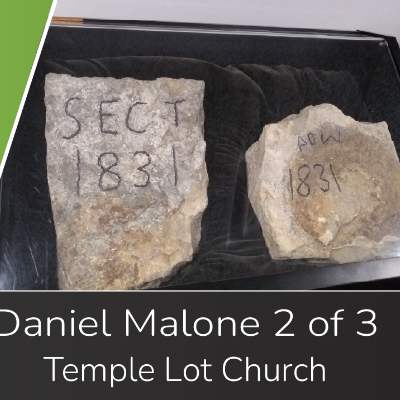
Temple Lot Mystery and Otto Fetting (Daniel Malone 2 of 3)
We focus heavily on the turbulent history of the physical temple lot in Independence, Missouri, and the controversial figure of apostle Otto Fetting [https://gospeltangents.com/lds_people_historical/otto-fetting/]. Daniel Malone, a Sunday school teacher for the Church of Christ (Temple Lot) [https://www.churchofchrist1830.org/] gives his insights. https://youtu.be/xqRZPoyaUqk Don’t miss our other conversations on Hedrickites: https://gospeltangents.com/denominations/Hedrickites/ [https://gospeltangents.com/denominations/hedrickites] Copyright © 2026 Gospel Tangents All Rights Reserved THE 1920S INFLUX AND A CHANGING CHURCH During the 1920s, the RLDS Church experienced a major schism over “supreme directional control [https://gospeltangents.com/2023/08/emma-smiths-surprising-2nd-marriage/],” which led to a massive influx of former RLDS members joining the Church of Christ. This sudden growth swelled the Independence congregation from roughly 250 to nearly 600 members. Amidst an era of intense theological debates, the Church of Christ made a monumental organizational change in 1925: they completely abolished the office of a presiding elder (or president), choosing instead to be led collectively by a Quorum of Twelve Apostles. However, Malone candidly admits that the early church had a “horrible track record” of electing apostles, resulting in numerous leaders leaving and taking factions of the church with them. OTTO FETTING AND THE MASONIC BLUEPRINTS One of the most notable apostles from this era was Otto Fetting, who joined around 1927 and claimed to receive a series of revelations from John the Baptist. Fetting instructed the church to build a temple and provided blueprints for a massive 180-by-90-foot structure that Malone describes as looking like a Masonic lodge. This directly contradicted Joseph Smith’s earlier instructions to build the Independence temple to match the dimensions of the Kirtland temple, which was much smaller. Fetting’s revelations eventually commanded that members be rebaptized, which was a bridge too far for the church. The Church of Christ ultimately rejected Fetting, redacted all of his revelations, and considers them non-binding8. Ironically, the 180-by-90-foot dimensions proposed by Fetting are the ones still marked out on the temple lot today. THE CORNERSTONE CONTROVERSY While excavating the foundation for Fetting’s temple, workers unearthed cornerstones that are currently housed in the church’s visitor center. Malone expressed deep personal suspicion regarding these artifacts. While he acknowledges the possibility that Joseph Smith could have originally placed them there to mark the spot, Malone finds it highly convenient that they were discovered right as Fetting was attempting to legitimize his massive temple project, suggesting they could potentially be forgeries planted by Fetting. CURRENT TEMPLE PLANS AND “CLOSED COMMUNION” Despite owning the property, the Church of Christ has absolutely no current plans to build a temple. They have money strictly earmarked and set aside for a temple, but they refuse to move forward unless they receive a direct, divine revelation from God commanding them to do so. We also addressed a rumor regarding a Brazilian restoration group [https://gospeltangents.com/2021/12/intro-reborn-lds-church/] attempting to merge with the Church of Christ to gain voting rights over the temple lot. Malone dismissed the likelihood of this, explaining that the church practices “closed communion” and requires all new members to be rebaptized directly into their organization. In fact, they stopped accepting priesthood and baptismal transfers from the RLDS Church back in the 1920s or 1930s due to stark differences in belief. Don’t miss our other conversations on the Temple Lot group: https://gospeltangents.com/denominations/Hedrickites/ [https://gospeltangents.com/denominations/hedrickites] Copyright © 2026 Gospel Tangents All Rights Reserved 0:00 Otto Fetting/Temple Cornerstones 15:11 Brazil Group
Velg abonnementet ditt
Mest populær
Premium
20 timer lydbøker
Eksklusive podkaster
Ingen annonser i Podimo shows
Avslutt når som helst
Prøv gratis i 14 dager
Deretter 99 kr / måned
Premium Plus
100 timer lydbøker
Eksklusive podkaster
Ingen annonser i Podimo shows
Avslutt når som helst
Prøv gratis i 14 dager
Deretter 169 kr / måned
Bare på Podimo























Populære lydbøker


















Prøv gratis i 14 dager. 99 kr / Måned etter prøveperioden. Avslutt når som helst.