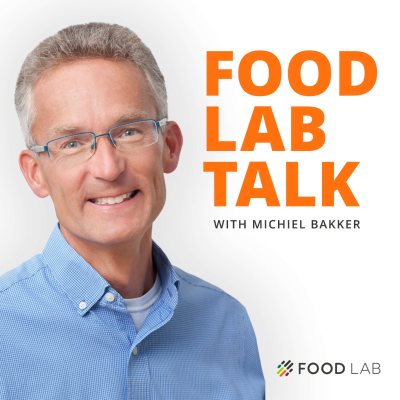
Food Lab Talk
Englisch
Kostenlos bei Podimo
Kostenlos hören bei Podimo
Starte jetzt und verbinde dich mit deinen Lieblingspodcaster*innen
- Vertraut von über 1 Mio. deutschen Hörer*innen
- Über 1.000 lokale Podcasts und Shows – nur bei Podimo
- Keine Zahlung nötig
Mehr Food Lab Talk
A better food system starts with one thing: vision. Food Lab Talk gives global food system changemakers a platform to articulate their vision for the future of food. The series features interviews with inspiring individuals who are working on the frontlines of many of our most pressing food issues: reducing food loss and waste, enhancing food system transparency, facilitating shifts toward more balanced plant-forward diets, enabling informed individual choices for sustainable lifestyles, and accelerating the transition to a circular food economy. Join Google’s Michiel Bakker to meet the leaders taking bold action and answering what each of us can do to create a better food system for us all.
Alle Folgen
36 Folgen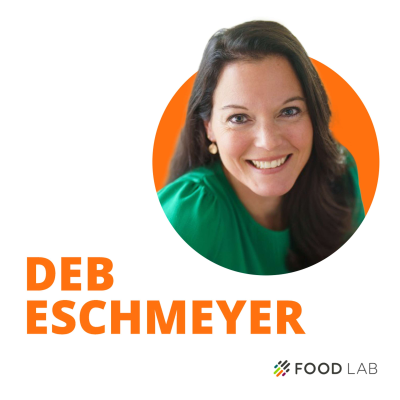
33. Deb Eschmeyer, Original Strategies
A food systems policy expert and social impact entrepreneur, Deb Eschmeyer has dedicated her career to the betterment of society. From co-founding the national nonprofit Food Corps, to serving as Executive Director of Michelle Obama’s “Let’s Move!” initiative, and driving change in the food industry, her efforts have permanently influenced the way we think about food and health. In this episode, Deb shares her journey as a changemaker emphasizing agility and persistence, finding your “zone of genius”, and balancing perspectives and patience to achieve long-term change. Deb Eschmeyer: “Don't take no for an answer and just keep pushing and speaking up and showing up. And it’s sometimes really uncomfortable. There's so many people who don't like public speaking. There's so many people who are brilliant and just have fabulous ideas… Speak up, show up, and develop lines of empathy. To be a better change maker is to understand all the different avenues of change it takes to get things done.” 00:00 Intro to Deb 01:44 From farmhouse to the White House: be relentless, speak up, show up 06:30 How empathy and a diverse set of experiences can help you find your “zone of genius” 09:21 Why school nutrition reform can spark system-wide change 13:03 Focusing on the long view and the direction of travel 15:35 Embracing collective responsibility to drive meaningful systems change 18:20 Complexity and the impending food crisis 21:01 Why trust, accountability, and collaboration are key to impactful change 25:10 Deb’s advice: embrace uncomfortable spaces, focus on your strengths, and keep pushing forward 28:25 Takeaways for changemakers Links * FoodCorps [https://foodcorps.org/] * Let's Move! Initiative [https://letsmove.obamawhitehouse.archives.gov/] * AmeriCorps [https://americorps.gov/] * ASU Swette Center for Sustainable Food Systems [https://globalfutures.asu.edu/food/] * Healthy, Hunger-Free Kids Act of 2010 [https://www.congress.gov/bill/111th-congress/senate-bill/3307] Keep in Touch Subscribe, rate, review the show at foodlabtalk.com [https://www.foodlabtalk.com/] Follow Food Lab talk on YouTube [https://www.youtube.com/@FoodLabTalk] and LinkedIn [https://www.linkedin.com/company/food-lab-talk/] *The views expressed by the guests in this podcast don't necessarily represent the host’s views, nor those of his employer.
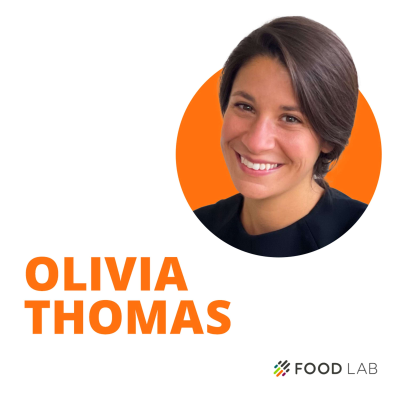
32. Olivia Thomas, Boston Medical Center and Rewire Health
Olivia Thomas is a registered dietitian, entrepreneur, and the co-founder of “Rewire Health”, a culinary medicine platform that simplifies healthy home cooking and expands access to teaching kitchens. In this episode, Olivia shares her experiences building a culinary medicine startup, including how active listening and a multidisciplinary approach can lead to impact-focused solutions. Olivia Thomas: “We need to be focusing on how resources, especially within food as medicine, can be used to reinvest into disinvested communities... I have been redefining how I work on projects based on the impacts. What foods am I marketing? Who is it benefiting? How is the data being used? And the idea of sovereignty is important and making sure that it aligns with the communities we're focusing on and working with.” 00:00 Intro to Olivia 01:09 From childhood cooking to culinary medicine 02:13 How food-based interventions help manage chronic disease 04:50 Overview of Rewire Health from pitch to startup 07:58 Cultivating a culinary medicine platform 09:49 Enabling personally relevant food choices 11:22 Investing in local communities to impact the whole food system 12:30 Embracing change and using technology to stay ahead 14:24 Why navigating complex systems requires a multidimensional approach 17:00 The role of collaboration and community building 18:14 Using culturally affirming recipes to empower choice 20:51 Accelerating behavior change with personalization, practice, and insight 23:37 Shifting perspectives on the role of food’s impact on health 25:44 Creating sustainable habits 28:15 Redefining problem-solving 29:23 How active listening builds trust and drives impact 30:13 Looking towards the future of culinary medicine 32:23 Takeaways for changemakers Links * Rewire Health [https://www.rewire-health.com/] * Pursuit App [https://www.pursuit-app.com/] * Boston Medical Center’s Teaching Kitchen [https://www.bmc.org/nourishing-our-community/teaching-kitchen] * The Teaching Kitchen Collaborative [https://teachingkitchens.org/] * Corbin Hill Food Project [https://corbinhillfoodproject.wpcomstaging.com/] * Boston Medical Center: Eat to Treat [https://www.bmc.org/nourishing-our-community/teaching-kitchen/program-information/eat-treat] Keep in Touch Subscribe, rate, review the show at foodlabtalk.com [https://www.foodlabtalk.com/] Follow Food Lab talk on YouTube [https://www.youtube.com/@FoodLabTalk] and LinkedIn [https://www.linkedin.com/company/food-lab-talk/] *The views expressed by the guests in this podcast don't necessarily represent the host’s views, nor those of his employer.
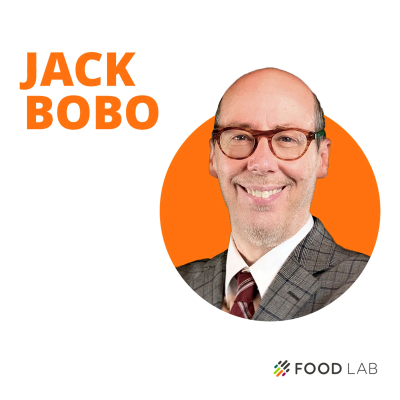
31. Jack Bobo, University of Nottingham Food Systems Institute
Jack Bobo is the Director of the University of Nottingham’s Food Systems Institute which brings together transdisciplinary researchers to address some of the most pressing food systems challenges. He is also the author of the 2021 book “Why smart people make bad food choices.” In this episode, Jack shares how breaking down silos can foster collaboration, why reframing your thinking can help navigate tradeoffs, and how small shifts in language can impact people’s perceptions. Jack Bobo: “I believe less in right and wrong and good and bad, and more in thinking in terms of choices and consequences. And if you can help to lay out the consequences of actions, I think in many ways you can lead people to knowledge instead of sort of beating them up with science. Researchers and academics love to tell people what to do and they like to tell them the answer. I think it's much better to be able to help people to understand the consequences of different choices. And then you may end up getting a different outcome, but at least they understand the consequences of it and it's an informed decision.” 00:00 Intro to Jack 01:14 Overview of the University of Nottingham’s Food Systems Institute 03:44 Taking a systems approach to lead global change 05:18 Why consensus is important for problem solving 06:45 Addressing the “language barrier” in food systems solutions 08:38 How shifting from “should” to “could” focuses on opportunities and solutions 11:40 Leading people to knowledge by framing the consequences of choices 13:56 Building trust by understanding confirmation bias and the misleading nature of our brains 17:38 The paradox of improved nutrition research and rising obesity rates 20:00 How to overcome the invisible influences on food choices 23:14 Changing the food system by focusing on social norms 25:51 The importance of word choice for effective change making 27:59 Why networking and storytelling are life skills 29:39 Balancing the continuum of local vs. global sustainability 31:37 Takeaways for changemakers Links * University of Nottingham Food Systems Institute [https://www.nottingham.ac.uk/science/schools-centres-and-institutes/food-systems-institute/index.aspx] * The Nature Conservancy [https://www.nature.org/en-us/] * Book: Why smart people make bad food choices [https://books.google.com/books/about/Why_Smart_People_Make_Bad_Food_Choices.html?id=JBMuEAAAQBAJ] * TEDx: Why We Fear the Food We Eat [https://youtu.be/thiOicCQRWY] * Futurity Food [https://futurityfood.com/] Keep in Touch Subscribe, rate, review the show at foodlabtalk.com [https://www.foodlabtalk.com/] Follow Food Lab talk on YouTube [https://www.youtube.com/@FoodLabTalk] and LinkedIn [https://www.linkedin.com/company/food-lab-talk/] *The views expressed by the guests in this podcast don't necessarily represent the host’s views, nor those of his employer.
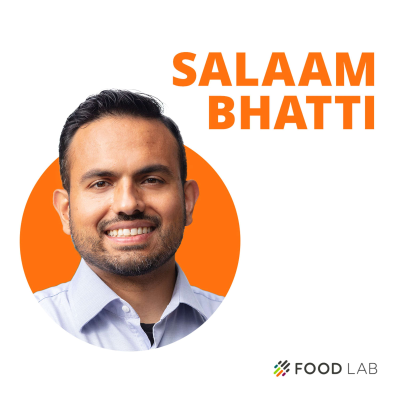
30. Salaam Bhatti, Food Research and Action Center
Salaam Bhatti is the SNAP Director at the Food Research and Action Center, a 501(c)(3) that uses advocacy and strategic partnerships to improve the health and well-being of people struggling against poverty-related hunger in the United States. Tune in to learn how to bring together diverse perspectives, challenge established norms, and seek innovative solutions for modern society. Salaam Bhatti: “The best way to find change is to go out and find like-minded people. Create a coalition to make that change happen. But if you want to perfect that, then you have to find people who disagree so that you can really understand why you believe what you believe. And maybe there are things that just need education, that just need more facts to help bring them to your side. Or maybe you were wrong and you can come to a compromise or an agreement. But until you get out of your comfort zone, the change you will try to make will only be fleeting and never systemic.” 00:00 Intro to Salaam 01:25 From law to public benefit activism 04:50 How sparking joy drives passion in food justice 06:09 Addressing food insecurity for an equitable food system 08:20 How zoning and economic inequalities exacerbate food insecurity 10:55 Why building strategic alliances can bridge divides to pass policy reform 14:28 Exploring the ripple effects of SNAP program changes on the economy 18:00 Overview of the Food Research and Action Center 19:14 Addressing poverty related hunger solutions and challenges 21:20 How choice and increased access improves health outcomes 26:17 Reimagining food policy for modern needs 28:22 Why getting out of your comfort zone can lead to systemic change 31:11 Takeaways for changemakers Links * Food Research Action Center [https://frac.org/] (FRAC) * Supplemental Nutrition Assistance Program [https://www.fns.usda.gov/snap/supplemental-nutrition-assistance-program] (SNAP) * Report: Household Food Security in the United States in 2022 [https://www.ers.usda.gov/publications/pub-details/?pubid=107702] * Quantifying the Impact of SNAP Benefits on the US Economy and Jobs [https://www.ers.usda.gov/amber-waves/2019/july/quantifying-the-impact-of-snap-benefits-on-the-u-s-economy-and-jobs/] Keep in Touch Subscribe, rate, review the show at foodlabtalk.com [https://www.foodlabtalk.com/] Follow Food Lab talk on YouTube [https://www.youtube.com/@FoodLabTalk] and LinkedIn [https://www.linkedin.com/company/food-lab-talk/] *The views expressed by the guests in this podcast don't necessarily represent the host’s views, nor those of his employer.
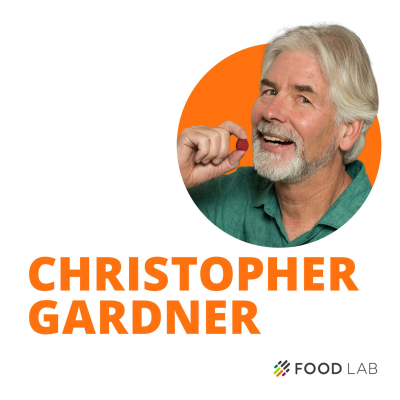
29. Christopher Gardner, Stanford School of Medicine
Dr. Christopher Gardner is a nutrition scientist focused on what foods to eat and what foods to avoid for optimal health, as well as the forces that can successfully motivate people to improve their food and beverage behaviors. His recent research interests include: “stealth nutrition,” which focuses on shifting diets through the integration of non-health related approaches, like the connection between food and climate change; institutional food; and the microbiome. Christopher Gardner: “I would say the biggest thing for me is humility. I am a nutrition scientist. I understand the mechanism. You should eat that. [But] there is the business aspect, the marketing aspect, the legal aspect, the policy aspect, the cultural aspect, the historical aspect, the storytelling aspect… The humility to recognize how many other disciplines and factors are tugging at people's tongues and hearts and brains, has really been the greatest learning experience for me.” 00:00 Intro to Dr. Gardner 01:03 How nutrition research becomes a Netflix documentary 04:22 Using humor to inspire retention 06:09 The road from philosophy to nutrition science 07:20 The dissonance with access to nutrition information 09:21 Food & Society: External motivators and behavior change 14:51 Why institutions have a powerful role in food systems transformation 16:55 The "instead of what" and "with what" approach to behavior change 21:26 The complex nature of food choice 25:50 How “stealth nutrition” influences choice 29:34 Embracing humility and creative storytelling in science communication 32:18 Takeaways for changemakers Links * Stanford School of Medicine Nutrition Studies Research Group [https://med.stanford.edu/nutrition.html] * Netflix Documentary - You Are What You Eat [https://www.netflix.com/title/81133260] * The Game Changers Documentary [https://gamechangersmovie.com/] * Cardiometabolic Effects of Omnivorous vs Vegan Diets in Identical Twins A Randomized Clinical Trial [https://jamanetwork.com/journals/jamanetworkopen/fullarticle/2812392?resultClick=3] * Michael Pollan’s Omnivore Dilemma [https://michaelpollan.com/books/the-omnivores-dilemma/] * Barbara Kingsolver’s Animal, Vegetable, Miracle [http://animalvegetablemiracle.com/] * Eric Schlosser's Fast Food Nation [https://openlibrary.org/books/OL24206856M/Fast_Food_Nation] * Marian Nestle's Food Politics [https://www.foodpolitics.com/food-politics-how-the-food-industry-influences-nutrition-and-health/] * CIA’s Greg Drescher on Using Deliciousness to Drive Change | Food Lab Talk Episode 13 [https://youtu.be/8HWynLxgI7A?feature=shared] Keep in Touch Subscribe, rate, review the show at foodlabtalk.com [https://www.foodlabtalk.com/] Follow Food Lab talk on YouTube [https://www.youtube.com/@FoodLabTalk] and LinkedIn [https://www.linkedin.com/company/food-lab-talk/] *The views expressed by the guests in this podcast don't necessarily represent the host’s views, nor those of his employer.
Nur bei Podimo






















Beliebte Hörbücher