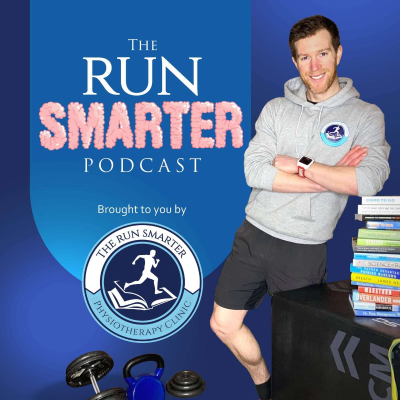
The Run Smarter Podcast
Englisch
Kostenlos bei Podimo
Kostenlos hören bei Podimo
Starte jetzt und verbinde dich mit deinen Lieblingspodcaster*innen
- Vertraut von über 1 Mio. deutschen Hörer*innen
- Über 1.000 lokale Podcasts und Shows – nur bei Podimo
- Keine Zahlung nötig
Mehr The Run Smarter Podcast
Expand your running knowledge, identify running misconceptions and become a faster, healthier, SMARTER runner. Let Brodie Sharpe become your new running guide as he teaches you powerful injury insights from his many years as a physiotherapist while also interviewing the best running gurus in the world. This is ideal for injured runners & runners looking for injury prevention and elevated performance. So, take full advantage by starting at season 1 where Brodie teaches you THE TOP PRINCIPLES TO OVERCOME ANY RUNNING INJURY and let’s begin your run smarter journey.
Alle Folgen
433 FolgenThe Hidden Psychological Factors Behind Persistent Tendon Pain with Jack Mest
Learn more about Brodie's Research Database & AI Assistant [https://funnel.runsmarter.online/run-smarter-ai-assistant] 📄🔍 For MORE Run Smarter Resources 🏃♂️📚 - Including Free Injury Prevention Courses 🩹🎓 - The Run Smarter Book 📖 - Access to Research Papers 📄🔍 - & Ways to Work with Brodie 🤝👟 👉 CLICK HERE! [https://app.runsmarter.online/] 🎉✨ Tendon pain is often treated as a purely physical problem. Strengthen the tendon, adjust the load, and eventually things should improve. But what happens when the pain persists for months… or even years? In this episode, Brodie speaks with physiotherapist and PhD researcher Jack Mest about a recent systematic review and meta-analysis exploring the psychological profile of people with persistent tendinopathy. The research compared people with chronic tendon pain to healthy controls and uncovered something surprising: fear of movement wasn’t the main psychological factor. Instead, the research found that pain catastrophizing — a negative outlook toward pain and recovery — appeared more common in people with persistent tendinopathy. This episode explores how psychological factors may influence tendon pain, why lower limb injuries may carry a greater psychological burden, and why clinicians need to treat the person behind the injury — not just the tendon itself. If you’re a runner struggling with Achilles pain, plantar fasciopathy, proximal hamstring tendinopathy, or another persistent tendon injury, this conversation will help you understand why recovery can feel so frustrating — and what might help. In This Episode Brodie and Jack discuss: * Why tendinopathy often becomes a chronic condition * What the biopsychosocial model means for tendon rehab * The difference between kinesiophobia (fear of movement) and pain catastrophizing * Why catastrophizing appears more common in persistent tendon pain * Why lower limb tendinopathies may have greater psychological impact than upper limb injuries * The role of beliefs, expectations, and past experiences in shaping pain * Why clinicians should ask about patients’ thoughts and fears about their injury * Whether psychological traits are pre-existing or develop after chronic pain begins * Practical advice for runners dealing with long-term tendon pain About the Guest Jack Mest is a physiotherapist and PhD researcher whose work focuses on understanding why tendinopathy becomes chronic and how psychological factors influence tendon pain. His research aims to improve the way clinicians approach tendon rehabilitation by integrating biological, psychological, and social factors into treatment. Follow Jack's research and updates: X (Twitter): @Mest_Jack [https://x.com/mest_jack] Facebook: Jack Mest Physio [https://www.facebook.com/jackmestphysio/] Paper summary: https://www.jospt.org/do/10.2519/jospt.blog.2026017/full/
Re-Run: Understanding Sweat Science, Hydration & Cramping with Andy Blow (Dec, 2021)
Learn more about Brodie's Research Database & AI Assistant [https://funnel.runsmarter.online/run-smarter-ai-assistant] 📄🔍 For MORE Run Smarter Resources 🏃♂️📚 - Including Free Injury Prevention Courses 🩹🎓 - The Run Smarter Book 📖 - Access to Research Papers 📄🔍 - & Ways to Work with Brodie 🤝👟 👉 CLICK HERE! [https://app.runsmarter.online/] 🎉✨ Andy Blow is the founder of Precision Hydration and a former elite triathlete. In today's episode, we delve into the misconceptions around sweat & hydration advice and how to individually tailor a fueling strategy to help your performance. Andy also answers your questions around cramping, running in cold conditions, gels for a sensitive stomach and if hydrating days before a race is necessary. Check out precisionhydration.com [http://precisionhydration.com/] for electrolytes and fuelling products. Click here [http://precisionhydration.com/book-a-video-consultation/] to book in a free 1 on 1 chat with the precision hydration team.
Latest Research: Super Shoe Updates
Learn more about Brodie's Research Database & AI Assistant [https://funnel.runsmarter.online/run-smarter-ai-assistant] 📄🔍 For MORE Run Smarter Resources 🏃♂️📚 - Including Free Injury Prevention Courses 🩹🎓 - The Run Smarter Book 📖 - Access to Research Papers 📄🔍 - & Ways to Work with Brodie 🤝👟 👉 CLICK HERE! [https://app.runsmarter.online/] 🎉✨ In this month’s research roundup, Brodie reviews three new papers examining super shoes (advanced footwear technology) and their impact on running economy and performance. Across a large review, a meta-analysis, and a randomized crossover trial, the consistent finding was a ~2.5–3% improvement in running economy when using carbon-plated, high-stack, high-rebound foam shoes. Importantly, benefits weren’t limited to elites. Even at slower speeds (7.5–12 km/h), recreational runners showed meaningful reductions in oxygen cost, translating to roughly a 1% improvement in marathon performance — about three minutes for a four-hour runner. The key insight is that it’s not just the carbon plate doing the work. The performance gains appear to come from a synergy between plate stiffness, PEBA-style high-rebound foams, rocker geometry, and stack height. The shoes don’t “create” energy — they reduce energy loss, particularly around the big toe joint and during stance. Interestingly, comfort didn’t correlate with better economy, and biomechanical changes were smaller than many expected. From a practical standpoint, super shoes offer real performance advantages, but gradual integration is essential. Altered loading patterns and increased stiffness may raise injury risk if introduced abruptly, with case reports highlighting midfoot stress reactions. Rotate them in carefully, monitor symptoms, and be aware that high-rebound foams can degrade over time, reducing their metabolic benefit.
Do We Really Need a Cool-Down After Running?
Learn more about Brodie's Research Database & AI Assistant [https://funnel.runsmarter.online/run-smarter-ai-assistant] 📄🔍 For MORE Run Smarter Resources 🏃♂️📚 - Including Free Injury Prevention Courses 🩹🎓 - The Run Smarter Book 📖 - Access to Research Papers 📄🔍 - & Ways to Work with Brodie 🤝👟 👉 CLICK HERE! [https://app.runsmarter.online/] 🎉✨ In this episode, Brodie dives into a long-awaited research review examining whether active cool downs actually do what we’ve been told they do. You’ve probably heard that cooling down helps “flush lactic acid,” reduce soreness, prevent injury, and speed up recovery. But what does the evidence say? This episode breaks down a comprehensive narrative review titled “Do we need a cool down after exercise?” and explores the physiological, psychological, performance, and injury-related effects of active cool downs compared to passive recovery
What Modern Science Reveals About Tendon Pain & Recovery
Learn more about Brodie's Research Database & AI Assistant [https://funnel.runsmarter.online/run-smarter-ai-assistant] 📄🔍 For MORE Run Smarter Resources 🏃♂️📚 - Including Free Injury Prevention Courses 🩹🎓 - The Run Smarter Book 📖 - Access to Research Papers 📄🔍 - & Ways to Work with Brodie 🤝👟 👉 CLICK HERE! [https://app.runsmarter.online/] 🎉✨ In this episode, Brodie breaks down a newly published review paper that takes a deep dive into what’s actually happening inside painful tendons — far beyond the usual “overuse” explanation. You’ll learn how healthy tendons are structured, what changes at a microscopic level when tendinopathy develops, and why pain severity often doesn’t match what shows up on scans. The episode explores how factors like load management, low-grade inflammation, oxidative stress, ageing tendon cells, and overall metabolic health all interact to influence tendon pain and recovery. Brodie also discusses what this emerging science means for real-world rehab — including why rest alone doesn’t work, why exercises sometimes stall progress, and why a more holistic approach is often needed. The episode finishes by looking ahead at future treatment directions, from improved diagnostics to regenerative and molecular therapies, while grounding everything in practical takeaways runners can apply right now. If you’re dealing with persistent tendon pain — especially proximal hamstring or Achilles tendinopathy — this episode will help you understand why recovery can be slow and what actually gives you the best chance of long-term success.
Nur bei Podimo






















Beliebte Hörbücher